

I used to skip the fairway wood entirely. Just went driver, then hybrid, and tried to muscle a 4-iron into any gap between 180 and 240 yards.
It worked sort of until I played a round at Streamsong Red, where nearly every par 5 demanded a second shot that carried at least 210 yards over sand and scrub.
My 4-iron wasn’t getting there. My driver off the deck was a crime scene. I needed a club that covered that middle distance reliably, and I needed it off the fairway, not just off a tee.
That round changed how I build my bag. I now carry a 3-wood and a 5-wood, and those two clubs account for more birdie opportunities than anything else between my driver and my 7-iron.
After cross-referencing MyGolfSpy’s 2026 Most Wanted Fairway Woods test (20+ models, thousands of robot shots on Foresight GC Quad), Today’s Golfer’s comprehensive test (where TaylorMade swept virtually every category), Golf Monthly’s forgiveness rankings, Reading the Break’s consensus scoring, and Independent Golf Reviews’ on-course testing, I built this list of 15 fairway woods.
That cross-source approach is the foundation of USA Golf Guy because no single test tells the whole story.
All are on Amazon. All have meaningful review counts. And the data tells a story that’s worth hearing before you buy.
All 15 Fairway Woods
| Rank | Fairway Wood | Price | Best For | Key Strength | Swing Speed | Buy |
|---|---|---|---|---|---|---|
| 1 | TaylorMade Qi4D | $350-400 | Best Overall | Won every major test | 90+ mph | Check Amazon Price |
| 2 | TaylorMade Qi4D Max | $350-400 | Forgiveness | Highest MOI | 80+ mph | Check Amazon Price |
| 3 | PING G440 Max | $350 | Consistency | Most consistent performer | 85+ mph | Check Amazon Price |
| 4 | Callaway Quantum Max | $350 | Distance | Longest carry + Step Sole | 90+ mph | Check Amazon Price |
| 5 | Cobra OPTM X | $369 | Adjustability | 33 loft/lie positions | 85+ mph | Check Amazon Price |
| 6 | Titleist GTS2 | $380 | Moderate Speed | Easy launch + clean look | 80-100 mph | Check Amazon Price |
| 7 | TaylorMade Qi4D Tour | $400+ | Low Handicap | Highest ball speed | 100+ mph | Check Amazon Price |
| 8 | Wilson DYNAPWR Max | $200-250 | Budget | Outstanding value | 80+ mph | Check Amazon Price |
| 9 | Callaway Quantum Max D | $350 | Slice Correction | Draw bias | 85+ mph | Check Amazon Price |
| 10 | Srixon ZXi | $280-320 | Underrated Value | Best feel | 90+ mph | Check Amazon Price |
| 11 | PING G440 LST | $400 | Low Spin | Penetrating flight | 100+ mph | Check Amazon Price |
| 12 | Cobra OPTM LS | $400+ | Tour Cobra | Titanium + speed | 100+ mph | Check Amazon Price |
| 13 | Titleist GT1 | $350 | Seniors | High launch + lightweight | 75-90 mph | Check Amazon Price |
| 14 | Callaway Quantum TD | $400+ | Low HC Control | Compact + workable | 100+ mph | Check Amazon Price |
| 15 | Tour Edge Exotics Max | $250-300 | Off-Brand Value | Performance at a lower price | 80+ mph | Check Amazon Price |
Scroll to see more features
The Story of the 2026 Fairway Wood Market
TaylorMade’s Qi4D line won nearly every category in both MyGolfSpy’s and Today’s Golfer’s 2026 tests.
Best overall, best for forgiveness, best for distance, best core model, best low-spin model. Today’s Golfer put it bluntly: “TaylorMade didn’t just win one category. They won all of them virtually.”
That dominance is real. But it doesn’t mean every other fairway wood is irrelevant. The PING G440 Max remains one of the most consistent fairway woods in the game. The Callaway Quantum Max produced the longest carry distances.
The Cobra OPTM X offers 33 adjustability positions. The Titleist GTS2 is the best option for moderate swing speeds. And the Wilson DYNAPWR Max delivers outstanding value.
The divergence between sources is useful information: TaylorMade wins the robot tests, but real golfers on real courses may find that PING’s consistency or Callaway’s distance or Cobra’s adjustability better fits their game.
The 15 Best Fairway Woods of 2026
TaylorMade Qi4D Best Overall
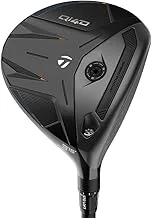
The Qi4D won MyGolfSpy’s 2026 test outright and swept Today’s Golfer’s categories.
The standard model sits between the forgiving Max and the low-spin Tour; it’s the one that fits the widest range of golfers.
AI-designed face geometry maintains ball speed across a larger hitting area, and the adaptive face structure is genuinely effective on off-center hits.
| Pros | Cons |
|---|---|
| Won the largest independent fairway wood test of 2026 outright | $350-400 is premium pricing |
| Swept nearly every category across multiple publications | TaylorMade's dominance is partly a marketing machine; the margins over competitors are small |
| AI-designed face maintains speed on mishits | The standard model may be too much club for slow swing speeds (see Qi4D Max) |
| Versatile; works off the tee and off the deck | Non-adjustable hosel on the standard model |
| Strong Amazon availability in multiple configurations |
Scroll to see more features
TaylorMade Qi4D Max Best for Forgiveness
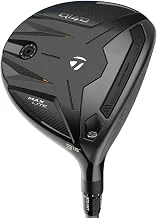
The Max version adds higher MOI for more forgiveness on off-center hits.
Today’s Golfer named it the most forgiving fairway wood of 2026.
Golf Monthly, Reading the Break, and Golf Club Brokers all independently ranked it in their top 3 for forgiveness.
If you miss the center face frequently (most amateurs do), the Max retains more ball speed on those misses.
| Pros | Cons |
|---|---|
| Named the most forgiving fairway wood of 2026 by multiple sources | Gives up some distance compared to the standard Qi4D on center-face hits |
| Higher MOI than the standard Qi4D; retains speed on mishits | Higher launch can be a disadvantage in wind |
| High launch helps golfers who struggle to get fairway woods airborne | $350-400 premium pricing |
| TaylorMade's AI face technology | A larger head profile may not suit golfers who prefer compact shapes |
| Available in 3-wood and 5-wood configurations |
Scroll to see more features
PING G440 Max | Best for Consistency
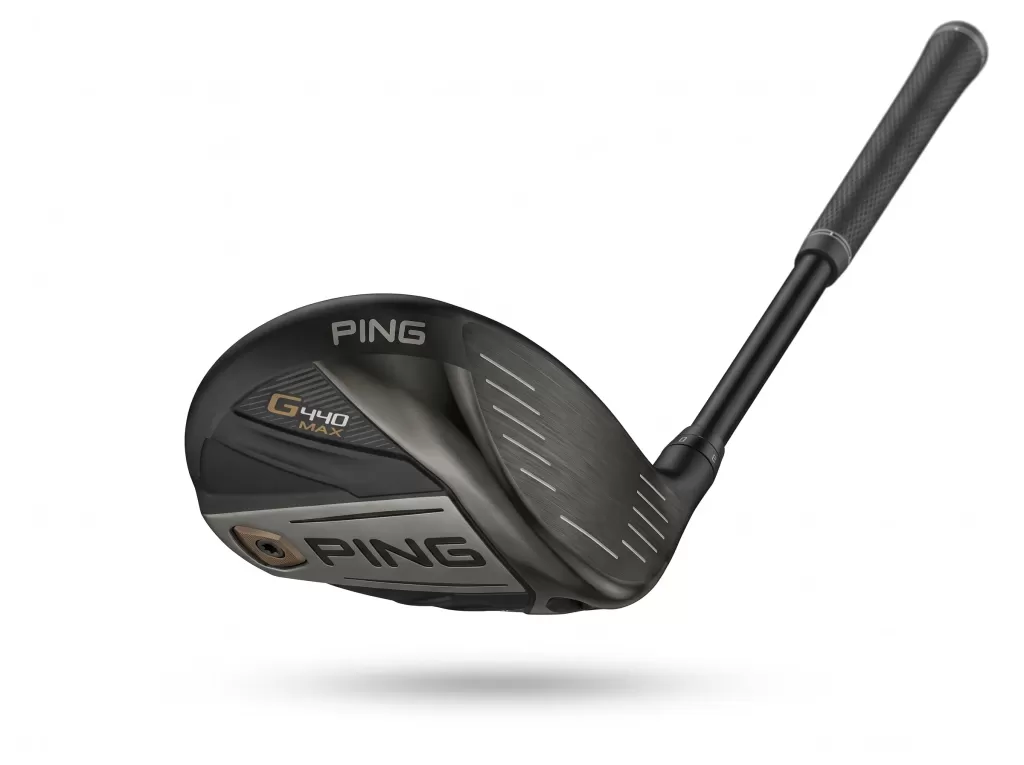
PING’s G440 Max is the fairway wood that does everything well and nothing poorly.
Golf Club Brokers called it “the most consistent overall performer” with excellence across distance, accuracy, and forgiveness.
PING’s high-MOI designs have been the standard for forgiveness for years, and the G440 Max continues that tradition.
Reading the Break ranks PING’s Max line among the most forgiving year after year.
If you want a fairway wood that produces the same result shot after shot, this is it.
| Pros | Cons |
|---|---|
| Consistently ranked among the most forgiving and accurate by every major source | Not the absolute longest; the Callaway Quantum Max carries farther |
| High MOI for speed retention on mishits | PING's price point is premium ($350) |
| PING's build quality and fitting ecosystem | Less adjustability than the Cobra OPTM X |
| A clean look at the address inspires confidence | Conservative styling may not excite golfers who want bold aesthetics |
| Strong Amazon review count with real buyer feedback |
Scroll to see more features
Callaway Quantum Max Best for Maximum Distance
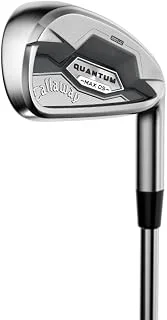
Reading the Break, Golf Club Brokers, and GolfGear360 all identified the Callaway Quantum Max as the longest carry fairway wood of 2026.
The Step Sole design reduces sole-to-ground contact by 57%, allowing the clubhead to glide through tight lies without grabbing, a genuine innovation for turf interaction.
The AI 10x face design optimizes ball speed across the hitting area, and Callaway’s Flash Face technology is proven across multiple generations.
| Pros | Cons |
|---|---|
| Longest carry distance among 2026 fairway woods confirmed by multiple sources | Slightly less forgiving than the PING G440 Max on extreme mishits |
| Step Sole reduces ground contact by 57% and provides exceptional turf interaction | Step sole design creates a different look at address; takes adjustment |
| AI 10x face maintains speed across a large area | Not as workable as compact tour-style fairway woods |
| Forgiving enough for mid-handicappers | Callaway's product cycle means this could be superseded soon |
| $350 pricing competitive with PING and TaylorMade |
Scroll to see more features
Cobra OPTM X Best Adjustability
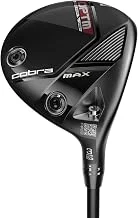
The Cobra OPTM X offers the FutureFit33 system with 33 distinct loft and lie configurations.
That’s not a gimmick. If you’re between standard specs or want to bias toward lower spin off the tee or higher launch off the deck, the OPTM X lets you dial it in precisely.
Golf Monthly named it their best fairway wood of 2026, and Reading the Break praised its near-LS ball speeds in a forgiving package.
At $369, it undercuts TaylorMade and Callaway flagships while offering more adjustability than either.
| Pros | Cons |
|---|---|
| 33-position FutureFit adjustability is the most in the category | Higher launch makes low stingers into wind trickier |
| Named best fairway wood by Golf Monthly | 33 adjustment positions can be overwhelming without a fitting |
| Near-LS ball speeds (~155 mph) in a forgiving shape | Cobra's brand perception lags behind TaylorMade and Titleist |
| $369 undercuts TaylorMade and Callaway flagships | SMARTPAD face technology is good but not as proven as PING or TM |
| Dual movable weights for draw/fade bias |
Scroll to see more features
Titleist GTS2 Best for Moderate Swing Speeds
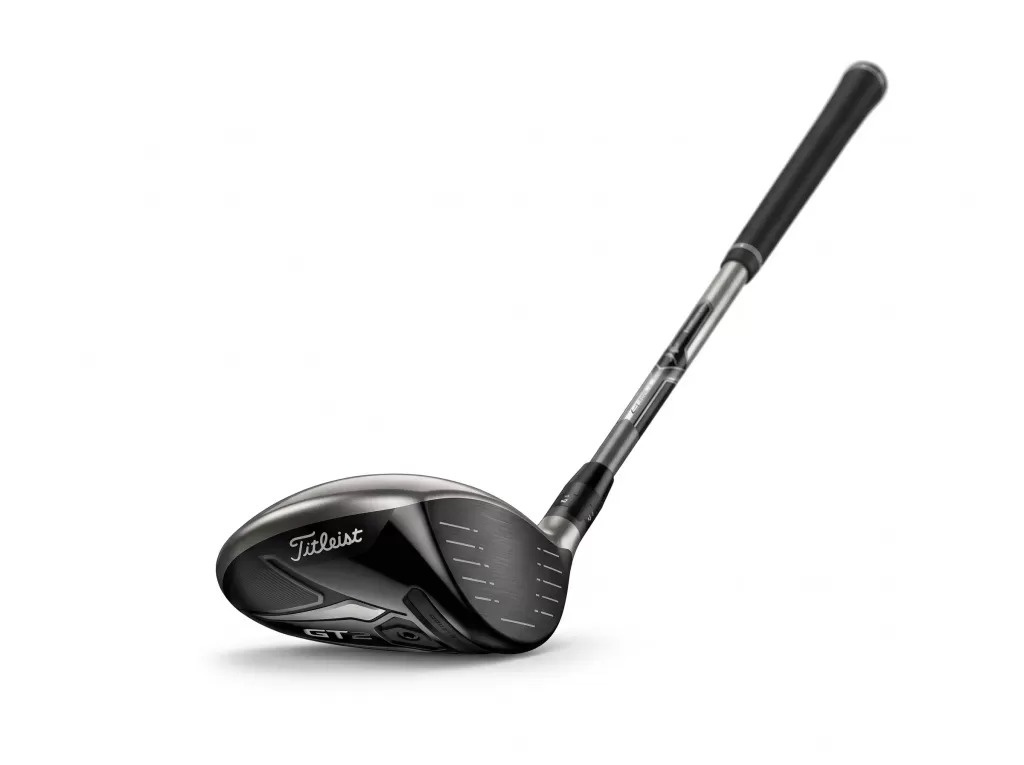
Golf Monthly praised the GTS2 for its larger profile, shallower face, and easy launch.
Golf Club Brokers ranked it best for moderate swing speeds with high launch.
The composite crown and wraparound design provide a clean, traditional look while making it exceptionally easy to launch from the turf.
If you struggle to get a fairway wood airborne, the GTS2 is designed to fix that.
| Pros | Cons |
|---|---|
| Designed for moderate-to-slow swing speeds | Not for fast swing speeds; will balloon and over-spin |
| Deep CG produces a high launch with less effort | The previous generation may be superseded by the GTS line |
| Lightweight configurations available | $350 pricing |
| Titleist's engineering precision | Limited adjustability |
| Accessible for seniors and slower swingers |
Scroll to see more features
TaylorMade Qi4D Tour Best for Low Handicappers
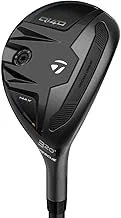
The Tour version is designed for golfers with faster swing speeds who want lower spin and a more penetrating ball flight.
GolfGear360 recorded a 150.2 mph average ball speed, the highest in the category.
This is the fairway wood for single-digit handicappers and low teens who generate enough speed to optimize a tour-spec head.
| Pros | Cons |
|---|---|
| Highest ball speed among TaylorMade's Qi4D line | $400+ premium pricing |
| Lower spin for penetrating flight in wind | Requires fast swing speed (100+ mph) to optimize |
| Compact tour shape at address | Less forgiving than the standard or Max models |
| Workable for shot shaping | A compact head is less confidence-inspiring for mid-high handicappers |
Scroll to see more features
Wilson DYNAPWR Max Best Budget Fairway Wood
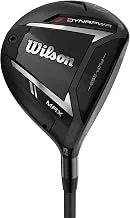
Golf Monthly praised the DYNAPWR Max for offering “forgiveness, excellent playability, and outstanding value.”
At $200-250, it’s the most affordable fairway wood on this list from a major brand, and it delivers performance that competes with clubs costing $100+ more.
| Pros | Cons |
|---|---|
| $200-250 significantly less than premium competitors | Not as long or as forgiving as the TaylorMade or PING flagships |
| Praised for forgiveness and playability by Golf Monthly | Wilson's brand perception in Fairway Woods lags behind the major brands |
| Wilson's engineering has improved dramatically in recent years | Fewer shaft and configuration options |
| Good availability on Amazon | May lose resale value faster than premium brands |
| Suitable for mid-to-high handicappers |
Scroll to see more features
Callaway Quantum Max D Best for Slice Correction
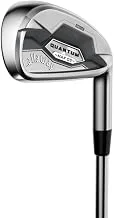
The “D” stands for draw bias. The Quantum Max D positions weight in the heel to promote a right-to-left ball flight (for right-handers).
If you fight a slice with your fairway wood, this is the data-backed correction.
| Pros | Cons |
|---|---|
| Drawing bias helps correct slices | Not for golfers who already draw or hook the ball |
| Same Step Sole technology as the standard Quantum Max | Draw bias can't fix swing faults; it only reduces their effect |
| AI 10x face design | Limited to golfers who fight a specific miss |
| Good forgiveness | Less versatile than a neutral model |
| $350 standard pricing |
Scroll to see more features
Srixon ZXi Fairway Wood Best Underrated Value
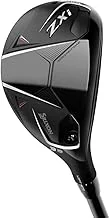
Golf Club Brokers called the ZXi the “best feel and underrated value” among 2026 fairway woods.
Srixon doesn’t get the marketing push that TaylorMade and Callaway receive, but their engineering, particularly in feel and sound, is competitive with any brand.
At $280-320, the ZXi sits well below the premium flagships.
| Pros | Cons |
|---|---|
| Praised for the best feel in the category | Srixon's brand adjustability is low; fairway woods are low in the US |
| $280-320 undercuts premium flagships by $50-100 | Less forgiving than PING or TaylorMade Max models |
| Srixon's engineering is quietly competitive | Fewer adjustability options |
| Good Amazon availability | Resale value is lower than premium brands |
| Excellent sound at impact |
Scroll to see more features
PING G440 LST Best Low-Spin Fairway Wood
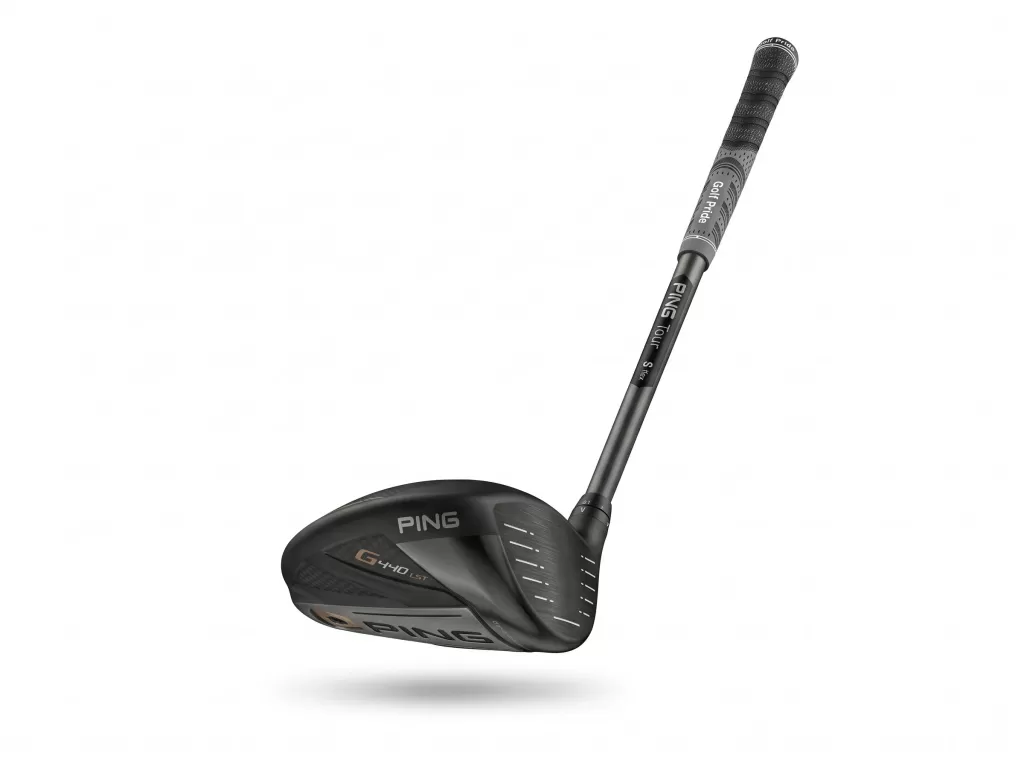
The LST (Low Spin Technology) version of the G440 is designed for golfers who generate too much spin with standard fairway woods.
Lower spin means more distance and a more penetrating flight.
This is PING’s answer for faster swingers who want PING’s consistency without the higher launch of the Max.
| Pros | Cons |
|---|---|
| Low spin for penetrating flight and maximum distance | Requires faster swing speed to optimize |
| PING's consistency and build quality | Less forgiving than the G440 Max |
| Compact head preferred by better players | $400 is premium |
| $400 premium pricing but justified by performance | A compact head may not inspire confidence for higher handicaps |
Scroll to see more features
Cobra OPTM LS Best Tour-Level Cobra
Titanium construction and tour-level ball speeds.
GolfGear360 placed the Cobra OPTM LS among the ball speed leaders.
For Cobra players who want a tour-spec fairway wood, this is the top of their line.
| Pros | Cons |
|---|---|
| Low spin for penetrating flight and maximum distance | Requires faster swing speed to optimize |
| PING's consistency and build quality | Less forgiving than the G440 Max |
| Compact head preferred by better players | $400 is premium |
| $400 premium pricing but justified by performance | A compact head may not inspire confidence for higher handicaps |
Scroll to see more features
Titleist GT1 Fairway Wood Best for Seniors
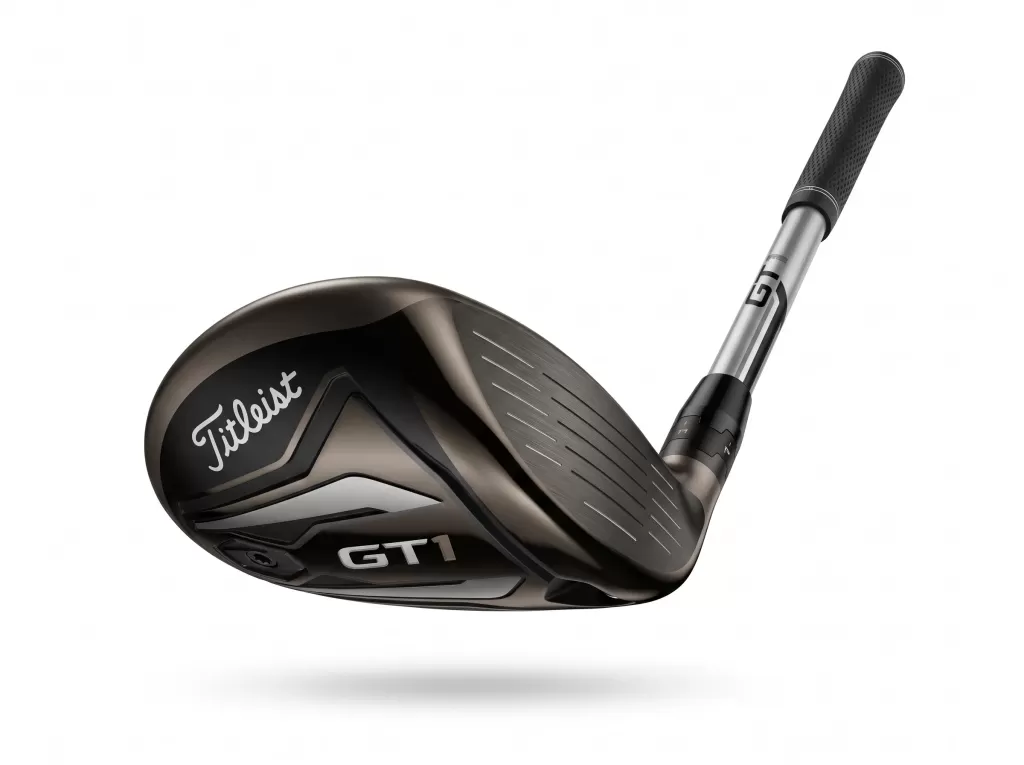
Independent Golf Reviews specifically recommended the GT1 for moderate-speed golfers, “particularly seniors, who want a high-launching, forgiving fairway wood that maximizes their distance and consistency without asking more of their swing.”
The deep CG and lightweight options restore carry distance that slower swings lose with heavier, lower-launching options.
| Pros | Cons |
|---|---|
| Designed for moderate-to-slow swing speeds | Not for fast swing speeds; will balloon and over-spin |
| Deep CG produces a high launch with less effort | The previous generation may be superseded by the GTS line |
| Lightweight configurations available | $350 pricing |
| Titleist's engineering precision | Limited adjustability |
| Accessible for seniors and slower swingers |
Scroll to see more features
Callaway Quantum Triple Diamond
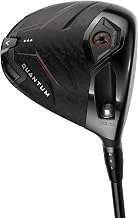
The Triple Diamond is Callaway’s compact, low-spin, tour-oriented fairway wood.
For single-digit handicappers who want a fairway wood they can shape and control, the TD provides workability that forgiving models can’t match.
| Pros | Cons |
|---|---|
| Compact head for shot shaping | $400+ premium pricing |
| Low spin for distance and control | Requires precise contact, not forgiveness |
| Tour-proven design | Not suitable for mid-to-high handicappers |
| Callaway's AI face technology | Limited Amazon availability for tour models |
Scroll to see more features
Tour Edge Exotics Max Best Off-Brand Value
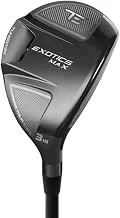
Tour Edge consistently delivers performance that punches above its price class.
The Exotics Max scored well in MyGolfSpy’s test and offers forgiveness, distance, and quality construction at $100-150 less than the major brand flagships.
| Pros | Cons |
|---|---|
| $250-300 significant savings vs. TM/Callaway/PING | Brand perception is below the major OEMs |
| Competitive performance in independent testing | Resale value is lower |
| Forgiving design suited to mid-to-high handicappers | Fewer shaft and configuration options |
| Tour Edge's quality has improved dramatically | Less adjustability than Cobra or TaylorMade |
| Good Amazon availability and reviews |
Scroll to see more features
How to Choose the Right Fairway Wood
Match Head to Swing Speed
This is the most important factor. Fast swing speeds (100+ mph) can optimize Tour and LS models.
If you’re re-evaluating the top of your bag, start with my best golf drivers buying guide. The gap between first and twentieth place was only three yards this year.
Moderate speeds (85-100 mph) pair best with standard models (Qi4D, OPTM X, G440 Max). Slower speeds (75-90 mph) need Max and high-launch models (Qi4D Max, GT1, GTS2).
3-Wood vs. 5-Wood vs. 7-Wood
A 3-wood (15 degrees) goes the farthest but is the hardest to hit off the deck.
The iron set you carry determines where the fairway wood gap starts. I ranked the best golf irons buying guide by Toby for 15 players’ irons to help you build the right combination.
A 5-wood (18 degrees) is more versatile and easier to launch from the fairway and rough. A 7-wood (21 degrees) is the most forgiving and easiest to get airborne.
For most mid-to-high handicappers, a 5-wood is a better investment than a 3-wood.
Always Get Fit
Golf Club Brokers said it plainly: “More than any club in the bag, fairway woods reward proper fitting.”
And if you’re spending $300+ on a fitted fairway wood, protect it when you travel. My best golf travel bags tested by Toby Travel Bag Guide show the $150 quality line.
Loft, lie, shaft flex, weight, and head shape interact in ways that off-the-shelf purchases rarely optimize.
If you’re spending $300+, add a $50-100 fitting to make sure you’re buying the right spec.
Frequently Asked Questions
Should I carry a fairway wood or a hybrid?
Both serve different purposes. Fairway woods produce higher ball speeds and more carry distance from the tee and clean lies.
Hybrids are easier to hit from the rough and on approach shots.
If you’re leaning toward a hybrid instead, I ranked the best golf hybrid clubs of 2026 using the same cross-source methodology.
Many golfers carry both a 3- or 5-wood for par-5 second shots and a hybrid for approach play from 180 to 200 yards.
Is TaylorMade really that much better than everyone else?
In 2026 robot testing, yes. But robot tests measure performance on a consistent machine swing. Human golfers are inconsistent.
A PING that fits your eye and your swing may outperform a TaylorMade that doesn’t, regardless of what the robot data says.
Can I use a fairway wood off the deck or only off the tee?
Modern fairway woods are designed for both. The Callaway Quantum Max’s Step Sole is specifically engineered for clean turf contact.
The key is having enough loft (15-18+ degrees) and the right swing speed. Most amateurs find 5-woods and 7-woods significantly easier to hit off the deck than 3-woods.
How much should I spend?
The Wilson DYNAPWR Max ($200-250) and Tour Edge Exotics Max ($250-300) deliver 85-90% of the performance of $350-400 flagships.
For golfers watching their budget, these are legitimate options backed by test data.
For golfers who want the absolute best, TaylorMade Qi4D, PING G440 Max, or Callaway Quantum Max are the data-backed picks.
And when your fairway wood gets you close, you need a wedge that can finish. See my best golf wedges for scoring best wedges for scoring guide.
Should I buy a previous-generation fairway wood to save money?
Golf Club Brokers specifically recommended this: “One-generation-back models deliver 90-95% of current performance at 30-50% off retail.”
A 2024-2025 PING G430 Max or TaylorMade Stealth 2 at a discount is a smart purchase.