

I spent the last three weeks buried in hybrid test data.
Every guide on USA Golf Guy follows this process: pull data from multiple independent sources and let the consensus tell the story.
Not one of the six tests. MyGolfSpy’s 2,400-shot lab evaluation.
Today’s Golfer’s Foresight GQ Quad numbers. Golf Monthly’s on-course testing across every model released this year. GolfWRX’s deep-dive teardowns.
Independent Golf Reviews’ hands-on analysis. Reading the Break’s 13-source consensus scoring.
MyGolfSpy says the Mizuno JPX One is the clear winner. Today’s Golfer says it’s the Titleist GT1. Golf Monthly picks the Callaway Apex UW.
Independent Golf Reviews goes with the Cobra OPTM. Same clubs, different test conditions, different results, and every buying guide on the internet just parrots one source.
That bothered me. So I built this guide differently.
I cross-referenced every major independent test published in 2026, identified where the results agree, where they diverge, and, importantly, why they diverge.
Then I verified that every hybrid on this list is actually purchasable on Amazon with real customer reviews, because a recommendation you can’t buy is just noise.
The 15 Best Hybrid Golf Clubs of 2026
Mizuno JPX One Best Overall Hybrid
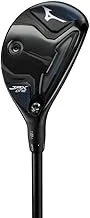
The JPX One topped MyGolfSpy’s 2026 hybrid test with a 9.3 overall score, driven by the best accuracy mark in the field.
Out of 2,400 shots across eight hybrids, the JPX One put 95.97% of shots into a playable position. Average offline distance: 0.3 yards. That’s functionally dead straight.
I went looking for a reason to knock this club down the list and couldn’t find one that holds up across publications.
Today’s Golfer placed the Mizuno ST-Max (a different model) third overall, confirming that Mizuno’s 2026 hybrid engineering is producing real results, not just one lucky model.
The technology behind it is the CORTECH Chamber: a dense stainless steel weight encased in elastomeric TPU that takes stress off the face and creates an additional energy source at impact.
Combined with a 1.8 mm MAS1C steel face and a waffle crown that improves face stability, the result is a hybrid that launches high and lands where you aimed it.
The catch, and I think this matters more than most guides acknowledge, is spin. The JPX One ranked as one of the highest-spinning hybrids in MyGolfSpy’s test.
If you already generate north of 3,800 rpm with your current hybrid, this club could push you into ballooning territory on windy days.
That’s not a flaw; it’s a fit question. A fitter can address it with shaft selection, but off the rack, high-spin players should be aware.
| Pros | Cons |
|---|---|
| Best accuracy score of any hybrid tested in 2026 | Among the highest-spinning hybrids in the field |
| Tightest shot dispersion (1,675 sq yd shot area) | High-gloss crown finish divided tester opinions |
| CORTECH Chamber adds energy at impact | No adjustable hosel; fixed loft only |
| Available in four loft options for flexible gapping | The $280 price sits between budget and premium |
| Strong results confirmed across multiple publications |
Scroll to see more features
Cobra OPTM Most Forgiving Hybrid of 2026
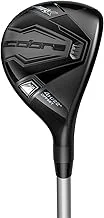
The OPTM earned a 9.9 forgiveness score from MyGolfSpy, the highest mark in any category for any hybrid in the entire test.
It also finished as the best overall hybrid at Independent Golf Reviews and earned Golf Monthly’s nod for one of the best off-the-ground options.
What made me rank this second overall instead of further down is the FutureFit33 adapter system. No other hybrid on the market offers 33 distinct loft and lie combinations.
You can adjust the loft and lie by ±2 degrees in any direction, and the SMARTPAD technology keeps the face square regardless of setting. For a club category where excessive draw bias is the number-one complaint from better players, that lie angle flexibility changes the equation.
The forgiveness numbers back up the adjustability story. The OPTM produced the lowest shot area (1,770 sq yards) after the JPX One, with the tightest ball speed deviations and carry distance deviations of any club tested.
Testers described shot outcomes as “predictable,” which, in a hybrid, is about the highest compliment you can pay.
The trade-off is distance. The OPTM ranked last among the eight 2026 hybrids for distance score (7.5), with 167.21 yards of carry versus the Tour Edge’s 171.26.
That’s a four-yard gap. Whether four yards matters depends on your priorities, but if you’re buying a hybrid because your 3-iron is unpredictable, the OPTM’s consistency is worth more than those four yards.
| Pros | Cons |
|---|---|
| Highest forgiveness score (9.9) of any hybrid tested | Lowest distance score among 2026 hybrids |
| 33-setting FutureFit33 adapter, the most adjustable hybrid ever | Premium price at $330 |
| Available from 2H through 6H for complete iron replacement | A larger profile may not suit low-handicap aesthetics |
| Confirmed top performer across MyGolfSpy and IGR | Fixed back weight limits for CG customization |
| The baffle rail system improves performance from rough |
Scroll to see more features
Tour Edge Exotics Max Best Value Hybrid
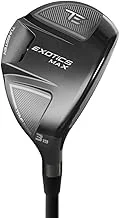
The Exotics Max finished third overall at MyGolfSpy (9.0) and first for distance. It posted the highest ball speed (116.54 mph), longest carry (171.26 yards), and longest total distance (185.73 yards) of any hybrid in the 2026 test, and it costs $70 to $100 less than the Callaway and TaylorMade competitors it beat.
That combination is rare. In 2024 and 2025, Tour Edge took the top spot in MyGolfSpy’s hybrid test. This year they dropped to third overall but kept the distance crown.
The data pattern over three years tells me this isn’t a fluke; Tour Edge consistently produces among the longest hybrids at the lowest prices.
The testers called it “effortless” and praised the two-tone crown for easy alignment. One tester said it was the club he liked best in the entire field.
I have two honest reservations. First, forgiveness is average, ranked in the middle of the pack. Second, and this is a real limitation for 2026: the Exotics Max uses a bonded hosel. No adjustability.
In a year when Cobra offers 33 settings, Callaway gives you 7 loft/lie combinations, and even PXG has an adjustable hosel, a bonded construction feels like a missing feature. If you already know your ideal loft and don’t need to tinker, this is the easiest recommendation on the list.
If you’re still figuring out your hybrid setup, the lack of adjustability could be a problem.
| Pros | Cons |
|---|---|
| Longest distance of any hybrid tested in 2026 | Average forgiveness, middle of the pack |
| $230 price point, $70-$100 under competitors | Bonded hose with zero adjustability |
| Highest ball speed (116.54 mph) in the test | Slight left bias noted by some testers |
| A two-tone crown makes alignment easy. | Limited loft options vs. competitors |
| Three consecutive years of top-3 finishes at MyGolfSpy |
Scroll to see more features
Callaway Quantum Max OS Best All-Around Hybrid
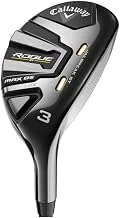
Runner-up overall at MyGolfSpy with a 9.1 score. Second for accuracy (9.2). Strong distance (9.3). Solid forgiveness (8.9).
The Quantum Max OS doesn’t dominate any single category, but it finishes near the top of all three, which is exactly what makes a great all-around hybrid.
The “OS” stands for Oversized, and the head is noticeably larger than the standard Quantum Max. Some testers flagged this as a negative at the address.
But the data tells a different story: that bigger footprint helped the OS version outperform the standard model in every scoring category.
The semi-draw bias helps golfers who fight a slice, and the adjustable head-toe weights let you amplify or reduce that draw effect. The Opti-Fit hosel adds seven loft and lie combinations.
The AI-optimized face (H.O.T. Face Technology) uses computational design to vary face thickness for consistent speed across the hitting area.
I’ve seen this tech in Callaway’s drivers and irons, and it translates well to hybrids; the ball speed consistency shows up in the forgiveness numbers.
| Pros | Cons |
|---|---|
| Balanced top-3 finishes across accuracy, distance, forgiveness | Oversized head won't appeal to every golfer. |
| Adjustable head-toe weights for shot shape control | The $320 price places it in the premium tier. |
| 7-setting Opti-Fit hosel for loft and lie customization | Semi-draw bias could overcook draws for some players. |
| AI-optimized face for consistent ball speed | Heavier feel than some competitors |
| Strong tester feedback on confidence at address |
Scroll to see more features
Ping G440 | The Consensus Pick
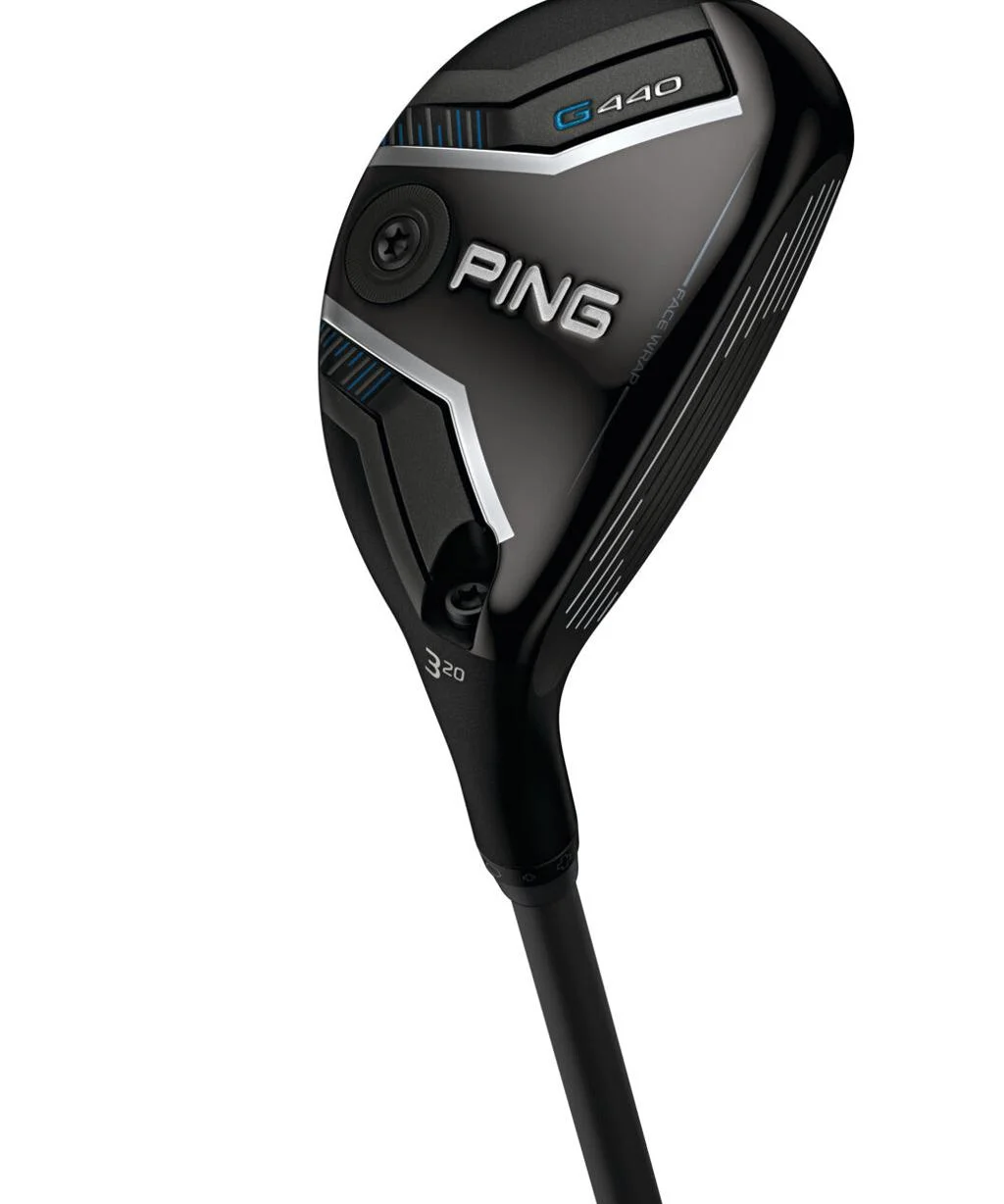
Here’s the thing about the Ping G440: it ranked top five or higher at every major publication that tested it.
Reading the Break’s consensus methodology, which aggregates expert reviews (35%), data-driven testing (25%), community feedback (30%), and retail reviews (10%) across 13 independent sources, placed the G440 as the safest overall hybrid pick of 2026.
MyGolfSpy scored it at 8.7 using carryover data from 2025 (they didn’t retest it for 2026).
Today’s golfer gave it a perfect 5/5. Independent Golf Reviews named it the best hybrid for most golfers. Golf Monthly listed it among the most forgiving and most versatile.
The G440’s defining technology is the Spinsistency variable face thickness and internal geometry that stabilize spin rates across the face.
The practical result: your heel and toe strikes don’t produce the dramatic trajectory swings that normally separate a good hybrid shot from a bad one.
Ping redesigned the rear weight to sit more flush on the turf, making the face angle more consistent at address.
The Trajectory Tuning 2.0 hosel adjusts loft ±1.5 degrees. And the loft range is the widest in the business. Ping offers a 34° 7-hybrid for golfers who want to replace irons all the way down.
My one flag: the traditional shape won’t appeal to golfers who want a modern, compact aesthetic.
The G440 looks like a hybrid is supposed to look, which is exactly the right thing for confidence but may not satisfy players who want something sleeker behind the ball.
| Pros | Cons |
|---|---|
| Highest consensus ranking across all major publications | Wasn't retested for 2026 at MyGolfSpy |
| Spinsistency Technology for stable spin across the face | Traditional head shape may not suit modern aesthetic preferences. |
| Widest loft range available (17° through 34°) | Higher launch may challenge low handicappers seeking penetrating flight. |
| Trajectory Tuning 2.0 hosel for ±1.5° adjustment | Not the longest in any individual test |
| Custom fitting through Ping's dealer network |
Scroll to see more features
Titleist GT1 Best Hybrid for High Handicappers
This is the most divisive hybrid in the 2026 market. Today’s golfer named it their outright number-one hybrid of the year, with first place for ball speed at 148.3 mph.
Independent Golf Reviews ranked it as the Most Forgiving Hybrid for high handicappers. But MyGolfSpy, using 2025 carryover data, placed it 13th overall.
Same club. Dramatically different conclusions.
I dug into the methodology difference, and here’s what explains the gap: Today’s golfer tests with TaylorMade TP5x balls (one of the longest balls on the market), while MyGolfSpy uses Titleist Pro V1.
Different tester profiles, different swing speed distributions, and different category weightings.
The GT1’s bowed face generates exceptional ball speed, and a high-speed ball paired with that face design amplifies the distance numbers that today’s golfer weighs heavily.
For high handicappers specifically, the GT1 makes a strong case. The draw-biased internal weighting actively straightens a slice, the most common miss pattern for 15+ handicappers. The SureFit adjustable system lets a fitter dial in loft and lie. The larger head profile inspires confidence at the address.
If you’re a mid-to-low handicapper who already hits the ball straight, the draw bias could be a problem. But if your misses go right, this club is engineered specifically to fix that.
| Pros | Cons |
|---|---|
| #1 overall at Today's Golfer highest ball speed (148.3 mph) | Only 13th in MyGolfSpy's combined rankings |
| Draw-biased weighting actively corrects slices. | Draw bias could overcook shots for straight hitters. |
| The SureFit system allows loft and lie customization. | Premium Titleist pricing at $330 |
| A bowed face generates exceptional ball speed. | High spin may balloon in windy conditions. |
| Strong endorsement from Independent Golf Reviews |
Scroll to see more features
TaylorMade Qi4D Best Hybrid for Pure Distance
The Qi4D posted the highest total yardage (184.86 yards) of any hybrid in MyGolfSpy’s 2026 test, edging out even the Tour Edge Exotics Max for total distance, though the Tour Edge carried further. Golf Monthly named it one of their “Best Off The Tee” picks.
The combination of a carbon fiber crown, a 450 stainless steel body, and a long cut-through Speed Pocket makes this TaylorMade’s most refined hybrid to date.
Here’s where I have to be direct: this club has the worst accuracy score (7.4) and the worst shot dispersion (2,439 sq yards) of any hybrid in the 2026 test.
That’s a 46% larger dispersion pattern than the Mizuno JPX One.
MyGolfSpy’s own testing team explicitly recommended a professional fitting to tame it.
The Qi4D is a specialist’s tool. Off the tee on wide-open par 5s, it’s a weapon. Twist Face corrective curvature helps with mishits, and the raw speed off the face is undeniable. As an approach club into a green, the accuracy gap is a real concern.
The KBS REAX shaft was co-developed specifically for TaylorMade’s rescue lineup, providing stability and feel tuned for hybrid performance.
The 3° loft sleeve allows adjustment of ±1.5° for flight optimization.
| Pros | Cons |
|---|---|
| Highest total distance (184.86 yards) in 2026 test | Worst accuracy score (7.4) of any 2026 hybrid |
| Carbon crown enables optimized CG placement. | Largest shot dispersion: 46% wider than JPX One |
| Twist Face provides corrective curvature on mishits. | Requires fitting to mitigate accuracy shortcomings |
| KBS REAX shaft designed specifically for hybrids | Forgiveness below average for the field |
| 3° loft sleeve for flight adjustment |
Scroll to see more features
TaylorMade Qi4D Max Best-Feeling Hybrid of 2026
Here’s a detail that got buried in most coverage of the MyGolfSpy test: the testers who hit 2,400 shots across all eight hybrids were asked which one they’d actually buy.
The Qi4D Max won. It also won best sound, best looks, and best feel. No other hybrid took even two of those four subjective categories.
The numbers tell a less dramatic story: an 8.4 overall score, solid but not dominant. The Qi4D Max produces the highest peak trajectory (24.94 yards) in the field and is the easiest TaylorMade hybrid to launch.
An 8g Trajectory Adjustment System weight positioned rearward drives that high launch while maintaining stability.
Independent Golf Reviews named it Best for Beginners because of the oversized head, large face area, and maximum forgiveness.
I’d broaden that recommendation to include any golfer who prioritizes feel and confidence over raw data metrics.
Sometimes the club that feels right produces better results on the course than the one that tests best in a lab, because you make committed swings when you trust the club behind the ball.
| Pros | Cons |
|---|---|
| Won all four subjective tester categories (sound, looks, feel, and purchase intent) | 8.4 overall score: solid but not dominant |
| Highest peak trajectory for easy launch | Limited workability as skills improve |
| 8g TAS weight for flight optimization | Oversized head won't suit advancing mid-handicappers. |
| Strong tester endorsement for on-course confidence | Accuracy and distance behind the top 3 |
| A lightweight shaft promotes clubhead speed. |
Scroll to see more features
PXG Lightning | Most Underrated Hybrid
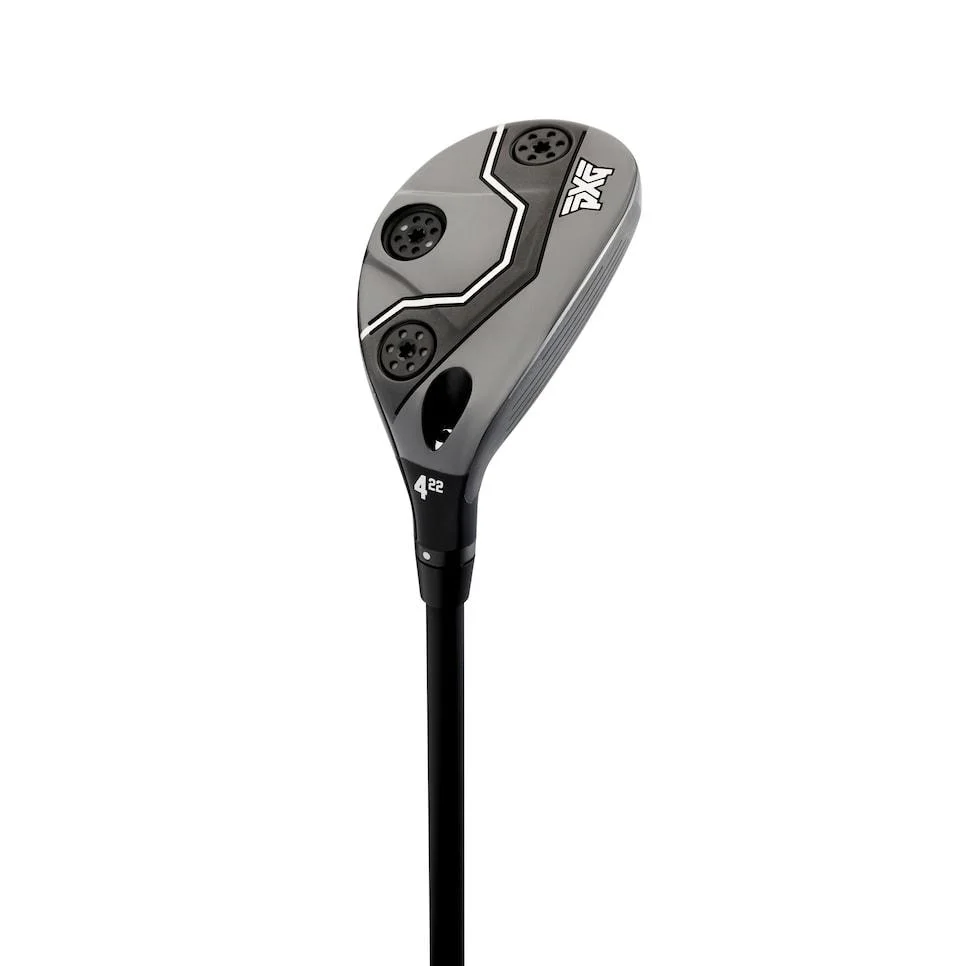
The PXG Lightning is the hybrid that gets dismissed before it gets tried. PXG’s brand carries baggage people assume is “expensive” and move on.
But the Lightning posted a 9.4 forgiveness score at MyGolfSpy (second only to the Cobra OPTM), produced the second-tightest shot area (1,686 sq yards) in the test, and drew the most enthusiastic single tester quote in the entire evaluation: “one of the best clubs I’ve hit in 2 years of testing.”
Independent Golf Reviews named it the Most Underrated Hybrid. Golf Monthly included it in their “Best Off The Tee” picks alongside the TaylorMade Qi4D and Srixon ZXi.
The adjustable hosel provides genuine loft flexibility, and the precision weighting system allows internal mass repositioning for draw or fade bias.
That level of customization, combined with high MOI forgiveness, gives you a club that performs even when your contact isn’t perfect.
The weakness the data exposes: distance (8.0) and accuracy (8.5) both sit below the field leaders.
This is a club that keeps you safe: tight dispersion, predictable outcomes, and minimal penalty for mishits, but it doesn’t actively help you gain strokes through distance or precision.
For golfers who lose more shots to inconsistency than to lack of distance, that trade-off is exactly right.
| Pros | Cons |
|---|---|
| Second-best forgiveness score (9.4) in the 2026 test | Below-average distance (8.0) and accuracy (8.5) |
| Second-tightest shot area for off-center consistency | PXG brand perception creates purchase hesitation. |
| Adjustable hosel with precision weighting system | Limited to three loft options |
| Standout tester endorsement | Requires fitting to maximize adjustability benefits |
| Competitive pricing against Titleist and Callaway |
Scroll to see more features
Callaway Elyte | The One MyGolfSpy Didn't Test
The Callaway Elyte is the biggest omission in MyGolfSpy’s 2026 hybrid test; they didn’t include it at all.
But Today’s Golfer tested it and named it Best for Height and Best for Forgiveness. Golf Monthly featured it prominently in multiple categories.
The Elyte offers the most adjustability in Callaway’s hybrid lineup.
Interchangeable heel-toe weights () can b13 g tungsten and 3 g aluminume swapped to toggle between neutral and draw ball flight. The OptiFit 4 hosel provides seven loft and lie combinations.
Per Callaway’s player testing data, combining both systems delivers up to 13 yards of shot shape adjustability.
The Ai 10x face uses ten times more control points than Callaway’s previous Smart Face generation, producing tighter dispersion and optimized launch across the hitting area.
In testing at Today’s Golfer, the Elyte launched higher and with more consistency than any other hybrid evaluated.
Two models exist: the standard Elyte (neutral flight, mid-sized profile) and the Elyte X (semi-draw flight, slightly oversized).
The standard is the better choice for golfers who already hit the ball straight; the X suits players who need help correcting a fade or slice.
I rank this 10th despite the strong reviews because of the missing MyGolfSpy data point. Without lab numbers from the industry’s most rigorous test, I can’t compare it directly to the top nine on identical metrics.
The Today’s Golfer and Golf Monthly endorsements are strong enough to warrant inclusion, but I want to be transparent about the data gap.
| Pros | Cons |
|---|---|
| Best for Height and Forgiveness at Today's Golfer | Not included in MyGolfSpy's 2026 test data gap |
| 13 yards of shot shape adjustability (per Callaway testing) | Premium pricing at $330 |
| AI 10x face with 10x more control points than previous gen | Two models (standard vs. X) require a decision |
| OptiFit 4 hosel with 7 loft/lie combinations | Newer model with less community feedback |
| Available from 3H through 7H for flexible bag building |
Scroll to see more features
Titleist GT2 The MOI Paradox
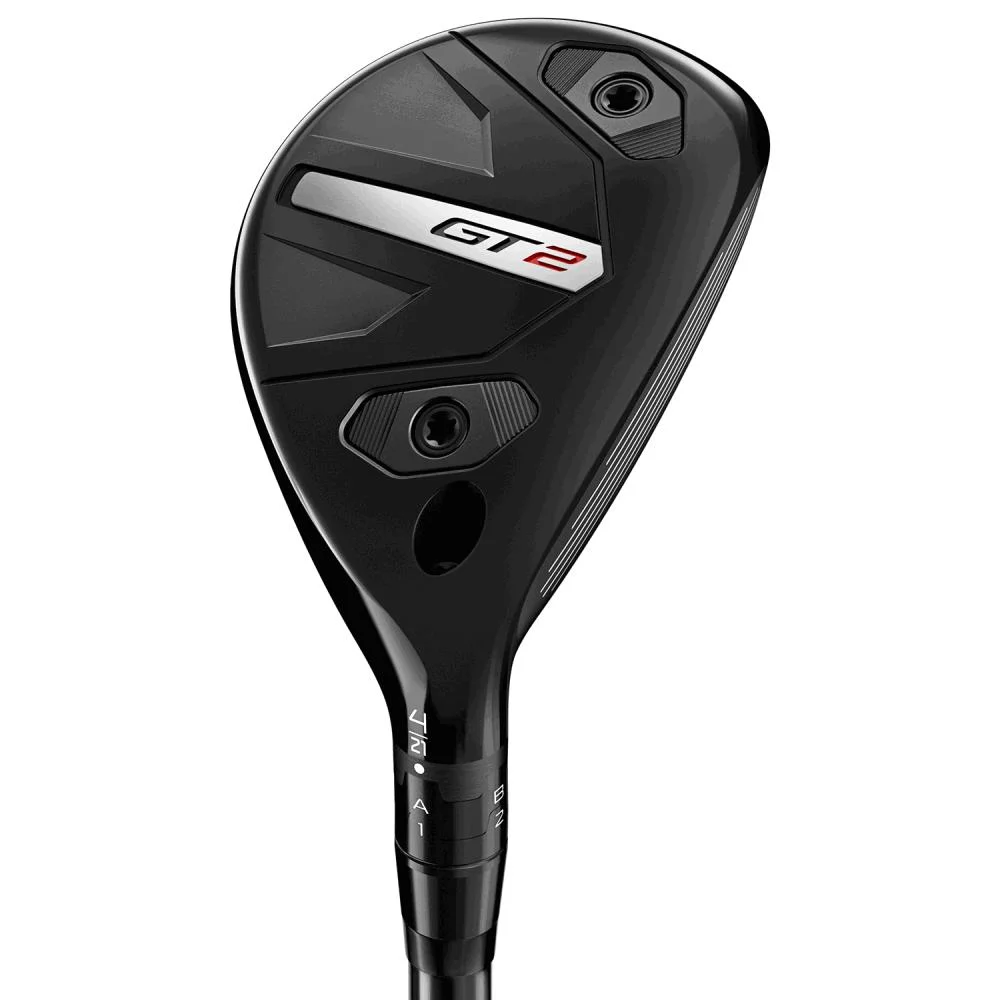
The GT2 holds a piece of engineering trivia that most guides get wrong or skip entirely: it has higher MOI than the larger GT1.
Titleist achieved this through internal mass distribution rather than head volume, making the GT2 a mid-sized hybrid that protects like a game-improvement club while looking like a players’ model.
Golf Monthly named it one of their top three overall picks. GolfWRX specifically highlighted it for stability and forgiveness.
MyGolfSpy scored it at 8.5 using 2025 carryover data, with strong forgiveness (8.2) and distance (8.7) marks.
The flatter sole design, a redesign from the TSR2 predecessor, improves turf interaction from tight lies.
This addresses a specific weakness of the GT1, which can struggle on firm, closely mown approaches.
Movable heel-toe weights plus the SureFit adjustable hosel give it the broadest fitting flexibility in the Titleist hybrid lineup.
The feel is refined: solid impact feedback with enough information on mishits that you know where you missed. Golf Monthly’s tester described the GT2 as effective from every lie type, fairway and rough, tight and soft.
| Pros | Cons |
|---|---|
|
|
Scroll to see more features
Titleist GT3 Best Players' Hybrid
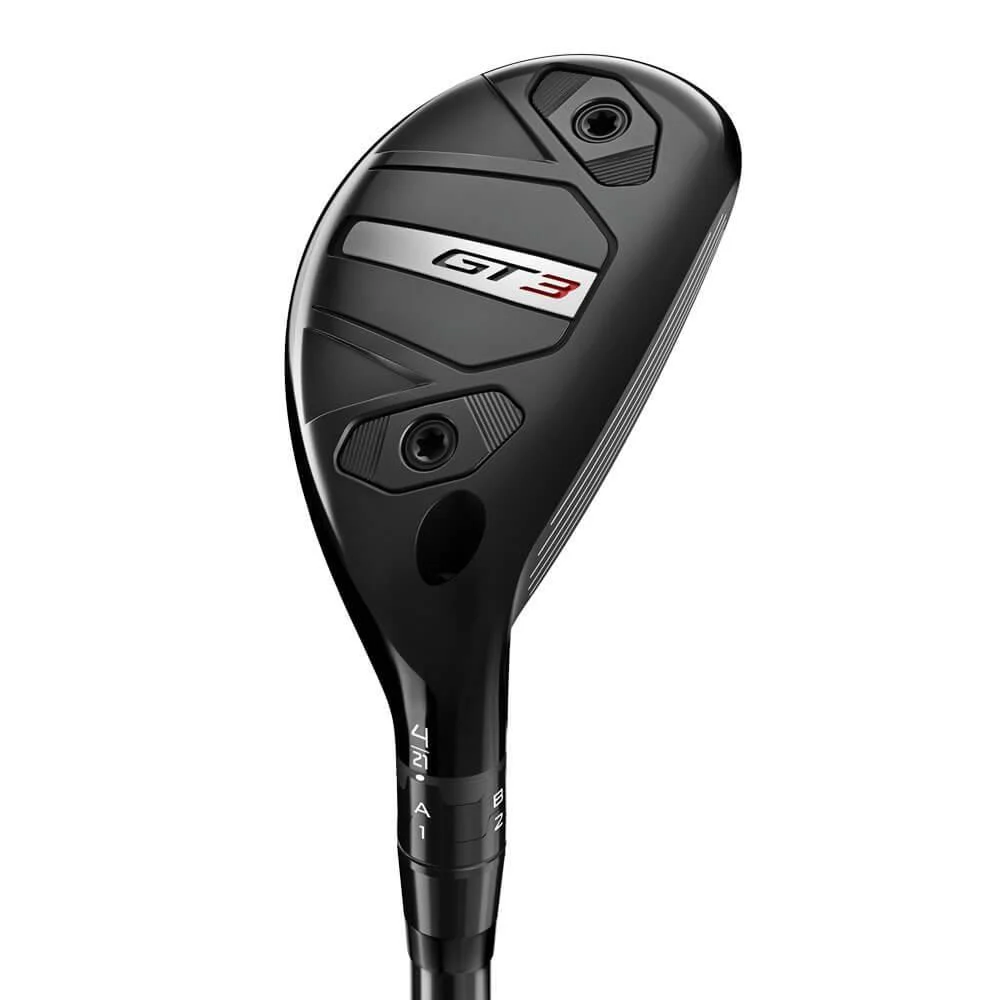
The GT3 is built for the single-digit handicapper who has always hated hybrids because they look too bulky.
The head is 6% smaller than its predecessor, but Titleist increased MOI by 15%, an engineering move most brands don’t attempt because smaller heads typically mean less stability.
The ATI 425 titanium face is a material usually reserved for drivers, deployed here for maximum ball speed from a compact frame.
Plugged In Golf’s reviewer put the GT3 directly into his own bag. That’s not a sponsored deal or a tagline; it’s a reviewer telling you this is the club that replaced what he was already gaming.
MyGolfSpy scored it at 8.7 using 2025 carryover data, tied for 5th overall. Golf Monthly named it “Most Versatile” alongside the Ping G440 and Cobra King Tec.
The honest limitation: this is not a high-handicapper’s club. The compact head requires consistent contact, and the lower-spin profile demands adequate swing speed to get the ball airborne properly.
If you can deliver the clubhead consistently, the GT3 rewards you with iron-like control and workable shot shapes.
If you can’t, the smaller head punishes mishits more than the GT1 or GT2.
| Pros | Cons |
|---|---|
| 6% smaller head with 15% more MOI precision engineering | A compact head punishes inconsistent contact |
| ATI 425 titanium face driver material in a hybrid | A lower spin profile needs adequate swing speed. |
| Adjustable heel-toe weights for shot shaping | Limited to three loft options |
| Iron-like control with hybrid-level launch | Not forgiving enough for higher handicappers |
| Plugged In Golf reviewer put it in his own bag. | $330 pricing |
Scroll to see more features
Srixon ZXi Best Iron-Like Hybrid
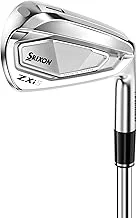
The ZXi is the hybrid for golfers who want their long game to feel like an extension of their iron set.
MyGolfSpy scored it at 8.7 using 2025 carryover data. Golf Monthly ranked it among the “Best Off The Tee,” meaning it produces a penetrating flight that holds its line in wind.
Srixon redesigned the head from the older ZX Mk II, noticeably larger this time, directly addressing the main criticism of that club.
The result hits a balance: large enough to inspire confidence for mid-handicappers, compact enough that better players don’t feel like they’re swinging a fairway wood.
The neutral face angle and squared-off toe shape maintain the iron-player aesthetic.
The mainframe face technology variable thickness patterns across the hitting area provide ball speed and spin control that tightens dispersion.
In practice, this means your distance gaps stay consistent even when contact moves around the face.
At a street price that’s dropped to around $230 at some retailers, the ZXi offers performance comparable to the $330 Titleist GT3 for considerably less money.
It won’t give you the same shot-shaping workability or the titanium face speed, but for the golfer who wants a reliable, iron-feeling long club at a fair price, this is hard to beat.
| Pros | Cons |
|---|---|
| Iron-like feel and aesthetics that blend into an existing iron set | Less forgiving than full game-improvement hybrids |
| Mainframe face tech for consistent ball speed across the face | Neutral bias doesn't help correct a slice. |
| The redesigned larger head improves confidence vs. ZX Mk II. | Not the longest hybrid in any test |
| Sale pricing around $230 makes it a strong value. | The 2025 model may see the ZXi successor |
| Golf Monthly "Best Off The Tee" recognition |
Scroll to see more features
Wilson DYNAPWR Best Hybrid for Seniors
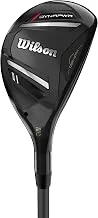
Most hybrid buying guides treat the “best for seniors” category as filler, stick a game-improvement hybrid in the slot, and move on.
Wilson engineered the DYNAPWR specifically around the swing characteristics that develop as swing speed decreases.
Power Holes technology cuts strategic slots into the face that allow dramatic flex at impact, generating ball speed your current swing can’t produce on its own. Lightweight construction moves the clubhead faster through the hitting zone without demanding more from your body.
A high launch angle gets the ball airborne quickly. Draw bias counteracts the fade that develops as swing speed drops.
Independent Golf Reviews named it Best Hybrid for Seniors. Golf Monthly flagged it as “Best for Slicers.” MyGolfSpy scored it at 8.5 using 2025 carryover data.
The price around $250 sits $50 to $80 below Titleist and Callaway alternatives. For a golfer whose primary concern is getting the ball up and forward with moderate swing speed, the DYNAPWR offers the best performance per dollar in this category.
The trade-off: low spin may reduce stopping power on firm greens. The larger profile limits shot shaping. But if you’re a 60+ handicapper watching your distances shrink, those trade-offs don’t apply; you need launch and carry, and the DYNAPWR delivers both.
| Pros | Cons |
|---|---|
| Power Holes face technology maximizes speed from slower swings. | Low spin reduces stopping power on firm greens. |
| Lightweight construction reduces fatigue over 18 holes. | Larger profile limits shot shaping. |
| Draw bias counteracts common senior fade pattern. | The 2025 model may see a refresh. |
| ~$250 price undercuts premium competitors | Not suited for golfers who already hit draws |
| Best for Seniors at Independent Golf Reviews |
Scroll to see more features
Callaway Quantum Max The Right-Sized Callaway
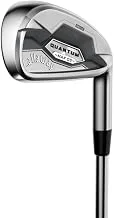
Every publication leads with the Quantum Max OS (the oversized version), and the standard Quantum Max gets buried by its sibling.
But the data gap between the two is smaller than the marketing gap suggests, and for golfers who find the OS head too large at address, the standard version is the smarter choice.
MyGolfSpy scored it at 8.7, the same as the Ping G440, Titleist GT3, and Srixon ZXi.
It produced slightly higher spin (3,639 rpm vs. 3,581 for the OS) and a steeper descent angle (37.42° vs. 35.86°). In practical terms, the standard Quantum Max stops on greens more effectively than the OS.
The AI-optimized H.O.T. Face Technology carries over from the OS. The Opti-Fit hosel provides seven loft and lie combinations.
It’s a mid-sized profile that doesn’t look oversized at address but packs Callaway’s full suite of hybrid technology.
This is the Callaway hybrid I’d recommend for a 10-15 handicapper who wants Callaway’s 2026 tech in a head shape that looks like a hybrid, not a mini-fairway wood.
| Pros | Cons |
|---|---|
| Same AI-optimized face technology as the OS model | Slightly lower accuracy than the OS version |
| Higher spin and steeper descent for better green-stopping | $320 price matches or exceeds competitors |
| A mid-sized profile inspires confidence without being oversized. | Overshadowed in coverage by the OS sibling |
| 7-setting Opti-Fit hosel for loft and lie adjustment | Not the most forgiving option in Callaway's lineup |
| Available from 3H through 7H |
Scroll to see more features
2026 Hybrid Comparison Table
| Hybrid | Price | MGS Score | Accuracy | Distance | Forgiveness | Adjustable Hosel | Best For | Buy |
|---|---|---|---|---|---|---|---|---|
| Mizuno JPX One | $280 | 9.3 | 9.8 | 8.8 | 8.9 | No | Accuracy | Check Amazon Price |
| Cobra OPTM | $330 | 8.9 | 9.0 | 7.5 | 9.9 | Yes (33 settings) | Forgiveness | Check Amazon Price |
| Tour Edge Exotics Max | $230 | 9.0 | 9.1 | 9.5 | 8.5 | No | Distance + Value | Check Amazon Price |
| Callaway Quantum Max OS | $320 | 9.1 | 9.2 | 9.3 | 8.9 | Yes (7 settings) | All-Around | Check Amazon Price |
| Ping G440 | $318 | 8.7 | 8.8 | 8.5 | 8.7 | Yes (±1.5°) | Consensus Pick | Check Amazon Price |
| Titleist GT1 | $330 | 8.5 | 8.5 | 8.3 | 8.7 | Yes (SureFit) | High handicapper | Check Amazon Price |
| TaylorMade Qi4D | $300 | 8.1 | 7.4 | 9.4 | 8.2 | Yes (3° sleeve) | Raw Distance | Check Amazon Price |
| TaylorMade Qi4D Max | $300 | 8.4 | 8.1 | 9.0 | 8.4 | Yes (TAS weight) | Beginners/feel | Check Amazon Price |
| PXG Lightning | $330 | 8.6 | 8.5 | 8.0 | 9.4 | Yes | Consistency | Check Amazon Price |
| Callaway Elyte | $330 | N/A* | N/A* | N/A* | N/A* | Yes (OptiFit 4) | Height / Adjustability | Check Amazon Price |
| Titleist GT2 | $330 | 8.5 | 8.5 | 8.7 | 8.2 | Yes (SureFit) | Versatility | Check Amazon Price |
| Titleist GT3 | $330 | 8.7 | 8.7 | 8.5 | 8.9 | Yes (SureFit) | Low handicapper | Check Amazon Price |
| Srixon ZXi | $280 | 8.7 | 8.8 | 8.4 | 8.6 | Yes | Iron-Like Feel | Check Amazon Price |
| Wilson DYNAPWR | $250 | 8.5 | 8.5 | 8.6 | 8.4 | No | Seniors | Check Amazon Price |
| Callaway Quantum Max | $320 | 8.7 | 8.9 | 8.4 | 8.4 | Yes (7 settings) | Mid-Handicaps | Check Amazon Price |
Scroll to see more features
Fairway Wood vs. Hybrid vs. Utility Iron
A 20° fairway wood, a 20° hybrid, and a 20° utility iron all share the same loft, but they don’t perform the same. The difference comes down to design, not the number on the sole, and swing speed is what decides which one actually works for you.
Fairway woods. launch highest and forgive mishits best, thanks to a low, deep CG. They’re the easiest to get airborne, but they skim across turf rather than dig through it, so they struggle from rough or tight lies.
Hybrids split the difference: fairway-wood-style forgiveness in a shorter, more iron-like shape that handles bad lies far better. This is why hybrids replaced long irons for most golfers.
Utility irons. Launch lower and spin the least, favoring golfers with faster swing speeds who don’t need help getting the ball up and want a more penetrating, wind-resistant flight.
How to Choose the Right Hybrid for Your Game
Picking a hybrid comes down to three questions: what problem are you solving, what’s your swing speed, and what does the rest of your bag look like?
Golfers who struggle with accuracy from 180+ yards should look at the Mizuno JPX One and Callaway Quantum Max OS, ranked 1st and 2nd for accuracy in lab conditions. These two clubs keep the ball on-target more consistently than anything else available.
If your main problem is inconsistent fat/thin contact, wild dispersion, or unpredictable results, the Cobra OPTM or PXG Lightning is your fix. Both posted the lowest variation in ball speed, carry distance, and spin shot-to-shot.
Need maximum distance at a fair price? The Tour Edge Exotics Max beat every premium hybrid for carry while costing $70–$100 less.
Golfers who fight a slice should look at the Titleist GT1, Wilson DYNAPWR, and Callaway Elyte X. All three feature draw-biased weighting that works against a fade pattern.
Low-handicappers who’ve resisted hybrids because they look too chunky have real options now. The Titleist GT3, Srixon ZXi, and TaylorMade Qi4D offer compact profiles with iron-like turf interaction.
And if you want one hybrid that works from every lie and can’t go wrong, buy the Ping G440. It’s the only hybrid ranked in the top five by every major publication.
Frequently Asked Questions
What is the best hybrid golf club in 2026?
Based on my cross-test research, the Mizuno JPX One is the best overall hybrid of 2026. It topped MyGolfSpy’s lab test (9.3 overall score), posted the best accuracy mark of any hybrid tested (95.97% of shots in a playable position), and earned strong reviews across other publications.
Mizuno’s 2026 lineup broadly outperformed in hybrid testing; their ST-Max model also placed third at Today’s Golfer. The JPX One’s main trade-off is higher spin, which can be addressed through shaft fitting.
What is the most forgiving hybrid of 2026?
The Cobra OPTM earned the highest forgiveness score (9.9 out of 10) in MyGolfSpy’s 2026 test, the highest mark in any category for any hybrid tested. It produced the tightest ball speed deviations and carry distance deviations shot-to-shot.
The Callaway Elyte also earned “Best for Forgiveness” at Today’s Golfer, though it wasn’t included in MyGolfSpy’s test. For high handicappers specifically, the Titleist GT1 combines forgiveness with draw-bias correction.
Should I use a hybrid or a long iron?
If your 3-iron or 4-iron produces inconsistent contact, low launch, or carries less than 180 yards, a hybrid will almost certainly improve your results.
For golfers replacing long irons entirely, the iron set you pair with your hybrids matters. See my best golf irons-buying guide by Toby Players’ irons guide for the mid and short iron picks.
Hybrids launch higher from the same loft, carry further from moderate swing speeds, and perform better from rough and poor lies.
Low-handicap players who make consistent center-face contact with long irons may prefer a utility iron or crossover, but for the vast majority of golfers, a hybrid is the smarter play.
What is the best hybrid for high handicappers in 2026?
The Titleist GT1, Wilson DYNAPWR, and TaylorMade Qi4D Max are the three best options for high handicappers.
The GT1 offers draw-biased weighting that actively straightens a slice, the most common miss pattern for high handicappers.
The DYNAPWR is engineered specifically for slower swing speeds. The Qi4D Max provides the largest effective hitting zone and easiest launch in TaylorMade’s lineup.
How far should a hybrid go?
A properly fitted hybrid should carry 10-15 yards further than the iron it replaces and 10-15 yards shorter than the next longest club. For a golfer with moderate swing speed (85-95 mph driver speed), a 3-hybrid typically carries 175-195 yards.
A 4-hybrid carries 165-185 yards. A 5-hybrid carries 155-175 yards. These numbers vary significantly with swing speed, angle of attack, and shaft selection, so get fitted if you can.
Is it better to carry one hybrid or two?
One hybrid works if you only need to replace a single long iron and hit your fairway woods well.
Two hybrids are better if you struggle with multiple long irons or play courses with thick rough where a hybrid’s wider sole provides an advantage.
A common and effective setup is 3H and 4H, or 4H and 5H, replacing the two clubs that produce the most inconsistent results in your current bag.
What hybrid replaced the 3-iron?
A 3-hybrid in the 19°-21° loft range is the standard replacement for a 3-iron. The 3-hybrid produces similar distances with higher launch, more forgiveness, and better performance from rough and fairway bunkers.
Most 2026 hybrids are tested at the 3H specification (19°-21° loft), so the performance data in most buying guides directly applies to this replacement scenario.
Are expensive hybrids worth it?
The 2026 data suggests diminishing returns above the $250-$280 price range. The Tour Edge Exotics Max ($230) beat every premium hybrid for distance.
The Mizuno JPX One ($280) won overall. The Srixon ZXi (on sale around $230) performs comparably to the $330 Titleist GT3.
Where premium pricing does buy you something measurable is adjustability. The Cobra OPTM ($330) with its 33-setting hosel and the Callaway Elyte ($330) with its interchangeable weights both offer customization that cheaper clubs can’t match.
If you plan to get fitted and use adjustability, the premium is justified. If you’re buying off the rack, the mid-priced options deliver equivalent performance.
What is the best hybrid for distance in 2026?
The Tour Edge Exotics Max posted the longest carry distance (171.26 yards) and highest ball speed (116.54 mph) in MyGolfSpy’s 2026 test.
The TaylorMade Qi4D had the highest total distance (184.86 yards) due to extra rollout from its lower spin profile.
Today’s Golfer found the Titleist GT1 produced the highest ball speed (148.3 mph) in their independent test. The best distance hybrid depends on whether you value carry (Tour Edge), total yards (TaylorMade), or ball speed (Titleist).
What hybrid does Tiger Woods use?
As of 2026 tour setups, Tiger Woods has historically used TaylorMade hybrids when carrying one.
Tour players switch equipment frequently based on course conditions, and many, including Tiger, have gone through periods of carrying no hybrid at all, using long irons or utility irons instead.
Your equipment choice should be based on your own swing data, not what a tour player bags.