
Putting accounts for roughly 40% of your strokes in an average round. You probably already know that.
The other 60% of your scoring comes from inside 120 yards, where your wedge does the heavy lifting. I ranked the best golf wedges for scoring using the same cross-source approach.
Every guide on USA Golf Guy follows this same process: pull data from multiple independent sources and let the consensus tell the story.
What you might not know is that the gap between the best-performing and worst-performing blade putters in MyGolfSpy’s 2026 test was 6.4 strokes on their PuttView Handicap scale. Six and a half strokes from a club most golfers pick based on looks alone.
I spent the last several weeks digging through every major putter test published in 2026. MyGolfSpy tested 24 blades with robotic-level data from their PuttView partnership.
Today’s Golfer tested 110 putters across blades, mallets, and zero-torque designs at Stoke Park in England. Golf Monthly, Independent Golf Reviews, Golf Club Brokers, and Breaking Eighty I pulled from all of them.
And here’s the part that actually matters: these publications don’t agree with each other. Not even close.
MyGolfSpy’s best blade putter of 2026 is the Mizuno M.Craft Osaka. Today’s Golfer says the best putter overall across all 110 models they tested is the TaylorMade Spider Tour, a mallet.
Scotty Cameron’s Studio Style Newport 2 finished 7th in pure putting performance at MyGolfSpy but ranked #1 for subjective feel and looks. Same putter, same year, wildly different conclusions depending on what you’re measuring.
That’s the kind of thing I think you should know before spending $300-plus on a flatstick.
And it’s why this guide exists to cross-reference every major test and surface the putters that perform well across multiple independent evaluations, rather than just echoing one publication’s rankings.
One more thing before we get into specific putters: every product on this list is available on Amazon with real customer reviews.
That matters because several of the putters that top the independent tests, particularly PING’s Scottsdale line and L.A.B. Golf’s zero-torque models, are sold direct-to-consumer only.
They’re genuinely good putters. But if you can’t buy them where you shop, a recommendation isn’t much use to you.
Best Putters of 2026
| Putter | Type | Price Range | Best For | MGS Rank (Blade Test) | Today's Golfer Verdict | Amazon Availability | Buy |
|---|---|---|---|---|---|---|---|
| Mizuno M.Craft Osaka | Blade | ~$300 | All-around blade performance | #1 Overall | Highly rated | Mizuno official store | Check Amazon Price |
| Scotty Cameron SS Newport 2 | Blade | ~$430–$450 | Premium feel and aesthetics | #7 Overall; #1 Subjective | Top blade pick | Third-party sellers | Check Amazon Price |
| TaylorMade Spider Tour | Mallet | ~$300–$350 | Maximum stability and forgiveness | N/A (mallet) | #1 Overall (all 110 putters) | TaylorMade official store | Check Amazon Price |
| Cleveland HB Soft 2 | Blade/Mallet | ~$150–$180 | Budget performance | Not in blade test | Solid results | Cleveland official store | Check Amazon Price |
| Odyssey Ai-ONE Jailbird | Mallet/ZT | ~$280–$320 | Zero-torque at mainstream price | N/A | #1 Zero-Torque | Callaway/Odyssey store | Check Amazon Price |
| Tour Edge Zero Torque ZT-2 | Zero-Torque | ~$130–$170 | Budget zero-torque | Not in test | Not tested | Tour Edge store | Check Amazon Price |
| Evnroll Origin ER2 | Blade | ~$350–$400 | Off-center hit correction | #4 Overall | Consistent top performer | Evnroll authorized sellers | Check Amazon Price |
| Cobra Vintage Sport | Blade | ~$250 | Value blade with LA Golf tech | #12 (MIM Sport) | Tested, mid-range | Cobra official store | Check Amazon Price |
| Mizuno M.Craft Tokyo | Mallet | ~$300 | Forged mallet feel | N/A (mallet) | Well-received | Mizuno official store | Check Amazon Price |
| Wilson Infinite ZT | Zero-Torque | ~$130–$150 | Entry-level zero-torque | Not in test | Not tested | Wilson official store | Check Amazon Price |
Scroll to see more features
How I Researched This Guide
I don’t test putters in a lab. I’m not going to pretend otherwise. What I do is read the work of people who actually run controlled tests, then cross-reference their findings against each other and against what’s actually available for you to buy.
For this guide, my primary data sources were:
MyGolfSpy’s 2026 Most Wanted Blade Putter test: 24 models, 20 testers, 120 hours, 15,360 putts, all scored using PuttView Handicap technology.
This is the most data-dense blade putter test published this year.
Today’s Golfer 2026 Putter Test: 110 putters tested across blades, mallets, and zero-torque designs.
Seven testers, 15 putts per putter per tester, totaling 7,560 putts. The largest multi-type putter test published in 2026.
Golf Monthly, Independent Golf Reviews, Golf Club Brokers, Breaking Eighty, and GolfMagic for additional perspectives, particularly on budget picks and the zero-torque category.
Amazon product listings and customer review data to verify that each putter is actually available and to check real-world buyer feedback.
Where two or more sources agree on a putter’s performance, I have high confidence in the recommendation.
Where they disagree, I’ll tell you exactly what’s different and why. That disagreement is often more useful than a single verdict.
Understanding Putter Types in 2026
Before getting into individual models, a quick orientation on the three categories.
This matters because MyGolfSpy tests each type separately, while Today’s Golfer throws them all into one test.
The “best putter” depends heavily on which type suits your stroke.
Blade putters are the traditional shape, with a compact head, usually heel-toe weighted, typically with some degree of toe hang.
They suit golfers with an arcing stroke. If you look down at a blade and feel like you know where the ball is going, you’re probably a blade player.
The trade-off is forgiveness. Mis-hit a blade, and the ball goes where you didn’t want it to go.
Mallet putters have larger, deeper heads with more weight distributed around the perimeter.
That means higher MOI (moment of inertia), which translates to more forgiveness on off-center strikes.
Face-balanced mallets work best for straight-back, straight-through strokes. If your putting stroke has minimal arc, a mallet will likely serve you better.
Zero-torque putters are the newer category that’s gone mainstream in 2025-2026.
The shaft enters the head at a specific position that eliminates the head’s tendency to twist during the stroke. L.A.B. Golf pioneered this design. Now Odyssey, Tour Edge, Wilson, and Evnroll all offer zero-torque models.
The result, when it works for your stroke, is a putter that stays square through impact without you having to manage face rotation. Golfers who struggle with consistency on mid-range putts tend to benefit most.
Best Blade Putters of 2026
Mizuno M.Craft Osaka Best Overall Blade Putter

The Mizuno M.Craft Osaka topped MyGolfSpy’s 24-putter blade test with a PuttView Handicap of -5.5 overall. That number means it performed 5.5 strokes better than an average tour player’s performance at the given distances.
It won best overall, best for short putts (-6.5), and placed second for medium putts (-1.8). Across three distance categories, it never dropped below 6th place.
What caught my attention during research is that this isn’t a putter from a brand known for its putters. Mizuno is an iron company first, and most golfers probably couldn’t name a single Mizuno putter model.
But the M.Craft Osaka delivered the best all-around blade performance in the most data-intensive test published this year. The testers commented on the milled face feel and the clean look at the address. A few disliked the corded grip, which is easy enough to swap.
Osaka uses Mizuno’s 1025E Pure Select steel, a specification six times tighter than the industry standard, according to Mizuno.
There’s a copper layer beneath the nickel chrome finish that contributes to the soft feel at impact. The adjustable sole weights let you tinker with swing weight without buying a new putter.
The primary trade-off is toe hang. Osaka has significant toe hang, which works well for golfers with an arcing stroke but may feel wrong if your stroke is straighter. Mizuno testers at MyGolfSpy flagged this specifically; it’s a feature for some players and a dealbreaker for others.
| Pros | Cons |
|---|---|
| Best overall PuttView Handicap in 2026 blade test | Significant toe hang won't suit all strokes |
| Forged 1025E steel with copper underlay genuinely has a soft feel | Corded grip may not suit all preferences |
| Adjustable weighting included | Mizuno brand recognition in putters is low (matters for resale) |
| The $300 price undercuts Scotty Cameron and Bettinardi | Limited hose/neck options compared to PING |
Scroll to see more features
Scotty Cameron Studio Style Newport 2 Best Premium Blade
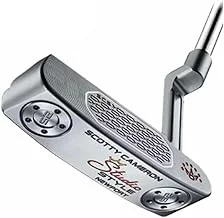
The Scotty Cameron Studio Style Newport 2 is a strange case study in putter testing. In MyGolfSpy’s blade test, it finished 7th out of 24 in pure performance with a PuttView Handicap of -3.3. Not bad, but not a podium.
Then the testers rated it #1 for sound and #1 for looks, and it appears repeatedly on “likelihood to purchase” lists. The putter that golfers most want to buy isn’t the putter that putts best in controlled conditions.
That said, the Newport 2 is the most copied putter shape in golf history, and this Studio Style revival is widely regarded as Scotty Cameron’s strongest version of it in years.
The carbon steel face insert a callback to the original Studio Style line from twenty years ago, giving it a softer impact feel than the standard 303 steel versions. Chain-link face milling is a visual and tactile detail that contributes to speed control on shorter putts.
Multiple publications outside of MyGolfSpy Golf Club Brokers, Breaking Eighty, and Incred Golf call this the “gold standard blade” for 2026.
If you care about how a putter sounds and feels as much as you care about where the ball ends up, the Newport 2 makes sense. If you’re purely data-driven, the Mizuno or Evnroll outperformed it on the green.
The price is the obvious barrier. At $430-plus, you’re paying a Scotty Cameron tax. Whether that tax buys you confidence and whether that confidence translates to made putts is between you and your green-reading ability. The putter won’t care.
On Amazon, the Studio Style Newport 2 is available through third-party sellers. Pricing tends to sit at or above MSRP. Titleist doesn’t operate an official Amazon storefront, so you’re buying from authorized golf retailers listed on the platform.
| Pros | Cons |
|---|---|
| The most copied blade shape in golf, refined for 2026 | 7th in MGS performance, not the best-performing blade |
| Soft SCS face insert with chain-link milling | A $430+ price is steep, especially when $300 putters outperform it on data |
| Customizable tungsten sole weights | Amazon availability is through third-party sellers only |
| Strong resale value; Scotty Cameron holds its price | Limited forgiveness (typical of traditional blades) |
Scroll to see more features
Evnroll Origin ER2 Best for Off-Center Hit Forgiveness (Blade)

Evnroll has been placed in or near the top of MyGolfSpy’s blade putter test for several consecutive years now. In 2026, the Origin ER2 finished 4th overall with a PuttView Handicap of -3.8.
It ranked 4th on short putts, 3rd on medium putts, and 4th on long putts about as balanced a scorecard as any putter in the field.
Even though the ranking matters, the face technology is the real reason this putter keeps earning its spot. SweetFace uses progressively milled grooves across the face: wider in the center and narrower toward the heel and toe.
The effect is that off-center hits are mechanically redirected back toward the target line. This is a measurable phenomenon that shows up in independent testing, and it’s why Evnroll keeps performing well year after year while other brands rotate in and out.
For golfers who know they don’t hit the center of the face on every putt, which is most of us, this technology addresses the problem at the source rather than just adding MOI to mask it.
The ER2 is a mid-blade shape, slightly wider than a traditional Newport-style blade, which helps at address without feeling like a mallet.
Evnroll putters are available on Amazon through the Evnroll official store and authorized dealers like Golfio. Pricing is generally at or near MSRP.
| Pros | Cons |
|---|---|
| SweetFace groove technology is genuinely differentiated, not marketing fluff | $350-400 is mid-premium pricing |
| Balanced performance across short, medium, and long putts | Less widely known brand limits fitting opportunities at retail |
| Consistent year-over-year test performance | The face-milling appearance is distinctive and may not appeal visually to all |
| Length-specific head weights for proper swing weight | Available on Amazon through the official Evnroll store |
Scroll to see more features
Cobra Vintage Sport Best Value Blade

Cobra’s putter lineup has improved dramatically over the past two cycles. Their MIM Sport model placed 12th in MyGolfSpy’s blade test, and the 3DP Tour Grandsport, their higher-end 3D-printed option, finished 5th.
At around $250, the Vintage Sport is the least expensive OEM blade putter on this list, and it comes with technology borrowed from LA Golf, which makes some of the most expensive putters on the market.
The Descending Loft face is the standout feature. Instead of a single loft angle across the face, LA Golf uses four descending lofts (4°, 3°, 2°, and 1°) to compensate for whether you tend to add or remove loft through impact.
The goal is a consistent launch angle regardless of your attack angle. It’s a clever solution to a problem most golfers don’t realize they have.
The Pebax insert, a thermoplastic elastomer, gives the Vintage Sport a softer feel than you’d expect at this price. And the MIM construction process produces tighter tolerances than traditional casting.
On Amazon, Cobra has an official storefront with the full Vintage line available: the Sport, the Widesport, the Nova, and the Stingray. Multiple head shapes, all under $275.
| Pros | Cons |
|---|---|
| ~$250 is genuinely good value for OEM blade quality | 12th in MGS performance, solidly mid-pack |
| LA Golf Descending Loft Technology included | MIM construction may not feel as premium as forged steel |
| Pebax insert provides soft, responsive feel | Cobra putter brand recognition is still growing |
| Multiple head shapes available in the same vintage line |
Scroll to see more features
Odyssey Ai-Dual DW Best Blade from a High-Volume Brand
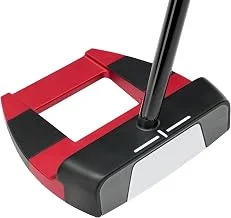
Odyssey sells more putters than anyone else on the planet, and their Ai-Dual DW (Double Wide) placed 16th in MyGolfSpy’s blade test with a PuttView Handicap of -2.3.
But here’s the divergence: it posted the 4th-best score on short putts (-5.4) before dropping to near-last on medium putts (6.4).
That’s a massive split. If your misses happen inside 8 feet, this putter might genuinely help. If you struggle from 10 to 12 feet, the data says look elsewhere.
The AI-designed face is Odyssey’s current calling card across their entire 2025-2026 lineup.
Using machine learning to optimize the milling pattern across the face, the goal is more consistent ball speed on off-center hits conceptually similar to what Evnroll does with SweetFace, but arrived at through a different process.
Odyssey’s biggest advantage for Amazon shoppers is ecosystem depth. Callaway (Odyssey’s parent company) runs a full official Amazon storefront. You can find virtually every Odyssey model in multiple configurations, typically with Prime shipping and competitive pricing.
Review counts on Odyssey putters tend to be the highest of any brand on Amazon; the White Hot OG line alone has thousands of ratings across various models.
| Pros | Cons |
|---|---|
| 4th best short-putt performance in the MGS blade test | Near last on medium putts, an extreme performance split |
| AI-designed face for off-center hit consistency | 16th overall in the blade test |
| Best Amazon presence of any putter brand: easy to find, compare, return | The Ai-Dual line is newer, with fewer long-term user reviews |
Scroll to see more features
Best Blade Putters of 2026
TaylorMade Spider Tour Best Overall Mallet

This is the putter that Today’s Golfer rated #1 overall out of 110 models tested, not just in the mallet category, but across all putters including blades and zero-torque designs.
One of their seven testers gave it a perfect score across every category; when a putter wins a 110-model shootout, that cuts through noise.
The Spider Tour has been a fixture on the PGA Tour for years. Rory McIlroy, Dustin Johnson, and Jason Day have all used versions of it. The current model pairs a lightweight aluminum core with a heavy stainless steel frame to push weight to the perimeter, maximizing MOI.
That’s the engineering shorthand for “the face stays square even when you don’t hit the center.” The True Path alignment system is optically engineered to help you visualize the line, a feature that sounds like marketing until you actually address a putt with it.
The Pure Roll insert combines angled grooves with a softer polymer to get the ball rolling end-over-end sooner and with less skid.
This matters more than most golfers realize. A putt that skids before rolling is less predictable than one that starts rolling immediately. The Spider Tour’s insert is designed to minimize that skid phase.
On Amazon, TaylorMade maintains a strong official presence. The Spider Tour is available in multiple configurations, different hosel types, shaft lengths, and the larger Spider Tour S and Spider Tour X variants.
For golfers who want forgiveness above all else and who have a relatively straight putting stroke, the Spider Tour is the safest recommendation I can make based on available test data.
| Pros | Cons |
|---|---|
| #1 overall putter in 110-model test (Today's Golfer) | ~$300-350 is standard premium pricing |
| Tour-proven with multiple major winners | Appearance is polarizing; not everyone likes the Spider look |
| High MOI design for maximum forgiveness | A larger head can feel unwieldy for players used to blades |
| The True Path alignment system aids visualization | May feel sluggish on faster greens (heavier head) |
| Pure Roll insert reduces skid | Multiple hose/model variants can make choosing confusing |
Scroll to see more features
Cleveland HB Soft 2 Best Budget Putter (Blade and Mallet)

If I had to recommend one putter to someone who said “I just want something good and I don’t want to spend $300,” it would be the Cleveland HB Soft 2 without hesitation.
Multiple independent sources Independent Golf Reviews, Golf Club Brokers, and Breaking Eighty all land on Cleveland as the best budget putter in 2026. That kind of cross-source agreement on a value pick is rare.
Cleveland’s Speed Optimized Face Technology uses a variable groove milling pattern that normalizes ball speed across a larger hitting area.
Miss the center by a quarter inch, and the ball still comes off at roughly the same speed. That’s the same basic problem that Evnroll and Odyssey are solving with their proprietary face tech, just at a significantly lower price point.
The HB Soft 2 lineup includes nine head shapes spanning blades and mallets. The Model 1 is a classic Anser-style blade. The Model 8 is a round mallet.
The Model 10.5 is a blade-mallet hybrid that Independent Golf Reviews specifically called the “best budget mallet putter” in their 2026 guide.
The Model 11 is a high-MOI square mallet. Whatever head shape you prefer, there’s probably an HB Soft 2 version of it.
On Amazon, Cleveland maintains an official storefront through Srixon/Cleveland Golf.
Review counts across HB Soft 2 models are strong, and pricing consistently sits below $180. Left-hand options are available in several models, a detail that matters to about 10% of golfers who often get overlooked.
| Pros | Cons |
|---|---|
| $150-180 is less than half the price of most competitors on this list | Not a test winner, solid but not top-3 in major tests |
| Speed-optimized face technology works | Build quality is good, not great at this price |
| Nine head shapes cover virtually every stroke type | Less premium sound and feel compared to $300+ putters |
| Excellent Amazon availability with high review counts | The counterweight system only activates on 35"+ shafts |
Scroll to see more features
Odyssey Ai-ONE Jailbird Best Zero-Torque Mallet
The Odyssey Ai-ONE Jailbird in its Square 2 Square (S2S) zero-torque configuration won the best zero-torque putter in Today’s Golfer’s 2026 test and tied for the #1 overall score across all 110 putters tested.
It scored first in stability, first in roll, and first in feedback within the zero-torque category.
This is a big deal because L.A. B. Golf essentially owned the zero-torque category until recently. L.A.B.’s MEZZ.1 MAX is used by Adam Scott, Will Zalatoris, and Lucas Glover on tour.
But the MEZZ.1 MAX costs $500-plus and isn’t widely available on Amazon. The Odyssey Ai-ONE Jailbird offers zero-torque performance at roughly $300 from a brand you can buy in any golf shop or on Amazon with Prime shipping. That’s a meaningful shift in accessibility.
The Jailbird head shape, named for its jail-bar alignment lines, has been one of Odyssey’s most popular designs for several cycles.
The S2S zero-torque variant adds the center shaft and face-balanced weight distribution that eliminates twisting. Combined with the AI-designed face pattern and high MOI, you get a putter that stays square through impact and forgives mis-hits.
If you’ve been curious about zero-torque putters but didn’t want to spend $500 on an L.A.B. Golf model or commit to a brand you can’t demo at your local shop, the Ai-ONE Jailbird S2S is the mainstream answer.
| Pros | Cons |
|---|---|
| #1 zero-torque putter in Today's Golfer's 110-model test | Zero-torque design may feel unusual to golfers accustomed to toe hang |
| Tied for #1 overall across all putter types | Center shaft aesthetics aren't for everyone |
| Half the price of L.A.B. Golf alternatives | Jailbird alignment lines polarize; some golfers find them distracting |
| Excellent Amazon availability through the Callaway store | Not independently tested by MyGolfSpy in this specific configuration |
| AI face technology for off-center consistency |
Scroll to see more features
Mizuno M.Craft Tokyo Best Forged Mallet

The Mizuno M.Craft Tokyo belongs to the same City Series family as the Osaka blade that won MyGolfSpy’s blade test.
Where the Osaka is a compact blade with significant toe hang, the Tokyo is a wing mallet designed for higher MOI and more forgiveness. Same steel. Same forging process. Same copper underlay for feel. Different head shape for a different type of golfer.
I’m including the Tokyo because it’s one of the very few forged mallet putters on the market. Most mallets are cast or milled from billet steel.
Mizuno forges the Tokyo from their 1025E Pure Select specification, which means you get the soft, connected feel that Mizuno is known for in their irons translated to a mallet putter. For golfers who want mallet forgiveness but miss the feel of a forged blade, this is a genuinely unusual option.
The Tokyo is available on Amazon through Mizuno’s official store in both double-bend and slant neck configurations. If the Osaka’s toe hang doesn’t suit your stroke but the M.Craft build quality appeals to you, the Tokyo is the natural alternative.
| Pros | Cons |
|---|---|
| Rare forged mallet 1025E steel with copper underlay | Less widely tested than dedicated mallet designs |
| Same build quality as the MGS #1 blade winner | $300 puts it against established mallet incumbents |
| Adjustable weighting | Mizuno putter brand awareness is still growing |
| Dual hosel options (double bend and slant) |
Scroll to see more features
Best Blade Putters of 2026
Tour Edge Zero Torque ZT Series Best Value Zero-Torque

Tour Edge launched their Zero Torque ZT line for 2026 with four models: ZT-1 (traditional mallet), ZT-2 (compact mallet), ZT-3 (wide mallet), and ZT-4 (large mallet). All four use center-shaft designs for zero-torque performance, and all four are priced under $200.
This is the value play in the zero-torque category. When the Odyssey Ai-ONE Jailbird S2S costs $300, and L.A.B. Golf models start around $500, Tour Edge is offering zero-torque technology at $130-180.
They’re not going to have the same level of face technology or MOI optimization as the premium options, but for a golfer who wants to try zero-torque putting without a major financial commitment, the price of entry just dropped significantly.
The ZT-1 and ZT-2 feature milled faces, a meaningful upgrade at this price point. The ZT-2 in particular, with its compact mallet profile, looks and feels more refined than its price suggests. The ZT-4 is the largest head in the lineup, offering the most forgiveness for golfers who prioritize stability above all else.
Tour Edge is one of those Amazon-native brands that major publications often overlook. They won’t show up in MyGolfSpy or Today’s Golfer tests, but they move serious volume through Amazon.
The 2026 ZT lineup already has listings in both the right and left hands across multiple lengths.
| Pros | Cons |
|---|---|
| $130-180 is the lowest entry point for zero-torque putters | Not tested by major independent publications |
| Full lineup of four head shapes | The Tour Edge brand carries less cachet than Odyssey or TaylorMade |
| Milled faces on ZT-1 and ZT-2 | Customer review counts are still building on 2026 models |
| Both right and left hands are available | Limited fitting infrastructure; you're choosing based on head shape preference |
Scroll to see more features
Wilson Infinite Zero Torque Budget Zero-Torque Alternative
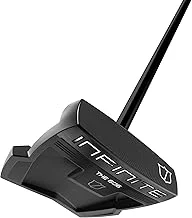
Wilson’s Infinite Line has been a quiet success story on Amazon for several years, good putters at reasonable prices with solid review counts.
Their zero-torque entries, the 606 and the Lakeview, bring center-shaft zero-torque performance at Wilson’s typical price point.
I’m including the Wilson ZT options here because they represent the absolute floor of what zero-torque costs in 2026 from a recognized OEM brand. Below this, you’re into no-name Chinese-made putters with questionable quality control.
Above this, you’re at Tour Edge ($150+) or Odyssey ($300+) or L.A.B. Golf ($500+). For a golfer who reads about zero-torque, gets curious, and wants to spend the least amount possible to try the concept, Wilson makes that possible.
Both models are available on Amazon through Wilson’s official store in right- and left-hand configurations.
| Pros | Cons |
|---|---|
| Lowest-cost OEM zero-torque option | Not tested by any major publication |
| Wilson brand reliability and quality control | Limited head shape options |
| Milled face at this price point | Build quality and materials won't match $300+ competitors |
| Left-hand available | Limited customer reviews on zero-torque-specific models |
Scroll to see more features
What the Tests Actually Agree On
Short and medium putts separate the field. MyGolfSpy’s data is explicit about this: the performance gap between best and worst putters is larger on short putts (7.6 PuttView Handicap differential) and medium putts (9.7 differential) than on long putts (4.8 differential).
This makes sense. On a 20-foot putt, getting within three feet of the hole is a decent result regardless of what putter you’re using. On a 6-foot putt, you either make it or you don’t, and the putter’s face angle at impact matters far more.
Zero-torque putters are no longer a niche. When a $300 Odyssey wins “best putter overall” in a 110-model test using a zero-torque design, the category has arrived. This is going to change how golfers think about putter selection over the next few years.
Price doesn’t predict performance. The $300 Mizuno M.Craft Osaka beat the $495 Bettinardi BB-8W overall. The $260 PING Scottsdale Anser 4 (not available on Amazon, but worth noting) outperformed the $430+ Scotty Cameron Studio Style Newport 2 on pure putting metrics.
The Cleveland HB Soft 2 at $150 does 80% of what $400 putters do. There’s a strong argument that diminishing returns kick in hard above $300.
Subjective preference and objective performance are different things. The Scotty Cameron Newport 2 ranked #1 for sound, looks, feel, and “likelihood to purchase” in MyGolfSpy’s tester survey and 7th for actual putting performance.
Golfers consistently prefer the putter that sounds and looks best, even when the data says a different putter performs better.
Those birdie putts on par 5s often start with a fairway wood approach that reaches the green in two.
I tested the best fairway woods tested by Toby 15 for fairway woods for distance and forgiveness.
How to Choose Your Putter in 2026
Start with stroke type. If your putter swings on an arc, you want some toe-hang blade putters or arc-specific mallets.
If your stroke is straight-back, straight-through, a face-balanced mallet, or a zero-torque putter, it will match better.
This single decision eliminates about half the putters on the market and saves you from buying something that fights your natural movement.
Get fitted if you can. A putter fitting, even a basic one at a big-box golf store, will tell you your stroke arc, your preferred length, and whether your current loft and lie angles are costing you putts. It’s the most underused service in golf retail, and it’s often free.
Don’t overspend unless you want to. The performance data is clear: a $150 Cleveland HB Soft 2 or a $300 Mizuno M.Craft Osaka will putt as well or better than most $400+ options.
Premium putters buy you premium aesthetics, premium feel, and premium resale value. They don’t necessarily buy you fewer three-putts.
Try before you commit when possible. Amazon’s return policy is one advantage of buying putters through the platform. If you’re choosing between two models, ordering both and returning one is a legitimate option.
Just be honest about it, put the headcover on when you test it, and return it in the condition you received it in.
Frequently Asked Questions
What is the best putter of 2026?
It depends on the type. The Mizuno M.Craft Osaka is the best blade putter based on MyGolfSpy’s 2026 test data.
The TaylorMade Spider Tour is the best mallet based on Today’s Golfer’s 110-putter test. The Odyssey Ai-ONE Jailbird S2S is the best zero-torque putter based on today’s golfer’s test. No single putter is “the best” for all golfers.
Are zero-torque putters worth it?
The testing data from 2026 says yes for many golfers. The Odyssey Ai-ONE Jailbird S2S tied for the #1 overall score in a 110-putter test that included traditional blades and mallets.
Zero-torque putters eliminate face rotation through the stroke, which helps golfers who struggle with consistency. They’re not magic; you still need to read the green and control speed, but the technology is sound, and it’s no longer experimental.
Why isn’t PING on this list?
PING sells direct-to-consumer only and is not available on Amazon. The PING Scottsdale Anser 4 and Anser 2D finished #2 and #3 in MyGolfSpy’s blade test. They are genuinely excellent putters.
If you can buy from PING’s website or an authorized dealer, they deserve serious consideration. They just don’t fit a guide focused on Amazon-available putters.
What is the best budget putter in 2026?
The Cleveland HB Soft 2 at $150-180 is the most recommended budget putter across multiple independent sources. It’s available in nine head shapes and for both hands and uses Speed Optimized Face Technology for off-center consistency.
If you want to spend even less, the Wilson Harmonized line starts around $33-40 on Amazon with thousands of positive reviews, though it lacks the face technology of modern designs.
Should I get a blade or a mallet putter?
Match the putter to your stroke. Blade putters with toe-hang suit arcing strokes. Face-balanced mallets suit straight strokes.
If you’re unsure about your stroke type, a mallet putter is generally more forgiving on mis-hits and a safer default choice. A basic fitting at any golf retailer will tell you which type suits your stroke.
How much should I spend on a putter?
Performance data suggests diminishing returns above $300. The $300 Mizuno M.Craft Osaka outperformed $495 Bettinardi and $430+ Scotty Cameron models in controlled testing.
The $150 Cleveland HB Soft 2 provides genuinely competitive performance at less than half that. Spend what you’re comfortable with, but don’t assume a higher price guarantees better putting.
Do expensive putters make a difference?
They make a difference in feel, sound, aesthetics, and build quality. Whether they make a measurable difference in putts made is less clear from the testing data.
MyGolfSpy’s results show that the correlation between price and performance is weak; some mid-priced putters outperform premium models, and some budget putters hold their own against the field.