
Every golf publication runs a rangefinder list. MyGolfSpy lab-tests 27 models and publishes composite scores.
Golf Monthly takes a dozen out on course and ranks them by feel. Breaking Eighty reviews 60+ units across several years. Golfstead cross-references Amazon reviews with spec sheets.
The problem? None of them agree.
MyGolfSpy’s 2026 winner, the Mileseey GenePro G1, gets tormented in their own comment section for poor Amazon reviews.
Golf Monthly’s top pick is not the same as Golf Digest’s. Budget picks that sell 10,000 units a month on Amazon do not even make the lab-test shortlists.
So I did something different. I pulled the actual recommendation lists from MyGolfSpy, Golf Monthly, Breaking Eighty, Golfstead, Independent Golf Reviews, Forbes, PlayBetter, and National Club Golfer.
That multi-source reconciliation is the foundation of USA Golf Guy, and in rangefinders, where no two publications agree, it matters more than anywhere.
I looked at which models showed up across more than one publication. Then I filtered for one non-negotiable: the rangefinder has to be available on Amazon right now.
What survived is this list of 15 rangefinders, organized by price tier, with the honest pros and cons drawn from real test data, verified customer feedback, and the published scores from the outlets that actually put these units through controlled testing.
No filler picks. No padding with models that scored poorly just to hit a round number.
Every rangefinder here earned its spot by showing up in at least one major publication’s recommendation list and proving itself through either lab testing, on-course evaluation, or sustained high ratings from verified buyers
How I Built This List
This is not a hands-on test. I do not own a testing lab or employ a staff of scratch golfers to fire lasers at flagsticks. What I do have is access to every published test, every review, and every score from the outlets that run those tests and the patience to reconcile all of it into a single honest recommendation.
I started with MyGolfSpy’s 2026 Most Wanted Rangefinder test, which evaluated 27 models across five scored categories: accuracy (out of 40), speed (out of 12.5), optics (out of 22.5), display (out of 15), and additional features (out of 10).
That gave me a data backbone with composite scores ranging from 8.2 to 9.8 out of 10.
I then layered in the on-course picks from Golf Monthly (12 models tested), Breaking Eighty (60+ models reviewed over multiple seasons), Golfstead (11 ranked picks with Amazon links), Independent Golf Reviews, Forbes, and PlayBetter’s 20-model ranked list.
The filter was simple. A rangefinder made my list if it met both conditions: endorsed or tested by at least one major golf publication and currently available to purchase on Amazon.
Models sold exclusively through brand websites or specialty retailers were cut, regardless of how well they scored.
The result is 15 rangefinders. I grouped them by price: premium ($350 and up), mid-range ($150 to $350), and value (under $150).
Quick-Pick Summary
Not everyone needs to read 5,000 words.
Best overall for serious golfers: Bushnell Pro X3+ LINK, the most advanced rangefinder money can buy, with wind, slope, temperature, and barometric pressure compensation all factored into adjusted yardages.
Best for most golfers: Bushnell Tour V7 Shift 90% of the Pro X3+ performance at a lower price, with a brand-new dual-color OLED display and LINK-enabled connectivity.
Best GPS hybrid: Garmin Approach Z30 full GPS course mapping inside the viewfinder alongside laser accuracy, with a “find my” feature if you leave it on the cart.
Best value under $300: Blue Tees Series 3 Max+ 7x magnification, dual-color display, rechargeable battery, and a strong magnet, all under $200.
Best budget pick: Callaway 300 Pro, the Amazon best-seller that competes with rangefinders twice its price on accuracy and features.
Best ultra-budget: REVASR I NK-1000 everything you need for under $50. The single highest-volume golf rangefinder on Amazon.
At-a-Glance Comparison Table
| Model | Price | Range | Mag | Accuracy | Slope | Magnet | Rechargeable | Tournament Legal | MGS Score | Buy |
|---|---|---|---|---|---|---|---|---|---|---|
| Bushnell Pro X3+ LINK | ~$540 | 1,300y | 7x | ±1 yd | Yes + Elements | Yes (BITE) | No (CR2) | Yes (switch) | Tested | Check Amazon Price |
| Bushnell Tour V7 Shift | ~$400 | 1,300y | 6x | ±1 yd | Yes | Yes (BITE) | No (CR2) | Yes (switch) | 9.6 | Check Amazon Price |
| Garmin Approach Z30 | ~$350 | 450y | 6x | ±1 yd | Yes | Yes | Yes (USB-C) | Yes (toggle) | 9.5 | Check Amazon Price |
| Bushnell Tour Hybrid | ~$500 | 500y+ | 6x | ±1 yd | Yes | Yes (BITE) | Yes | Yes (toggle) | 9.4 | Check Amazon Price |
| Nikon Coolshot Pro III Stabilized | ~$400 | 1,200y | 6x | ±1 yd | No | No | No (CR2) | Yes (no slope) | 9.4 | Check Amazon Price |
| Nikon Coolshot 50i GII | ~$250 | 1,200y | 6x | ±1 yd | Yes | Yes | No (CR2) | Yes (switch) | 9.3 | Check Amazon Price |
| Blue Tees Captain Pro | ~$300 | 1,200y | 7x | ±1 yd | Yes + GPS | Yes | Yes (USB-C) | Yes (switch) | 9.1 | Check Amazon Price |
| Precision Pro NX10 | ~$280 | 900y | 6x | ±1 yd | Yes | Yes | No (CR2) | Yes (switch) | 9.0 | Check Amazon Price |
| Bushnell Tour V6 Shift | ~$270 | 1,300y | 6x | ±1 yd | Yes | Yes (BITE) | No (CR2) | Yes (switch) | Prior gen | Check Amazon Price |
| Blue Tees Series 3 Max+ | ~$200 | 1,000y | 7x | ±1 yd | Yes | Yes (dual) | Yes (USB-C) | Yes (switch) | — | Check Amazon Price |
| GoGoGo Sport ZeroIn | ~$150 | 1,200y | 6x | ±1 yd | Yes | Yes | Yes | Yes (switch) | 9.0 | Check Amazon Price |
| Callaway 300 Pro | ~$120 | 1,000y | 6x | ±1 yd | Yes | Yes (MagnaHold) | No (CR2) | Yes (switch) | — | Check Amazon Price |
| TecTecTec PINM8 PRO | ~$150 | 800y | 6x | ±1 yd | Yes | Yes | Yes (USB-C) | Yes (switch) | — | Check Amazon Price |
| REDTIGER GolfVue Series 1 | ~$70 | 1,200y | 7x | ±0.5 yd | Yes | Yes + belt clip | Yes | Yes (switch) | 8.6 | Check Amazon Price |
| REVASRI NK-1000 | ~$45 | 1,000y | 6.5x | ±1 yd | Yes | No | Yes (USB-C) | Yes (switch) | — | Check Amazon Price |
Scroll to see more features
Premium Tier ($350 and Up)
These are the rangefinders that competitive golfers, golf-obsessed weekend warriors, and anyone who simply wants the best available technology will gravitate toward.
Every model in this tier was tested and scored by MyGolfSpy in their 2026 Most Wanted evaluation, and everyone pulled a composite score of 9.4 or higher out of 10.
Bushnell Pro X3+ LINK
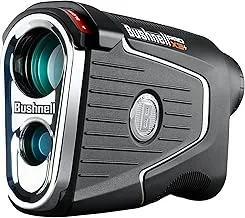
The Pro X3+ LINK is the most advanced laser rangefinder on the market in 2026.
Where most rangefinders compensate for slope alone, the X3+ factors in wind speed and direction (via the Bushnell Golf app), temperature, barometric pressure, and altitude and then gives you a single adjusted yardage.
It also connects to Foresight Sports and Bushnell launch monitors through LINK-enabled technology, feeding your personal shot data back into the rangefinder to deliver club recommendations.
The 7x magnification is the highest among standard-form rangefinders, and the dual display option lets you switch between red LED and black text depending on lighting conditions.
Bushnell built this in an IPX7-rated metal housing.
You can submerge it in a meter of water for 30 minutes, and it will keep working.
Key specs:
- 1,300-yard range
- 7x magnification
- ±1 yard accuracy
- Slope + elements (wind, temp, pressure)
- BITE magnetic cart mount
- CR2 battery
- Locking slope switch
- IPX7 waterproof metal housing
| Pros | Cons |
|---|---|
|
|
Scroll to see more features
Bushnell Tour V7 Shift
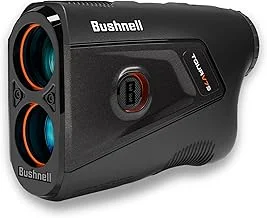
Brand new for 2026, the Tour V7 Shift replaces the Tour V6 Shift as Bushnell’s core performance rangefinder.
The headline upgrade is a dual-color OLED display: line-of-sight yardage shows in red, and slope-adjusted yardage shows in green.
No more squinting at a single number and wondering whether the slope is toggled on.
Bushnell also added a yardage range recall; press the Mode button, and it pulls up your last ranged distance.
The V7 is LINK-enabled, meaning it connects to compatible launch monitors, and Bushnell’s PinSeeker technology with JOLT vibration and flashing red ring confirmation has been refined to be faster and more consistent than in any previous generation.
Key specs:
- 1,300-yard range
- 6x magnification
- ±1 yard accuracy
- Slope with dual-color display (red = line of sight, green = adjusted)
- BITE magnetic cart mount
- CR2 battery
- IPX6 waterproof
- LINK-enabled
| Pros | Cons |
|---|---|
|
|
Scroll to see more features
Garmin Approach Z30
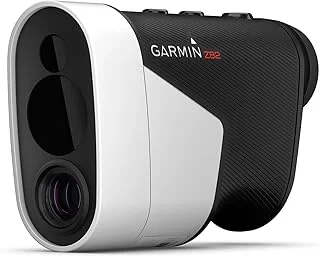
The Approach Z30 is Garmin’s current-generation laser rangefinder, and it operates differently from everything else on this list.
Yes, it fires a laser and gives you a pin distance. But the left side of the viewfinder simultaneously displays a color GPS map of the hole you are playing, showing the layout, distances to hazards, layup targets, and front/center/back green yardages.
One feature that no other rangefinder offers: a “find my” function. Forget your rangefinder on the cart? The Garmin app on your phone will locate it.
When paired with the Garmin Golf app, the Z30 also displays wind speed and direction in the viewfinder.
An active subscription unlocks green contour data. The Z30 comes preloaded with GPS data for over 41,000 courses.
Key specs:
- 450-yard range to flag
- 6x magnification
- ±1 yard accuracy
- Slope (PlaysLike Distance)
- Image stabilization
- GPS course mapping in viewfinder
- Magnetic mount
- USB-C rechargeable
- 41,000+ preloaded courses
| Pros | Cons |
|---|---|
|
|
Scroll to see more features
Bushnell Tour Hybrid
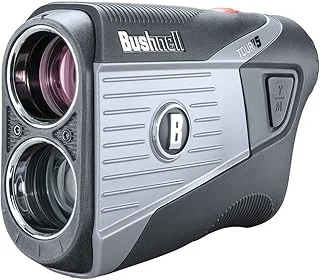
The Tour Hybrid answers the question, “What if my rangefinder also had a GPS built into it?” without requiring a phone connection.
The viewfinder uses a split-screen layout: one side shows your laser view at 6x magnification, and the other displays a 2D GPS map of the hole with front, center, and back yardages all adjusted for slope.
This is the only Bushnell that shows you three green yardages (front, middle, and back) directly in the viewfinder without needing to fire the laser separately at each target.
MyGolfSpy’s testers specifically praised the optics, and multiple reviewers noted that setup was remarkably simple for a hybrid device.
Key specs:
- 500+ yard range
- 6x magnification
- ±1 yard accuracy
- Slope
- Built-in GPS with front
- center
- back
- BITE magnetic mount,
- rechargeable
- LINK-enabled
| Pros | Cons |
|---|---|
|
|
Scroll to see more features
Nikon Coolshot Pro III Stabilized
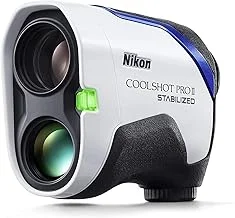
This is the rangefinder for golfers who want one thing: an accurate distance, delivered fast, through outstanding optics. No slope.
No GPS. No app. No OLED display. Just Nikon’s optical image stabilization technology keeping the viewfinder steady while you lock onto the flag.
MyGolfSpy gave it a 9.4/10, tied for third overall, and labeled it “Best Barebones.” That is not an insult. For golfers who play tournaments regularly and never want to worry about toggling slope on or off, a rangefinder that is tournament-legal by default removes one variable from the equation.
The stabilization technology is the real selling point. If you have hands that shake slightly (caffeine, cold weather, age, nerves), the Coolshot Pro III keeps the viewfinder image steady enough to lock onto a flag that a non-stabilized unit would struggle with.
Key specs:
- 1,200-yard range
- 6x magnification
- ±1 yard accuracy
- No slope
- Optical image stabilization
- No magn button, R2 battery
- Tournament legal by default
| Pros | Cons |
|---|---|
|
|
Scroll to see more features
Mid-Range Tier ($150 to $350)
This is where the decision gets harder.
The rangefinders in this tier deliver 85 to 95 percent of the performance of the premium models at 40 to 70 percent of the price.
For the majority of golfers, the best value in this entire list sits somewhere in this section.
Nikon CoolShot 50i GII
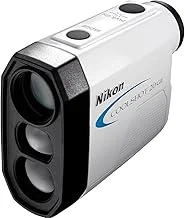
Here is a number worth paying attention to: the Coolshot 50i GII scored a perfect 40 out of 40 on accuracy in MyGolfSpy’s 2026 test.
It was the only rangefinder in the entire 27-model test pool to achieve that. Every other model, including units costing twice as much, scored 39.5 or below.
Nikon paired that accuracy with HYPER READ technology for fast distance acquisition, image stabilization, and an ID (Incline/Decline) mode that provides slope-adjusted distances.
The 50i GII is significantly less expensive than the Coolshot Pro III while actually including slope, making it the stronger value proposition for most golfers.
Key specs:
- 1,200-yard range
- 6x magnification
- ±1 yard accuracy
- Slope (ID Technology)
- Magnetic mount
- CR2 battery
- Image stabilization
| Pros | Cons |
|---|---|
|
|
Scroll to see more features
Blue Tees Captain Pro
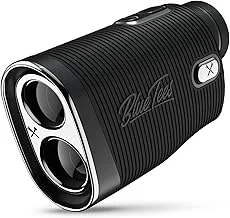
Blue Tees is making aggressive moves in the rangefinder market, and the Captain Pro is their flagship for 2026.
It combines a laser rangefinder with built-in GPS, delivering front, center, and back distances alongside your laser reading.
The OLED display runs at 7x magnification, and the entire unit carries an IP67 dust- and waterproof rating, the highest protection rating of any rangefinder on this list.
Golf Monthly highlighted the Captain Pro as part of Blue Tees’ new ecosystem that includes a watch, launch monitor, and GPS speaker. At $300, it undercuts every comparable GPS hybrid rangefinder by at least $50.
Key specs:
- 1,200-yard range
- 7x magnification OLED display
- ±1 yard accuracy
- Slope + GPS
- Magnetic mount
- USB-C rechargeable
- IP67 waterproof
- Shot tracking
| Pros | Cons |
|---|---|
|
|
Scroll to see more features
REDTIGER GolfVue Series 1

The REDTIGER GolfVue Series 1 is the only rangefinder under $100 that MyGolfSpy included in their 2026 lab test. It scored 8.6/10, lower than the recommended picks but still above several models costing significantly more.
For $70, you get 7x magnification (matching the Bushnell Pro X3+ LINK), 1,200-yard range, ±0.5 yard claimed accuracy (better than the ±1 yard spec on most competitors), a rechargeable battery, and both a magnetic cart mount and a magnetic belt clip.
Three measurement modes ballistic (slope-adjusted distance), ranging (continuous scan), and speed (for moving objects) make it versatile beyond golf.
The weak spots are where you would expect them at this price: build quality, optics clarity, and display quality.
Key specs:
- 1,200-yard range
- 7x magnification
- ±0.5 yard claimed accuracy
- Slope (external switch)
- Magnetic cart mount + magnetic belt clip
- Rechargeable (30,000 cycles)
- IP54 water-resistant
- 3 measurement modes
| Pros | Cons |
|---|---|
|
|
Scroll to see more features
Bushnell Tour V6 Shift
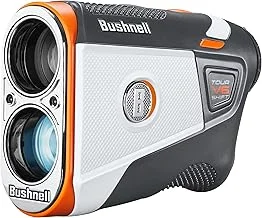
The V6 Shift was the default recommendation across the golf media for most of 2024 and 2025. The V7 now replaces it, but the V6 remains widely available on Amazon at a reduced price and nearly every feature that made it the consensus pick still applies.
PinSeeker with JOLT vibration, BITE magnetic mount, 1,300-yard range, 6x magnification, slope toggle, and IPX6 waterproofing. The V6 does not have the dual-color OLED display, yardage recall, or LINK connectivity of the V7. For golfers who do not need those specific upgrades, the V6 at $270 represents one of the strongest value plays on this entire list.
Forbes named it their top pick. Breaking Eighty called it the go-to recommendation. Golf Monthly featured it alongside the V7.
Key specs:
- 1,300-yard range
- 6x magnification
- ±1 yard accuracy
- Slope
- BITE magnetic mount
- CR2 battery
- IPX6 waterproof
- PinSeeker with JOLT vibration
| Pros | Cons |
|---|---|
|
|
Scroll to see more features
Blue Tees Series 3 Max+
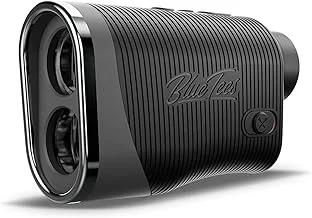
The Series 3 Max+ is the rangefinder that made Blue Tees a legitimate competitor to Bushnell in the mid-range.
At roughly $200, it offers 7x magnification (matching or exceeding every Bushnell under $500), a dual-color switchable display (black or red text depending on lighting), a rechargeable USB-C battery, and a strong built-in magnet with two magnetic plates.
Independent Golf Reviews tested the Series 3 Max+ against a Bushnell Pro X3 and found that the slope-compensated distances matched almost exactly.
That is a striking result for a rangefinder that costs less than half the price.
Key specs:
- 1,000-yard range
- 7x magnification
- ±1 yard accuracy
- Slope
- Dual magnetic plates
- USB-C rechargeable
- Switchable black
- red display color
- Water-resistant
| Pros | Cons |
|---|---|
|
|
Scroll to see more features
Value Tier (Under $150)
This tier has changed more than any other in the last three years.
A $45 rangefinder in 2026 ships with slope, a rechargeable battery, and accuracy within one yard. Five years ago, that feature set cost $300.
The question at this price point is not whether the rangefinder works. It does. The question is which trade-offs you can live with.
GoGoGo Sport ZeroIn
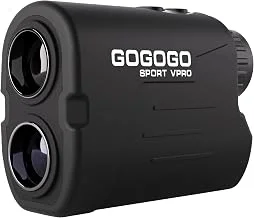
The ZeroIn is the only budget rangefinder that MyGolfSpy formally recognized in their 2026 Most Wanted awards.
It scored 9.0/10 overall, with a remarkable 39/40 on accuracy, just half a point behind the Bushnell Pro X3+ LINK and ahead of several models costing three times as much.
At $150, it costs roughly half the average price of rangefinders in the MyGolfSpy test pool. MyGolfSpy’s testers described it as simple, easy to use, and accurate enough for any golfer.
The trade-offs are in optics and display. It scored 17.5/22.5 on optics (the lowest among MyGolfSpy’s recommended picks) and 13.5/15 on display. You are getting flagship-level accuracy in a body that looks and feels less polished than the premium competition.
Key specs:
- 1,200-yard range
- 6x magnification
- ±1 yd accuracy
- Slope
- Magnetic mount
- Rechargeable battery
- Scan mode
| Pros | Cons |
|---|---|
|
|
Scroll to see more features
TecTecTec PINM8 PRO
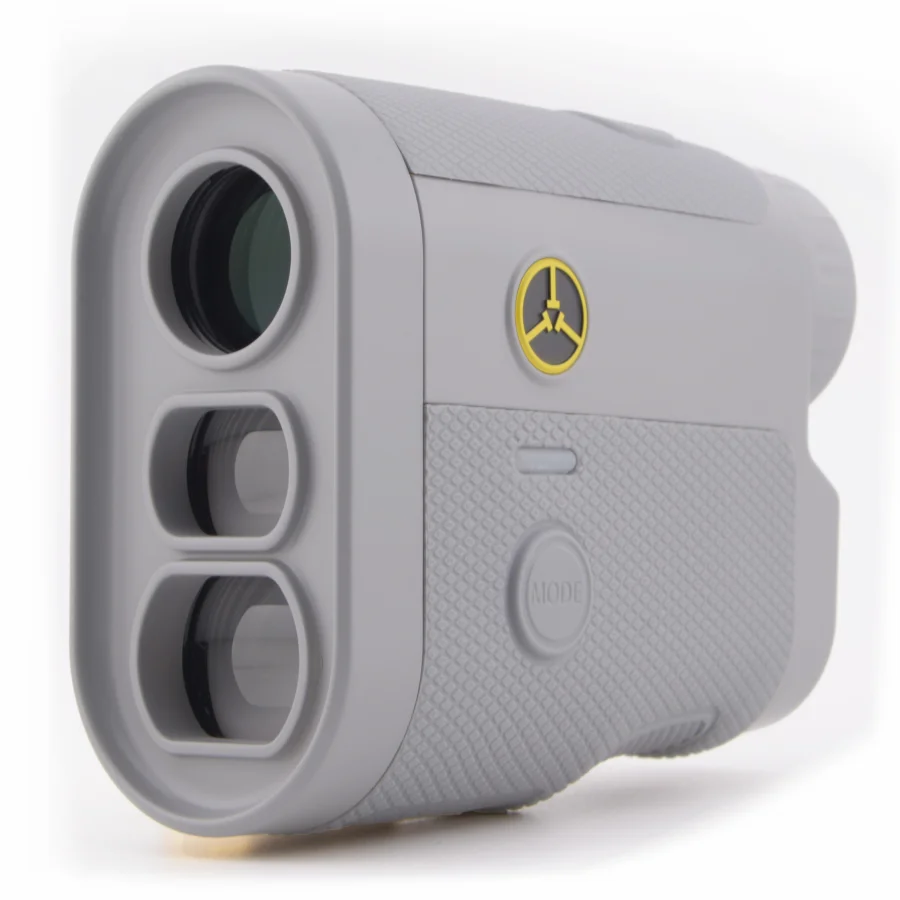
TecTecTec has been a reliable mid-budget rangefinder brand for several years, and the PINM8 PRO is their current flagship.
The red LCD display is the standout design choice; it is easier to read against bright skies and green backgrounds than the black displays on most competing models.
The PINM8 PRO runs on a rechargeable battery rated for 8,000 to 10,000 measurements per charge.
That is roughly an entire season of weekend golf before you need to plug it in. USB-C charging, built-in magnet, slope toggle, target lock with vibration feedback, and IP54 protection round out the package.
Key specs:
- 800-yard range
- 6x magnification
- ±1 yard accuracy
- Slope
- Built-in magnet
- USB-C rechargeable (8,000-10,000 measurements per charge)
- Red LCD
- IP54 rated
- Scan mode
| Pros | Cons |
|---|---|
|
|
Scroll to see more features
Callaway 300 Pro
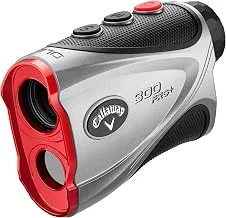
The Callaway 300 Pro has been the best-selling golf rangefinder on Amazon for years. Not the best-rated. Not the most feature-rich.
The best-selling. That sustained popularity is not an accident.
At roughly $120, the 300 Pro includes Pin Acquisition Technology (P.A.T.) with pulse vibration confirmation, MagnaHold integrated magnet, slope compensation with an external on/off switch, and 6x magnification with 1,000-yard range and ±1 yard accuracy.
These are the same core features that Bushnell charges $270 to $400 for.
The trade-off is build quality and optics. The 300 Pro feels lighter and more plastic than a Bushnell.
The viewfinder is not as crisp. But for golfers who want reliable accuracy, slope, and a magnet at the lowest reasonable price from a recognized golf brand, the 300 Pro is the standard answer.
Key specs:
- 1,000-yard range
- 6x magnification
- ±1 yard accuracy
- Slope (external on
- off switch)
- MagnaHold magnetic mount
- CR2 battery
- 0.34 lbs
- Rain- and fog-resistant
| Pros | Cons |
|---|---|
|
|
Scroll to see more features
Precision Pro NX10

The NX10 stands out for a feature no other rangefinder offers: customizable skins.
You can swap the exterior panel with designs based on American states and cities, sports teams, national flags, and other graphics.
That sounds gimmicky until you realize it means your rangefinder actually looks different from every other black rectangle in your playing group’s bags.
Beyond aesthetics, the NX10 delivers a bright, custom-designed display, strong Pulse Vibration Technology for flag lock confirmation, and lifetime free battery replacements from Precision Pro a customer service commitment that no other brand matches.
Key specs:
- 900-yard range
- 6x magnification
- ±1 yard accuracy
- Slope
- Magnetic mount
- CR2 battery
- Customizable exterior skins
- Lifetime free battery replacements
| Pros | Cons |
|---|---|
|
|
Scroll to see more features
REVASRI NK-1000
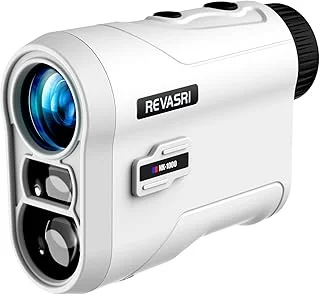
The REVASRI NK-1000 is the volume king of Amazon golf rangefinders. It moves more than 10,000 units per month, more than any other golf rangefinder on the platform.
At $45, it removes price as a reason for any golfer to not own a rangefinder.
For that money, you get 1,000-yard range, 6.5x magnification (slightly higher than standard 6x), slope compensation with tournament-legal toggle, pin lock with vibration confirmation, and a rechargeable lithium-ion battery with USB-C charging.
It weighs 0.26 pounds, the lightest rangefinder on this list.
Golfstead ranked it #2 overall across all price tiers, citing the quality of the experience relative to the price as genuinely impressive.
The catch: no magnetic mount, build quality is visibly budget, and some buyers report trouble locking onto the flag at a distance. At $45, those trade-offs are expected rather than disappointing.
Key specs:
- 1,000-yard range
- 6.5x magnification
- ±1 yard accuracy
- Slope (toggle)
- Pin lock with vibration
- USB-C rechargeable
- 0.26 lbs
- No magnetic mount
| Pros | Cons |
|---|---|
|
|
Scroll to see more features
Detailed Feature Comparison: Premium vs. Mid-Range vs. Value
| Feature | Bushnell Pro X3+ LINK (Premium) | Nikon CoolShot 50i GII (Mid-Range) | Callaway 300 Pro (Value) |
|---|---|---|---|
| Price | ~$540 | ~$250 | ~$120 |
| Range | 1,300 yards | 1,200 yards | 1,000 yards |
| Magnification | 7x | 6x | 6x |
| Accuracy | ±1 yard | ±1 yard (scored 40/40 in testing) | ±1 yard |
| Slope | Yes + wind, temp, and pressure | Yes (ID Technology) | Yes (external switch) |
| Magnet | BITE (strong) | Yes | MagnaHold (strong) |
| Battery | CR2 disposable | CR2 disposable | CR2 disposable |
| Waterproofing | IPX7 (submersible) | Water-resistant | Rain- and fog-resistant |
| Display | Dual-color LED, switchable | LCD | LCD |
| Weight | 0.75 lbs | ~0.5 lbs | 0.34 lbs |
| Tournament legal | Yes (locking switch) | Yes (switch) | Yes (external switch) |
| Launch monitor link | Yes (LINK-enabled) | No | No |
| MGS accuracy score | Tested separately | 40/40 (perfect) | Not tested |
| Best for | Low handicaps, competitive golfers | Accuracy-obsessed golfers on a budget | First rangefinder buyers, casual golfers |
Scroll to see more features
Rechargeable vs. CR2 Battery Comparison
| Battery Type | Models |
|---|---|
| USB-C Rechargeable | Garmin Approach Z30, Blue Tees Captain Pro, Blue Tees Series 3 Max+, GoGoGo Sport ZeroIn, TecTecTec PINM8 PRO, REDTIGER GolfVue Series 1, REVASRI NK-1000 |
| Rechargeable (other) | Bushnell Tour Hybrid |
| CR2 Disposable | Bushnell Pro X3+ LINK, Bushnell Tour V7 Shift, Bushnell Tour V6 Shift, Nikon Coolshot Pro III Stabilized, Nikon Coolshot 50i GII, Precision Pro NX10, Callaway 300 Pro |
Scroll to see more features
The trend is clear: USB-C rechargeable batteries have become standard on rangefinders released from 2024 onward, particularly in the budget and mid-range segments.
Premium Bushnell and Nikon models still use CR2 disposable batteries, primarily because a CR2 lasts six to twelve months of regular play longer than most rechargeable units between charges.
The advantage of rechargeable: no emergency battery runs to the pro shop. The advantage of CR2: plug-and-forget reliability across an entire season.
Frequently Asked Questions
Do I actually need a rangefinder?
Yes, if you care about scoring. Knowing your distance to within a yard turns club selection into an actual decision instead of a guess.
It starts with knowing your driver’s carry. I reviewed the best golf drivers to buy: 9 drivers from $100 to $699.
Pairing exact driver distances with a rangefinder makes every tee shot an informed decision.
Most amateurs who switch from pacing off sprinkler heads to using a rangefinder save two to four strokes per round.
At $45 for the cheapest model on this list, the cost-per-stroke improvement is hard to beat with any other equipment purchase.
Are rangefinders legal in tournament play?
Distance-measuring devices are allowed under the Rules of Golf unless a competition’s local rules specifically prohibit them.
However, devices that measure slope, wind, or recommend clubs are not legal during competition.
This is why nearly every rangefinder on this list includes a slope on/off toggle; when slope is disabled, the device measures distance only and is tournament-compliant.
If you play tournaments regularly, look for a rangefinder with a clear, easy-to-activate tournament mode.
The Bushnell Pro X3+ LINK’s locking slope switch and the Nikon Coolshot Pro III’s no-slope-at-all design are the cleanest solutions for competitive golfers.
How much should I spend on a rangefinder?
That depends on how you play.
If you play a few times a month and skip tournaments, spend $45 to $150. The REVASRI NK-1000 ($45) or Callaway 300 Pro ($120) will do everything you need.
If you play weekly and enter the occasional club event, $150 to $300 is the sweet spot.
Inside 120 yards, distance control is everything and your wedge is the tool that converts accurate yardage into a scoring opportunity. I ranked the best golf wedges for scoring as 15 wedges on the exact metrics that matter for distance control.
The Nikon Coolshot 50i GII ($250) or Blue Tees Series 3 Max+ ($200) give you the strongest accuracy-to-price ratio in the category.
If you play tournaments, track stats, and carry a single-digit handicap, spend $350 to $540. The Bushnell Tour V7 Shift ($400) or Pro X3+ LINK ($540) are the standard at that level for a reason.
What is the difference between slope and non-slope rangefinders?
Slope rangefinders use a built-in inclinometer to measure the elevation change between you and your target.
They then calculate an adjusted “plays like” distance for example, a shot that measures 150 yards uphill to an elevated green might play like 160 yards. Non-slope rangefinders give you the straight-line distance only.
Every rangefinder on this list except the Nikon Coolshot Pro III Stabilized includes slope.
The difference in price between slope and non-slope models has narrowed to the point where buying a non-slope rangefinder is only worth considering if you play exclusively in tournaments and want to eliminate any risk of accidentally using slope during competition.
Do I need a rangefinder with GPS?
For most golfers, no. A laser rangefinder alone gives you the most accurate distance to any target you can point at.
GPS adds front/center/back green distances, hole maps, hazard locations, and sometimes shot tracking but a free app on your phone can do most of this.
GPS hybrids like the Garmin Approach Z30, Bushnell Tour Hybrid, and Blue Tees Captain Pro make sense if you play unfamiliar courses frequently, want green yardages without firing the laser at three different spots, or want all your distance data in one device.
Otherwise, a standard laser rangefinder plus a free GPS app covers the same ground.
How important is magnification?
Magnification determines how clearly you can see your target through the viewfinder.
A higher magnification makes the flag appear larger and easier for the laser to lock onto. Most rangefinders offer 6x magnification. Several on this list, the Bushnell Pro X3+ LINK, Blue Tees Captain Pro, Blue Tees Series 3 Max+, and REDTIGER GolfVue, offer 7x.
In practical terms, the jump from 6x to 7x is noticeable but not transformative.
Both levels are adequate for locking onto a flag at 200 to 250 yards, which covers the vast majority of approach shots. If you play courses with tightly packed flags and busy backgrounds, 7x magnification makes acquisition slightly easier.
What does “BITE” mean on Bushnell rangefinders?
BITE is Bushnell’s name for their built-in magnetic cart mount. It refers to the integrated magnets in the rangefinder housing that allow you to attach the unit directly to a metal cart bar.
The magnets are strong enough to hold the rangefinder securely during cart movement but easy to pull off when you need it.
Other brands use similar technology but call it by different names: MagnaHold (Callaway), magnetic mount, or magnetic stripe.
Can a $45 rangefinder really be as accurate as a $540 one?
For basic distance measurement, yes to a point. The REVASRI NK-1000 at $45 claims ±1 yard accuracy, the same spec as the Bushnell Pro X3+ LINK at $540. In favorable conditions (clear line of sight, non-reflective background, and flat terrain), both will give you a usable distance.
Where the gap widens: consistency across varied conditions (wind, rain, busy backgrounds, extreme distance), slope-adjusted accuracy on steep terrain, speed of acquisition, optical clarity, build durability, and additional data like wind and barometric pressure compensation.
The $540 rangefinder earns its price through reliability when conditions are difficult, not through better numbers when conditions are easy.
How long do golf rangefinder batteries last?
CR2 batteries (used in most Bushnell, Nikon, and Callaway models) last six to twelve months of regular play, or roughly 2,000 to 5,000 distance measurements. A pack of spare CR2 batteries costs around $10 to $15.
Rechargeable models vary more widely. The TecTecTec PINM8 PRO claims 8,000 to 10,000 measurements per charge.
The REDTIGER GolfVue is rated for 30,000 charge cycles. Most USB-C rechargeable rangefinders will last three to five rounds per charge, depending on usage frequency and whether the unit has GPS features draining power simultaneously.