
I was standing over a 52-yard pitch on the 14th at Pinehurst No. 8 last October, dewy grass, tight pin, and a lie that wasn’t doing me any favors. I hit what I thought was a decent shot.
The ball landed three feet past the flag, took one hop, and rolled off the back of the green as if I’d greased it. That moment that exact moment is when I decided to tear apart every wedge test, every review, and every data set I could get my hands on.
Because a wedge that can’t hold a green in the morning dew isn’t really doing its job, no matter what the marketing copy says.
Here’s what I found after cross-referencing independent test data from MyGolfSpy (13,680 shots across 18 models), Today’s Golfer, Golf Monthly, GolfWRX, and Independent Golf Reviews: the publications don’t agree. At all.
A wedge that ranks first in one test can place middle-of-the-pack in another. And that disagreement is actually the most useful information you can get because it tells you what different testers prioritize and how a wedge performs under different conditions.
What follows is my curated list of 15 wedges, all verified as available on Amazon, drawn from the combined wisdom of multiple independent sources rather than any single lab.
That’s the approach behind every guide on USA Golf Guy: cross-referencing independent test data so you get the full picture.
I’m not claiming I hit all of these in a controlled test environment.
I’m claiming something different: I read every credible test, tracked the consensus picks, flagged the divergences, and built this list so you don’t have to do that work yourself.
All 15 Wedges at a Glance
| Rank | Wedge | Price | Best For | MGS Score* | Accuracy | Consistent | Spin | Wet Spin Retention | Buy |
|---|---|---|---|---|---|---|---|---|---|
| 1 | Mizuno Pro T-3 | $180 | Best Overall | 8.9 | 8.8 | 9.2 | 8.9 | 97.0% | Check Amazon Price |
| 2 | TaylorMade MG5 | $200 | Wet Conditions | 8.8 | 8.7 | 9.1 | 8.7 | 98.4% | Check Amazon Price |
| 3 | Titleist Vokey SM10 | $180 | Tour Pedigree | N/T 2025 | — | — | — | Strong | Check Amazon Price |
| 4 | Cleveland RTZ FF | $180 | Accuracy | 8.7 | 8.8 | 8.5 | 8.6 | 104.9% | Check Amazon Price |
| 5 | Cleveland RTZ | $170 | Wet Weather | 8.4 | 8.2 | 8.6 | 8.7 | 105.3% | Check Amazon Price |
| 6 | PING S159 | $185 | Forgiveness | 2024 Winner | — | — | — | Gains in wet | Check Amazon Price |
| 7 | Callaway OPUS SP | $180 | Feel | 8.5 | 8.5 | 8.3 | 8.6 | 84.8% | Check Amazon Price |
| 8 | Wilson Infinite | $130 | Value | 8.6 | 8.5 | 9.0 | 8.5 | 78.4% | Check Amazon Price |
| 9 | Cobra KING | $150 | Mid-Handicap | 8.3 | 8.4 | 8.3 | 8.4 | 76.3% | Check Amazon Price |
| 10 | Bettinardi HLX 6.0 | $200 | Distance Control | 8.6 | 8.5 | 9.0 | 8.4 | 77.0% | Check Amazon Price |
| 11 | PXG Sugar Daddy III | $200 | Premium Spin | 8.6 | 8.4 | 8.7 | 8.7 | 84.4% | Check Amazon Price |
| 12 | Mizuno Pro T-1 | $180 | Blade Players | 8.6 | 8.6 | 8.8 | 8.5 | 83.3% | Check Amazon Price |
| 13 | TM Hi-Toe 4 | $180 | Open-Face Shots | Not in MGS | — | — | — | Strong | Check Amazon Price |
| 14 | Callaway Jaws Raw | $170 | Aggressive Spin | Prior gen | — | — | — | Good | Check Amazon Price |
| 15 | Sub 70 JB v2 | $110 | Budget Accuracy | 8.5 | 8.8 | 8.1 | 8.3 | 69.3% | Check Amazon Price |
Scroll to see more features
What MyGolfSpy's Test Revealed
MyGolfSpy’s 2025 Most Wanted Wedge test was substantial: 240 hours, 18 models, and 13,680 shots captured on Foresight GC Quad launch monitors. They scored on accuracy (50% weighting), spin (30%), and consistency (20%).
The Mizuno Pro T-3 swept all three categories. The TaylorMade Milled Grind 5 came in second. Those are strong results.
But their test excluded Titleist Vokey SM10 and PING S159, two of the most played wedges in competitive golf. PING S159 won the 2024 test. Vokey SM10 placed third. Neither brand released a new wedge for 2025, so MyGolfSpy excluded them from the 2025 cycle.
The comment section on that article? Furious. And rightly so. If you’re shopping for the best wedge you can buy right now, omitting the two most popular options on the market creates a blind spot.
The 15 Best Golf Wedges of 2026
Mizuno Pro T-3 Best Overall

The Mizuno Pro T-3 cleaned house in MyGolfSpy’s 2025 test. Top score in accuracy, consistency, and spin a clean sweep that rarely happens across 18 competing models.
The reason? Grain Flow Forged HD construction from 1025E Pure Select mild carbon steel at Mizuno’s Hiroshima facility, combined with Quad Cut Grooves optimized by loft and Hydroflow Micro Grooves that laser-etch tiny channels to move moisture off the face.
The practical result is a wedge that holds its spin numbers when the grass is wet. In MyGolfSpy’s 50-yard wet test, the T-3 retained 97% of its dry spin, one of the best retention rates in the field.
That matters enormously for early-morning golfers and anyone playing in the Southeast during summer.
| Pros | Cons |
|---|---|
| Clean swept accuracy, consistency, and spin in the largest independent wedge test of 2025 | Shallow cavity-back design creates a slightly longer head profile; visual purists may not love it |
| 97% spin retention in wet conditions, critical for morning golfers | Not a blade-style head, so tour-style shotmakers may prefer a more traditional shape |
| Grain Flow Forged from Hiroshima, feel that Mizuno loyalists will recognize immediately | Relatively new to the market; long-term groove durability is unproven against the Vokey or PING over thousands of rounds |
| $180 price undercuts most premium competitors | |
| Multiple loft/bounce/grind configurations available |
Scroll to see more features
TaylorMade Milled Grind | Best for Wet Conditions
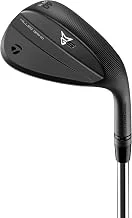
The MG5 finished second overall in MyGolfSpy’s test and earned the highest tester rating for sound, feel, looks, and likelihood of purchase.
That last metric is telling the people who actually hit these wedges in testing wanted to buy them afterward.
The standout feature is wet performance. In the 50-yard wet test, the MG5 retained 98.4% of its dry spin. Only the Cleveland RTZ models (which actually gained spin in wet conditions, more on that below) outperformed it.
TaylorMade’s Spin Tread Technology micro-channels milled into the face that redirect water appear to genuinely work based on the data.
The RAW face finish will rust over time. Whether that bothers you is a personal preference. Some golfers love the patina. Others hate it.
| Pros | Cons |
|---|---|
| Second-best overall score in a 13,680-shot independent test | RAW face finish rusts over time; aesthetic, not performance, concern |
| 98.4% spin retention in wet near the top of the field | $200 price point is $20 more than the category winner (Mizuno T-3) |
| Rated best for sound and feel by testers who actually hit it | Firmish feel compared to forged Japanese wedges: a preference issue |
| Six precision-milled grind options for different swing types and conditions | |
| Available in chrome and black finishes |
Scroll to see more features
Titleist Vokey SM10 Best Tour Pedigree

The Vokey SM10 was not included in MyGolfSpy’s 2025 test because Titleist didn’t release a new wedge model that cycle. But the SM10 placed third overall in the 2024 test and remains the most played wedge model on the PGA Tour.
Ignoring it because it didn’t appear in one year’s test would be doing you a disservice.
The SM10’s strength is its grind library. Bob Vokey and Aaron Dill offer six grinds (F, S, M, D, K, L) across a full spread of lofts and bounces.
No other manufacturer matches this level of sole customization at the off-the-rack price point. For players who know their attack angle and turf conditions, the grind options let you essentially build a semi-custom wedge without paying custom prices.
| Pros | Cons |
|---|---|
| Most-played wedge on the PGA Tour; undeniable validation at the highest level | Cast 8620 carbon steel, not forged; the feel debate will rage forever |
| Six grinds covering every attack angle and turf condition | Not independently tested in the 2025 cycle, so direct comparison data to 2025 models is limited |
| Excellent greenside spin consistency across dry and wet conditions | Premium pricing without meaningful differentiation from the SM9 in raw performance |
| Massive review count on Amazon from years of loyal users | |
| Improved wet-condition spin retention over previous SM9 generation |
Scroll to see more features
Cleveland RTZ Full-Face Best for Accuracy

Cleveland’s RTZ Full-Face tied for the best accuracy score (8.8) in MyGolfSpy’s test, matching the Mizuno Pro T-3.
The full-face groove design gives you spin on shots hit across the entire face, including open-face cuts from greenside bunkers.
That’s where the full-face design earns its keep: shots played from awkward lies and tight spots where center-face contact isn’t guaranteed.
But the real story is the wet data. The Cleveland RTZ (both the standard and full-face versions) actually gained spin in wet conditions, with 105.3% and 104.9% retention, respectively. That’s not a typo.
The Cleveland wedges produced more spin with water on the face than without. No other wedge in the test came close.
| Pros | Cons |
|---|---|
| Tied for best accuracy score in 18-model independent test | Full-face aesthetics are polarizing; many golfers dislike the look at address |
| 104.9% spin retention in wet literally gained spin with water on the face | Slightly below average in consistency scoring (8.5 vs. the field's best at 9.2) |
| Full-face grooves provide spin on off-center and open-face shots | The head profile is different from a traditional wedge and takes time to adjust visually |
| Excellent for bunker play and creative greenside shotmaking | |
| The $180 price matches the Mizuno and Vokey |
Scroll to see more features
Cleveland RTZ (Standard) Best Wet-Weather Wedge

If you want the Cleveland wet-weather magic without the full-face design, the standard RTZ delivers the same 105.3% spin retention in wet conditions as the best in the test in a more traditional head shape.
Cleveland’s groove technology has consistently excelled in moisture testing year after year, and the RTZ is the latest proof point.
The tradeoff: the standard RTZ’s overall score (8.4) placed it 12th out of 18 models in the MyGolfSpy test.
Its dry accuracy and consistency numbers were middle-of-the-pack.
This is a wedge that separates itself in adverse conditions but doesn’t dominate on a perfect, dry range day.
| Pros | Cons |
|---|---|
| Best spin retention in wet conditions of any wedge tested: 105.3% | 12th place overall (8.4 score), not a top performer in dry conditions |
| Traditional head shape for golfers who dislike full-face designs | Dry accuracy and consistency numbers are average |
| Cleveland's multi-year track record of wet-weather performance is unmatched | For golfers who rarely play in wet conditions, the wet-weather advantage is wasted |
| Slightly less expensive than the Full Face at ~$170 | |
| Multiple finish options available on Amazon |
Scroll to see more features
PING S159 Best for Forgiveness

PING’s S159 won MyGolfSpy’s 2024 Most Wanted Wedge test. Like the Vokey, it was excluded from the 2025 cycle because PING didn’t release a new model.
But the S159 remains PING’s current offering and still delivers performance that the 2024 data validated.
PING wedges have a decades-long reputation for wet-condition spin that borders on absurd. In every MyGolfSpy test that’s included a PING wedge, the spin in wet conditions has exceeded the spin in dry conditions.
The S159 continued that tradition. If you play early morning rounds with heavy dew, or live somewhere that gets rain during golf season (so, basically anywhere east of Arizona), a PING wedge is a genuinely data-backed choice.
The S159 also offers an Eye2-inspired sole design that provides forgiveness on heavy and thin contact, something most blade-style wedges can’t match.
| Pros | Cons |
|---|---|
| Won the 2024 Most Wanted Wedge test, the most recent test it was included in | Not tested in the 2025 cycle; direct comparison to the newest models requires inference |
| PING's legendary wet-condition spin performance consistently gains spin when moisture is present | PING's head shapes tend to run slightly larger than Vokey or Mizuno's visual preference |
| Eye2-inspired sole provides forgiveness on heavy and thin strikes | The ~$185 price point is competitive but not a bargain |
| Precision-milled face and grooves with hydropearl chrome finish | |
| Multiple sole grinds available (S, W, Eye2) |
Scroll to see more features
Callaway OPUS SP Best Feel from a Major OEM

The Callaway OPUS SP placed 10th overall in MyGolfSpy’s test (8.5 score) but excelled in spin (8.6) and held its own in accuracy (8.5).
What stood out to me from cross-referencing other reviews is the consensus on feel.
Golf Monthly and GolfWRX reviewers consistently praised the OPUS SP’s feedback on impact as a soft, buttery sensation that Callaway achieved through their forging process.
In wet conditions, the OPUS SP retained 84.8% of its dry spin. That puts it in the middle tier, decent but not Cleveland or Mizuno territory.
| Pros | Cons |
|---|---|
| Exceptional feel at impact, frequently cited as one of the best-feeling wedges in the category | 10th overall in the 18-model test; not a top-5 performer on aggregate data |
| Strong spin performance (8.6 in MyGolfSpy's scoring) | 84.8% wet spin retention is middle-of-the-pack |
| Callaway's groove design delivers consistent greenside bite | Available only through Callaway's own channel initially; Amazon availability may lag on newest finishes |
| Multiple sole grind options for different playing styles | |
| Well-stocked on Amazon with good availability |
Scroll to see more features
Wilson Infinite Best Value
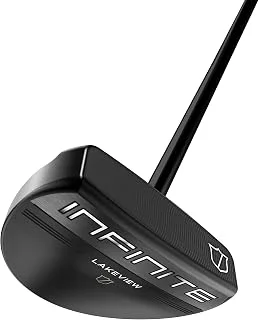
The Wilson Infinite was MyGolfSpy’s pick for best value at $129.99, and the data backs it up.
It scored 8.6 overall, tying for 5th place alongside the Mizuno Pro T-1, Bettinardi HLX 6.0, and PXG Sugar Daddy III. At $50 less than those competitors, the performance-per-dollar ratio is the best in the field.
The Infinite posted the highest full-swing spin in the entire test (9,905 RPM average) and ranked third in consistency (9.0).
Where it fell short was in wet conditions: 78.4% spin retention, which is below average.
If you play mostly in dry conditions and want a wedge that punches well above its price, the Wilson Infinite is a no-brainer.
| Pros | Cons |
|---|---|
| Tied for 5th overall at $50 less than the competition | 78.4% wet spin retention is below average, not ideal for wet-condition players |
| Highest full-swing spin average in the entire 18-model test (9,905 RPM) | Wilson doesn't carry the same brand cachet as Titleist, Mizuno, or Cleveland in the wedge category |
| Third-best consistency score (9.0) with outstanding distance control | Fewer grind options than Vokey or PING; less customization |
| The $130 price point makes it accessible to budget-conscious golfers | |
| Solid build quality from a brand with a long wedge history |
Scroll to see more features
Cobra KING Wedge Best for Mid-Handicappers

The Cobra KING scored 8.3 overall in MyGolfSpy’s test with notably consistent accuracy (8.4) and spin (8.4).
What I like about the Cobra KING for mid-handicappers is the combination of forgiveness in the sole design and a visual profile that doesn’t look oversized at address.
It’s a wedge that accommodates the occasional fat contact without penalizing you the way a blade would.
Cobra doesn’t get enough credit in the wedge market. They price below the competition ($150 vs. $180+) and deliver performance that’s genuinely competitive with more expensive options.
| Pros | Cons |
|---|---|
| Competitive performance at ~$150, significantly underpriced vs. premium competitors | 76.3% wet spin retention below average for moisture conditions |
| Forgiving sole design suits mid-handicappers who occasionally hit it heavy | Overall 14th place in the 18-model test; not top-tier on pure data |
| Clean look at address doesn't scream "game improvement" | Brand perception in the wedge category lags behind Titleist, Cleveland, and Mizuno |
| Multiple loft and bounce options available on Amazon | |
| Cobra's quality control has improved markedly in recent generations |
Scroll to see more features
Bettinardi HLX 6.0 Best for Distance Control

Bettinardi is known for putters, but their wedge program is underappreciated.
The HLX 6.0 scored 8.6 overall in MyGolfSpy’s test, with the second-best consistency score in the field (8.9, behind only the Mizuno T-3’s 9.2).
For golfers whose primary wedge concern is dialing in yardages, knowing that your 50-yard shot actually goes 50 yards, the HLX 6.0’s distance control numbers are compelling.
| Pros | Cons |
|---|---|
| Second-best consistency score in the test (8.9); exceptional distance control | 77% wet spin retention below average |
| 8.6 overall score, ties for 5th place | The $200 price point is at the top of the range for what it delivers |
| Bettinardi's forging quality translates from putters to wedges into excellent craftsmanship | Limited brand awareness in the wedge category; not a household name |
| Clean, traditional head profile | |
| Available on Amazon in multiple configurations |
Scroll to see more features
PXG Sugar Daddy III BP Grind Best Spin at Premium Price

PXG’s Sugar Daddy III scored 8.6 overall with the best spin score in the non-podium group (8.7).
In wet conditions, it retained 84.4% of its dry spin, acceptable but not exceptional.
The BP (Bob Parsons) grind provides a versatile sole that works on multiple turf conditions.
| Pros | Cons |
|---|---|
| Strong spin numbers (8.7) across conditions | 84.4% wet spin retention is mid-pack |
| Tied for 5th overall in the 18-model test | PXG's brand premium means you're paying partly for the name |
| Versatile BP grind works across turf types | Availability on Amazon can be inconsistent; check the listing carefully |
| PXG's direct pricing model is more accessible than it used to be |
Scroll to see more features
Mizuno Pro T-1 Best Traditional Blade Wedge

If you prefer the T-3’s performance pedigree in a more traditional blade shape, the Mizuno Pro T-1 is the answer.
It scored 8.6 overall, tied for 5th with solid consistency (8.8) and accuracy (8.6).
The T-1 uses the same Grain Flow Forged HD construction and Hydroflow Micro Grooves as the T-3 but in a compact, tour-style head.
| Pros | Cons |
|---|---|
| Same Hiroshima forging and groove tech as the category-winning T-3 | Less forgiving than the T-3's shallow cavity design |
| Traditional blade profile preferred by low-handicap and tour-style players | Not a clean-sweep winner like its sibling; slightly lower scores across the board |
| 83.3% wet spin retention acceptable | Blade profile is less forgiving for mid-to-high handicappers |
| Identical $180 price point as the T-3 |
Scroll to see more features
TaylorMade Hi-Toe 4 Best for Open-Face Shots

The Hi-Toe 4 wasn’t in MyGolfSpy’s 2025 test, but it appears consistently in Golf Monthly’s, Today’s Golfer’s, and GolfWRX’s recommended lists.
The full-face scoring area is designed specifically for open-face shots around the green, flop shots, bunker escapes, and tight-lie chips where you need the entire face to generate spin.
Cross-source consensus: the Hi-Toe 4 is one of the best specialty wedges for creative short-game players. It’s not a do-everything wedge, but for a 58- or 60-degree lob wedge, it’s hard to beat.
| Pros | Cons |
|---|---|
| Full-face grooves across the entire scoring area, purpose-built for open-face play | Not included in MyGolfSpy's 2025 lab test; no controlled data comparison |
| Consistently recommended by Golf Monthly, Today's Golfer, and GolfWRX | Full-face design is polarizing aesthetically |
| Copper-infused raw face generates excellent spin | Best suited as a lob/sand wedge; less ideal as a gap wedge |
| Multiple bounce options for different techniques | |
| Strong Amazon availability and review count |
Scroll to see more features
Callaway Jaws Raw Best Aggressive Spin
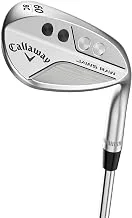
The Jaws Raw uses an aggressive groove pattern and a raw (unplated) face that promotes maximum friction.
The raw face rusts over time, which Callaway claims actually improves spin. Across reviews from multiple publications, the Jaws Raw consistently appears in “best for spin” categories.
This is the previous-generation Callaway wedge, which means it’s often available at a discount compared to the newer OPUS SP.
If you want an aggressive spin on a budget, the Jaws Raw at its current discounted price is one of the best deals in wedges.
| Pros | Cons |
|---|---|
| Aggressive groove geometry and raw face designed for maximum spin | Previous generation, not the latest Callaway technology |
| Previous-generation pricing means deals are frequently available | Raw face rusts, which some golfers dislike aesthetically |
| Multiple sole grinds (S, W, Z, X) for different conditions | Groove wear over time is a consideration with aggressive groove patterns |
| Strong Amazon review count from years of market presence | |
| Raw face patina develops character over time |
Scroll to see more features
Sub 70 JB v2 Best Direct-to-Consumer
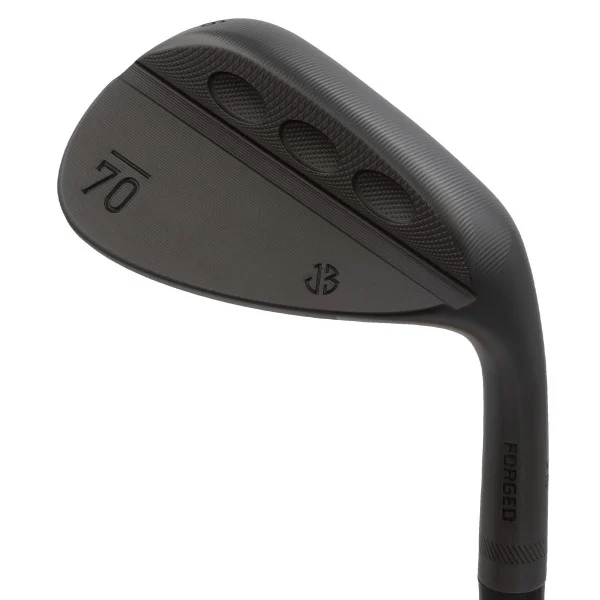
Sub 70 is a DTC brand that also sells on Amazon, giving you the best of both worlds.
The JB v2 scored 8.5 overall in MyGolfSpy’s test, tying for 9th place with the second-best accuracy score in the field (8.8, tied with the Mizuno T-3 and Cleveland RTZ Full-Face). For $110, that accuracy result is remarkable.
The catch: consistency (8.1) and spin retention (69.3% wet) were among the weakest in the test.
This is a wedge that performs on dry range days but struggles when moisture enters the equation.
| Pros | Cons |
|---|---|
| Tied for best accuracy in the 18-model test (8.8) at $110 | 69.3% wet spin retention, second-worst in the test |
| DTC pricing is $60-70 less than premium competitors | Below-average consistency (8.1); distance control is a weakness |
| Available on Amazon, rare for a DTC brand | Less established brand; resale value and long-term support are unknowns |
| Excellent value proposition for budget-conscious players |
Scroll to see more features
How to Choose the Right Wedge for Your Game
Bounce and Grind Selection
This is the factor most golfers ignore and the one that matters the most.
Turf interaction runs both ways; your shoe traction on wet slopes matters as much as your wedge bounce on soft turf. I ranked the best golf shoes: 15 golf shoes on comfort, traction, and waterproofing.
Bounce is the angle between the leading edge and the lowest point of the sole.
Higher bounce (12-14 degrees) helps in soft conditions and bunkers. Lower bounce (6-8 degrees) suits firmer conditions and shallow attack angles.
If you play courses with soft, lush fairways and fluffy sand, lean toward higher bounce. If your home course has firm, tight lies, lower bounce will keep the leading edge from bouncing into the ball.
The Loft Gapping Question
Your wedge setup should fill the gap between your shortest iron and the shots you need around the green.
A common modern setup: pitching wedge (43-46 degrees), gap wedge (50-52 degrees), sand wedge (54-56 degrees), and lob wedge (58-60 degrees).
Keep 4-6 degrees between each wedge for consistent yardage gaps.
Once you’re on the green, the putter finishes the job. I tested the best golf putters across blade, mallet, and zero-torque designs to find the best option for every stroke type.
Wet Condition Performance
If you play early mornings, in the Southeast, in the Pacific Northwest, or anywhere rain is frequent, wet spin retention should rank high in your buying criteria.
If wet conditions matter enough to influence your wedge choice, your rain gear setup should match. I reviewed the best golf rain gear: 15 rain gear pieces from $70 pants to $400 GORE-TEX jackets.
The data is clear: Cleveland and PING consistently outperform the field in wet conditions. Mizuno and TaylorMade are close behind.
Several other brands lose 20-30% of their spin when moisture is present.
Feel vs. Data
Some golfers buy purely on feel. Others trust the numbers. The truth is somewhere in between.
A wedge that feels terrible in your hands won’t produce your best results regardless of what a launch monitor says.
If possible, hit before you buy. If that’s not an option, Amazon’s return policy gives you a safety net that brand-direct purchases often don’t.
Frequently Asked Questions
How often should I replace my wedges?
Most manufacturers and fitting experts recommend replacing wedges every 60-75 rounds, or roughly once per year for regular players.
Grooves wear down with use, and worn grooves produce less spin. If you notice your wedge shots aren’t checking up the way they used to, it’s probably time.
Do expensive wedges perform better than budget options?
Not necessarily. The Wilson Infinite at $130 tied for 5th place overall in MyGolfSpy’s 18-model test, outperforming several $180+ wedges.
The Sub 70 JB v2 at $110 tied for the best accuracy score. Price correlates with materials and brand, not always with measurable performance.
Should I get a wedge fitting?
Absolutely. Wedge fittings are underrated because most golfers only think about fitting for drivers and irons.
A proper wedge fitting evaluates your launch angle (ideally half the loft, so 28 degrees for a 56-degree wedge), spin rates, and the bounce/grind that matches your turf interaction.
MyGolfSpy’s testing director echoed this: “Wedge fittings are important. It cannot be stressed enough.”
Does the RAW/unplated finish actually improve spin?
The data from MyGolfSpy’s test suggests that raw finishes don’t measurably impact spin performance.
The TaylorMade MG5’s raw face and the Cleveland’s coated face both excelled in spin. The raw finish is primarily an aesthetic choice.
Some brands claim the micro-roughness of oxidized steel adds friction, but controlled testing hasn’t conclusively proved this.
Are full-face wedges worth it?
If you frequently play open-face shots, bunker shots, and creative short-game shots where contact occurs across the entire face, yes.
The Cleveland RTZ Full-Face tied for the best accuracy score in the test, and its wet performance is category-leading.
If you mostly use wedges for standard full-swing and pitch shots, a traditional design will serve you equally well.
What’s the difference between a gap wedge, sand wedge, and lob wedge?
Gap wedge: 50-52 degrees, fills the “gap” between your pitching wedge and sand wedge.
Sand wedge: 54-56 degrees, designed for bunker play and medium-distance pitches.
Lob wedge: 58-60 degrees, for high, soft shots that need to stop quickly. Most players carry two or three of these depending on their set makeup.
Which grind should I choose?
Standard/medium grind: works for most conditions and swing types. Low bounce grind: firmer conditions, shallower attack angles.
High bounce grind: softer conditions, steeper attack angles, and fluffy bunker sand. Wide sole: maximum forgiveness for inconsistent contact.
The Vokey SM10’s six-grind library and PING’s three-grind system offer the most options.
Can I buy wedges on Amazon with confidence?
Yes. Every wedge on this list is sold by authorized retailers on Amazon with manufacturer warranty coverage.
Amazon’s return policy also protects you if a wedge doesn’t feel right.
Check the seller to confirm it’s either the brand’s official Amazon store or an authorized retailer.
Why did MyGolfSpy exclude Vokey and PING from the 2025 test?
MyGolfSpy only tests new models released in the current testing cycle.
Since neither Titleist nor PING released a new wedge for 2025, they were excluded.
This is standard practice for their methodology but creates a significant blind spot for consumers who are shopping across all currently available wedges, which is why I include both on this list.
What’s the single best wedge for a golfer who only buys one?
If you’re buying one wedge, make it a 56-degree sand wedge with moderate bounce (10-12 degrees).
The Mizuno Pro T-3 in a 56/10 configuration is the data-backed answer from the largest independent test.
If budget is a concern, the Wilson Infinite in the same spec delivers 90% of the performance for 70% of the price.