

I nearly quit walking the course two summers ago. By the 14th hole, my heel felt like someone had driven a nail through it.
That dull ache started around hole five, turned into a sharp stab by the back nine, and stuck with me for two days after.
My doctor told me it was plantar fasciitis, inflammation of the thick band of tissue running from my heel to my toes. And he told me my golf shoes were making it worse.
It’s also a common problem: about one in 10 people will deal with it at some point in their lives.
That diagnosis sent me down a rabbit hole. I talked to a podiatrist who plays golf himself, read through clinical guidelines on arch support, and cross-referenced what Golf Monthly, MyGolfSpy forum users, and foot health specialists recommend.
What I found surprised me: the priciest shoe on the wall was not the best shoe for this condition, and the features that actually matter are buried below the ones golf brands splash across their marketing.
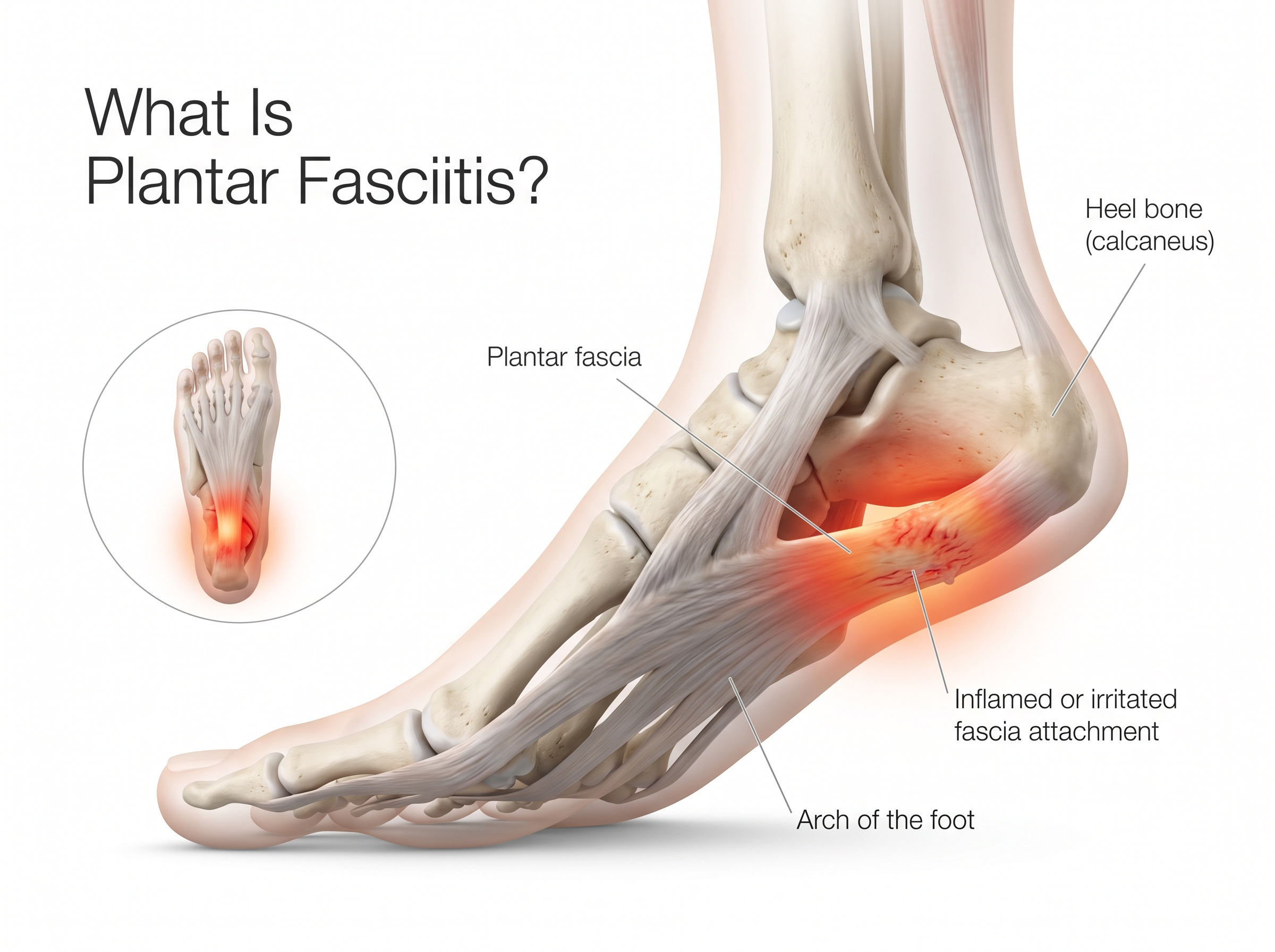
What Is Plantar Fasciitis?
(For Illustrative Purposes Only)
Plantar fasciitis is irritation of the thick band of tissue that runs along the bottom of your foot from your heel to your toes.
It is one of the most common causes of heel pain, and the classic sign is a sharp, stabbing ache in the heel, especially with your first steps in the morning.
It is most common between ages 40 and 60, and long hours on your feet, extra body weight, and worn-out shoes all raise the risk.
Symptoms
Plantar fasciitis typically causes a sharp, stabbing pain in the bottom of your foot near the heel.
The pain is often the worst with your first few steps in the morning, although it can also be triggered by long periods of standing or when you get up from sitting.
Causes
The plantar fascia is a thick band of tissue that connects your heel bone to the base of your toes. It helps support the arch of the foot and absorbs shock when you walk.
Too much tension or stress on the fascia can cause tiny tears in the tissue. Repeated stretching and tearing may lead to irritation or inflammation
Why Golf Makes Plantar Fasciitis Worse
Most articles skip this part entirely. But golf loads your plantar fascia in a way that running and walking never do.
When you swing a golf club, your lead foot absorbs a rotational force that twists through the arch.
That torque pulls on an already inflamed fascia in a direction it was not designed to handle.
Add four to five hours of walking on uneven terrain slopes, wet turf, and bunker lips, and you get repetitive microtrauma that never gets a chance to settle.
Carrying a loaded bag on top of all that only adds to the strain, which is why I moved to a push cart. My guide to the best golf push carts covers the ones that take the bag weight off your feet without slowing your round.
| Activity | Estimated steps | Plantar fascia stress type |
|---|---|---|
| Walking 18 holes (riding cart) | 5,000 – 7,000 | Repetitive compression |
| Walking 18 holes (no cart) | 9,000 – 12,000 | Sustained compression + fatigue |
| Full golf swing (lead foot) | 60 – 90 swings | Rotational shear + lateral torque |
| Short game shots | 30 – 50 shots | Abrupt weight transfer |
| Standing and waiting | 45 – 90 minutes total | Static load on inflamed tissue |
Scroll to see more features
What I Look for in a Golf Shoe for Plantar Fasciitis
A “comfortable” golf shoe does not automatically help plantar fasciitis. Soft and supportive are two different jobs.
If you’re still sorting out your everyday pair before narrowing down to PF-specific options, my breakdown of the best golf shoes of 2026 covers the 15 pairs I’d actually put on my feet.
A shoe can feel plush under your foot and still let your arch collapse with every step.
After talking to a podiatrist and testing multiple shoes across dozens of rounds, I evaluate plantar fasciitis golf shoes on six specific features:
Arch support: Choose a footbed that supports your arch without creating pressure.
Heel cushioning: Comfortable cushioning may help reduce discomfort while walking.
Stability: A secure base helps you maintain balance during your golf swing.
Proper fit: Make sure your toes have enough room, and your heel stays secure.
Good traction: Choose an outsole suitable for your course conditions.
Orthotic compatibility: Check whether the shoe accommodates your preferred insoles.
| Activity | Estimated steps | Plantar fascia stress type |
|---|---|---|
| Walking 18 holes (riding cart) | 5,000 – 7,000 | Repetitive compression |
| Walking 18 holes (no cart) | 9,000 – 12,000 | Sustained compression + fatigue |
| Full golf swing (lead foot) | 60 – 90 swings | Rotational shear + lateral torque |
| Short game shots | 30 – 50 shots | Abrupt weight transfer |
| Standing and waiting | 45 – 90 minutes total | Static load on inflamed tissue |
Scroll to see more features
How to Choose Golf Shoes for Walking 18 Holes
(For Illustrative Purposes Only)
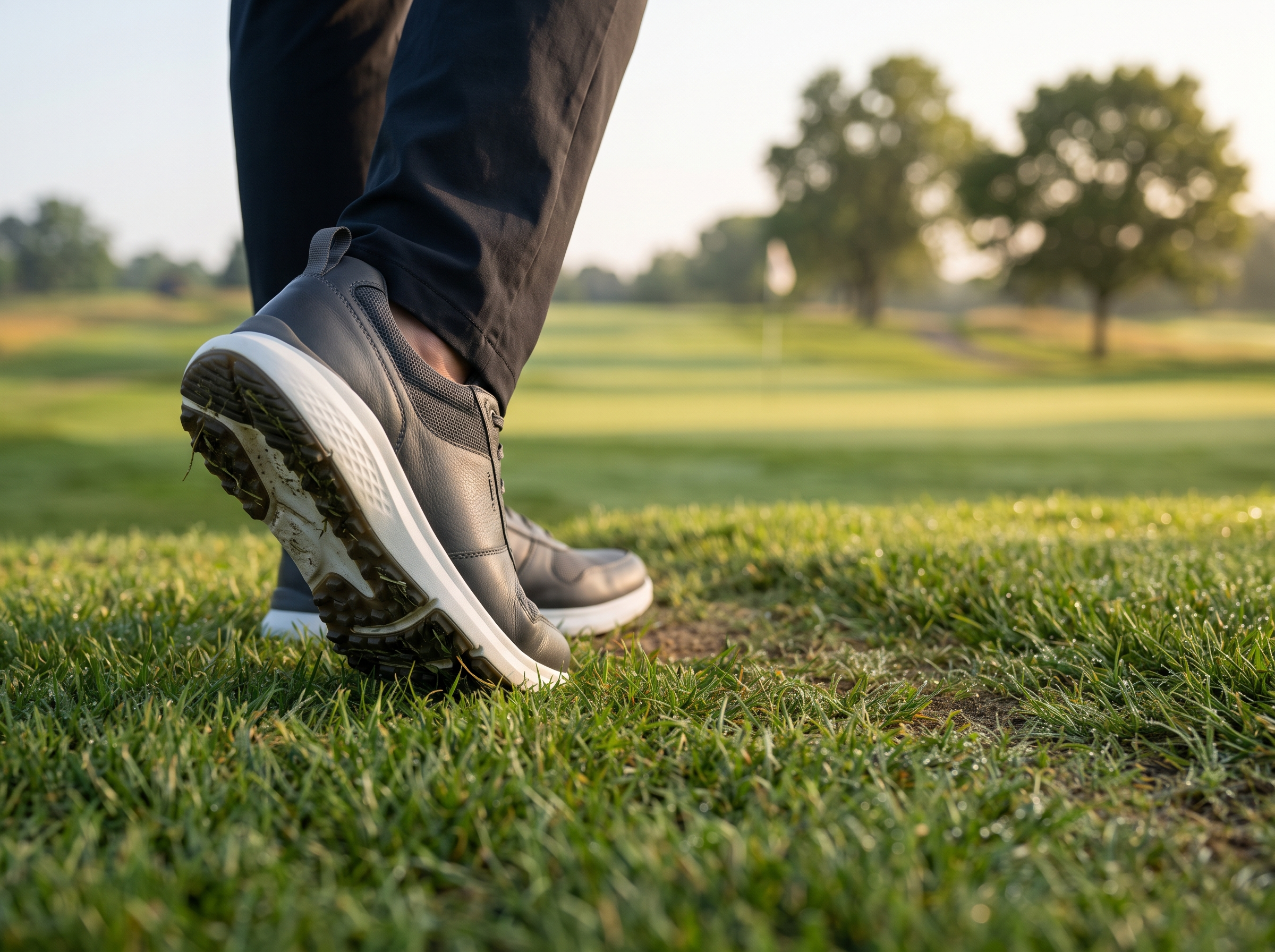
Walking 18 holes can put repeated stress on your feet. If you have plantar fasciitis, comfortable footwear and sensible activity adjustments can help you manage your time on the course.
Here is what I recommend:
Prioritise all-day comfort: Try shoes on with your usual golf socks and walk around to check for pressure points.
Choose suitable traction: Consider whether you regularly play on wet grass, hills, or uneven terrain.
Check the fit: Your heel should feel secure, and your toes should have enough room.
Adjust your walking distance: If walking aggravates your symptoms, consider a shorter round or golf cart where appropriate.
Monitor your symptoms: Avoid pushing through worsening pain, particularly if it affects your ability to walk normally.
Remember that golf shoes cannot guarantee pain-free rounds. If your symptoms persist or worsen, seek advice from a healthcare professional.
Weight vs. support
(For Illustrative Purposes Only)
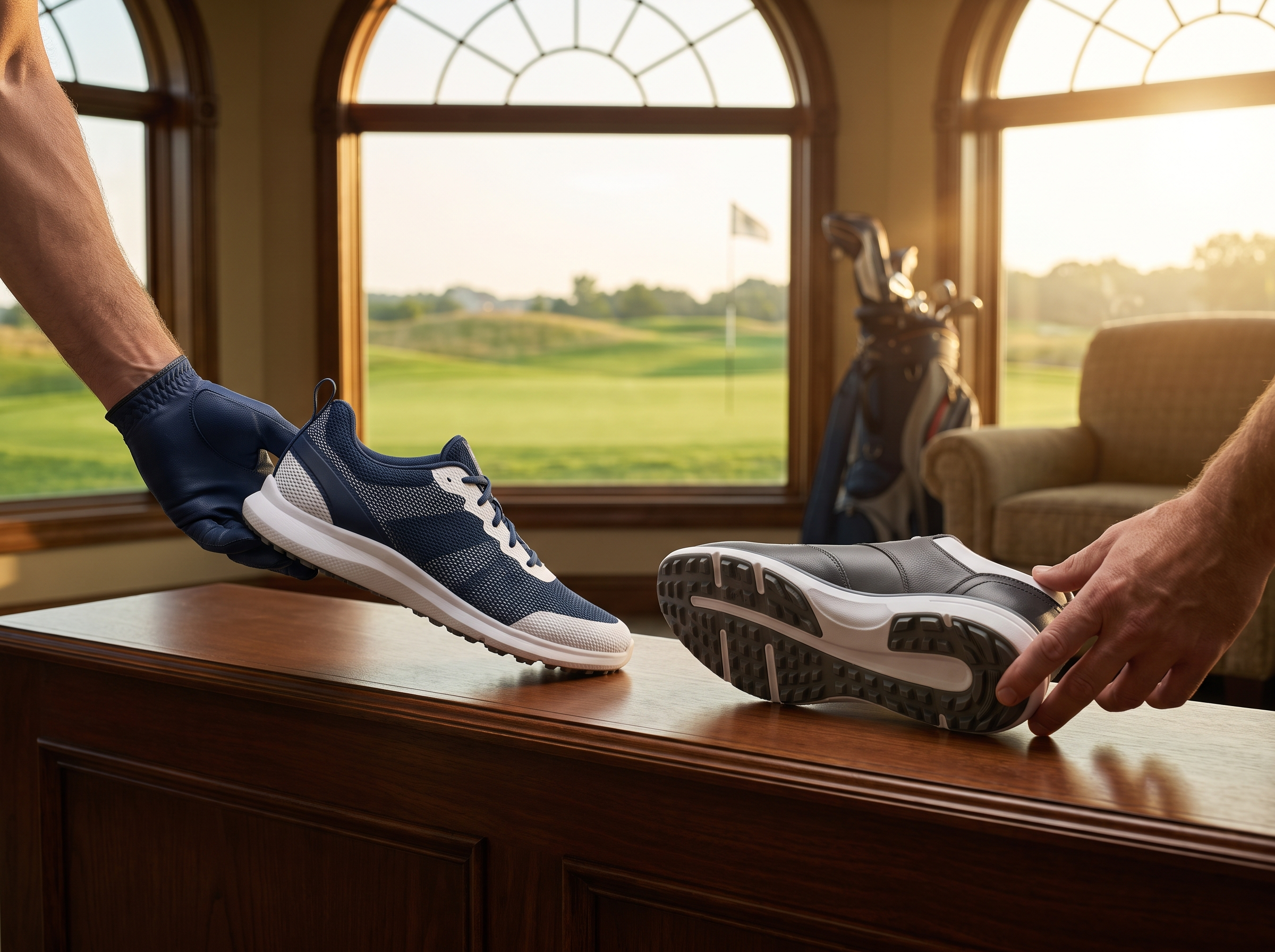
Reviewers disagree here. Some say go lightweight to cut fatigue. Others say a slightly heavier, more structured shoe supports the foot better through the swing.
I put heel lockdown and arch contour first, since that’s what keeps the fascia from absorbing every small shift.
Lightness is a bonus if you walk a lot, which is why the FJ Fuel makes my list.
The 9 Best Golf Shoes for Plantar Fasciitis
FootJoy Pro/SL Best Overall for Plantar Fasciitis
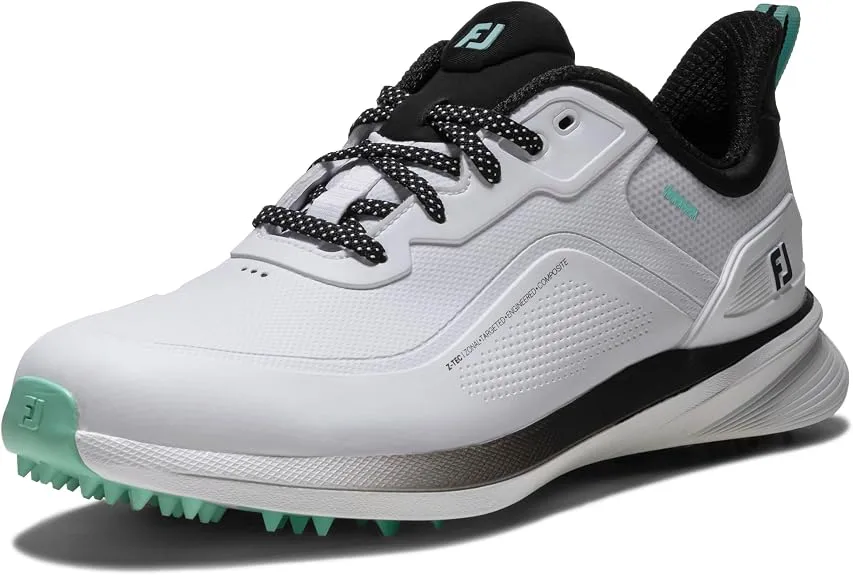
The FootJoy Pro/SL is the shoe I recommend first because it gets the two hardest things right: genuine arch support and rotational stability during the swing.
The StratoFoam heel crash pad absorbs impact on every step, and the OrthoLite X25 FitBed insole provides contoured cushioning that follows the shape of your arch instead of just sitting flat underneath it.
The reason the Pro/SL works so well for plantar fasciitis is the Laser Plus Last. FootJoy built this last with a rounded toe, a standard midfoot fit, and a slightly narrower heel, which means your heel stays locked in place instead of sliding around inside the shoe.
That heel lockdown matters. More than cushioning for PF because every time your heel shifts, your fascia absorbs the correction.
The insole is fully removable, so you can swap in a custom orthotic without cramming your foot into a shoe that suddenly feels too tight.
And the Infinity Outsole with TPU inserts gives enough torsional rigidity to handle swing forces without making the shoe feel like a boot.
A podiatrist who treats golfers in Michigan named the Pro/SL as his top recommendation for plantar fasciitis patients.
Toby’s Reading
- Choose it: if you want one shoe that handles arch support, heel lockdown, and swing stability together
- Best for PF severity: Mild to moderate on its own; moderate to severe when paired with a custom orthotic
- Walking or riding: Strong choice for walking 18 holes
- Course type: Good on most courses, including hill lies
- Budget: Premium ($150 to $185)
- Orthotic-friendly: Yes, the insole is fully removable
- Width options: Medium, Wide, Extra Wide
- Sizing tip: Half a size up is a good starting point if your feet swell during rounds
- Skip it: if you want the cheapest option or a more stylish look
- Toby’s verdict: The safest first pick for most golfers with PF
| Pros | Cons |
|---|---|
| OrthoLite X25 insole with real arch contour | Not the most stylish design; some call it a “bowling shoe” look. |
| A deep heel cup keeps the foot locked in place | Premium price point at $185 for the latest version |
| Available in Medium, Wide, and Extra Wide | Slightly taller feel underfoot compared to thinner shoes |
| 2-year waterproof warranty | Color options are limited in Wide and Extra Wide |
| Removable insole for custom orthotic use |
Scroll to see more features
Skechers GO GOLF Arch Fit Set Up
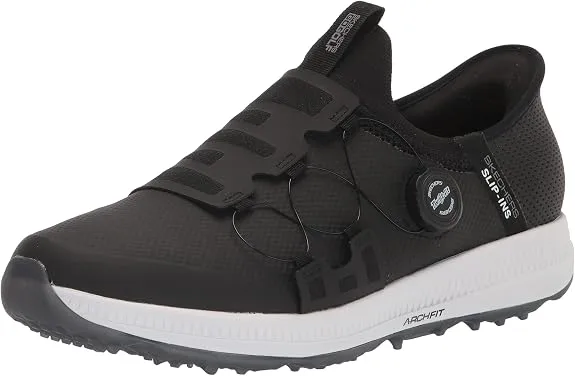
This is the shoe I point people toward when they need podiatrist-level arch support at a price that does not sting. The Skechers Arch Fit system was developed using 20 years of data and 120,000 unweighted foot scans.
That is not marketing fluff; it means the insole shape is based on actual foot anatomy data collected by podiatrists, not guesswork from a shoe designer.
The removable Arch Fit insole sits on top of the ULTRA GO cushioning midsole, and the combination works because the insole handles arch support while the midsole handles impact absorption.
I have read dozens of Amazon and Skechers.com reviews from golfers with plantar fasciitis, and the pattern is consistent: people who struggled through rounds in other shoes report walking 18 holes with no pain after switching to the Arch Fit line.
One golfer wrote that he had avoided golf shoes entirely because of his plantar fasciitis until he found these.
The Goodyear Performance Outsole gives solid traction on wet turf, though it does not match the Pro/SL for swing stability on hillside lies.
Toby’s Reading
- Choose it: if arch support matters most and you don’t want to pay premium prices
- Best for PF severity: Mild to moderate; the strongest built-in arch support on the list
- Walking or riding: Works for both; comfortable enough for 18 holes on foot
- Course type: Fine on flat to rolling courses; less stable than the Pro/SL on hillside lies
- Budget: Mid-range ($90 to $120), about half the price of premium options
- Orthotic-friendly: Yes, the Arch Fit insole is removable
- Width options: Medium and Extra Wide
- Sizing tip: The toe box runs narrow, so many golfers need to size up
- Break-in: The arch insert is firm; give it a few rounds
- Skip it: If you have wide feet or play at a strict dress-code club
- Toby’s verdict: Best value if arch support is your priority
| Pros | Cons |
|---|---|
| Podiatrist-certified arch support insole | The toe box runs slightly narrow; some need to size up. |
| Costs half of what premium options run | Not as much torsional rigidity as FootJoy Pro/SL |
| ULTRA GO midsole for lightweight cushioning | Styling that leans casual may not suit stricter dress code clubs. |
| Goodyear outsole for durability | The arch insert is firm and takes a few rounds to break in |
| Removable insole for custom orthotic swap |
Scroll to see more features
ECCO Biom C4 Best Premium Comfort for Sensitive Feet
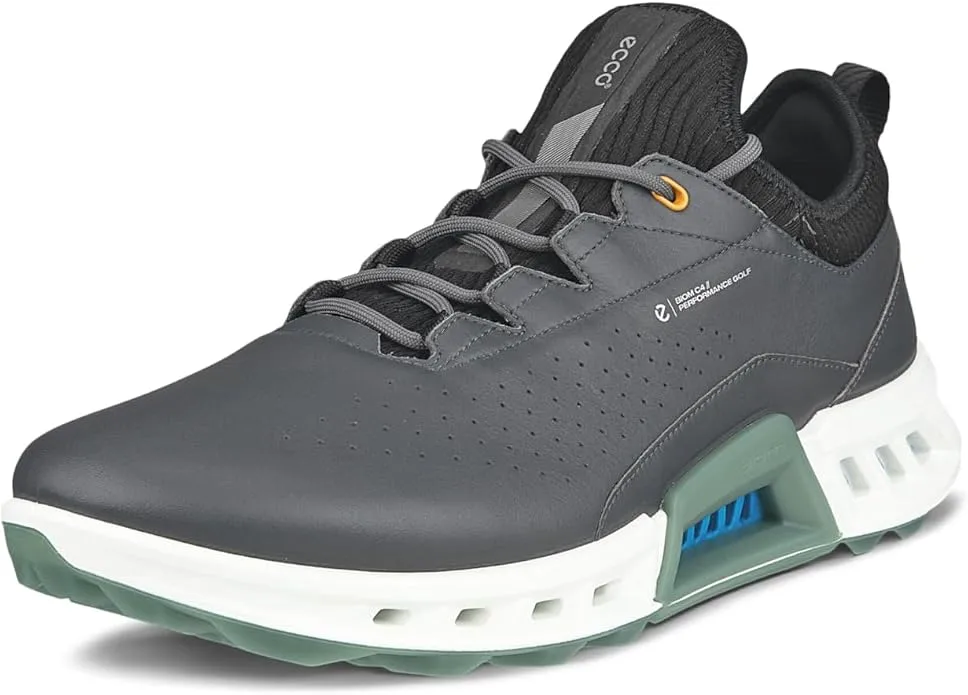
The ECCO Biom C4 takes a different approach to plantar fasciitis than the others on this list. Instead of packing in aggressive arch support, it focuses on natural foot motion.
The BIOM Natural Motion technology positions your foot closer to the ground than any other golf shoe I have tested, which reduces the leverage that makes fascia inflammation worse during the swing.
The OrthoLite insole is removable; pull it out and you get extra width, or swap in a custom orthotic that matches your exact arch profile.
The ECCO Performance Leather upper comes from ECCO’s own tanneries, and the GORE-TEX Surround construction delivers 360-degree breathability alongside waterproofing, which matters because swollen, hot feet inside a sealed shoe make plantar fasciitis pain worse.
The ECCO MTN GRIP outsole uses three different traction zones, one for grip, one for stability, and one for rotational support during the swing. It is the most thoughtfully engineered outsole on this list for swing-specific movement.
The catch is the price. At $200 – $250, the Biom C4 costs $50 – $100 more than most options here. But the build quality and leather upper will outlast two pairs of synthetic alternatives
Toby’s Reading
- Choose it: if you have sensitive feet and prefer a natural, close-to-the-ground feel
- Best for PF severity: Mild to moderate; relies on natural motion more than heavy arch correction
- Walking or riding: Great for walking, with breathable 360-degree GORE-TEX Surround
- Course type: Good in wet conditions thanks to the waterproof build and three-zone outsole
- Budget: Premium ($200 to $250); the leather upper is built to last
- Orthotic-friendly: Yes, the OrthoLite insole is removable (take it out for extra width)
- Width options: Standard only
- Sizing tip: Runs large; most golfers go half a size down
- Skip it: if you need extra-wide sizing or have a tight budget
- Toby’s verdict: The pick for golfers who want premium comfort and will invest for it
| Pros | Cons |
|---|---|
| BIOM Natural Motion keeps the foot close to the ground. | The highest price on this list is 200–250. |
| GORE-TEX Surround with 360-degree breathability | ECCO sizing runs differently; half sizes should size down |
| Removable OrthoLite insole for orthotic use | Only available in standard width (remove insole for wider fit) |
| 3-year waterproof warranty | No extra-wide option available. |
| ECCO Performance Leather built to last years |
Scroll to see more features
New Balance Brighton Best for Wide Feet
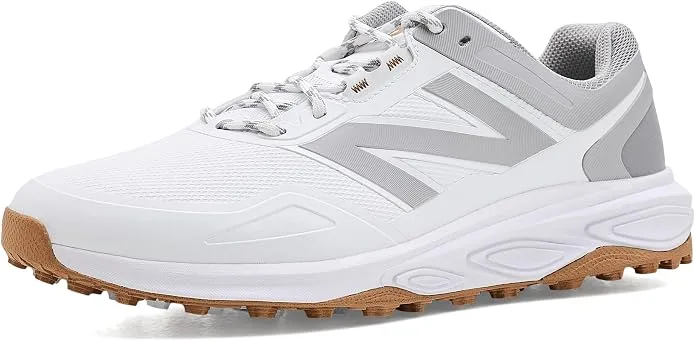
If you have both plantar fasciitis and wide feet, this is the shoe that solves both problems at once.
The New Balance Brighton is one of the only performance golf shoes that offers true 4E extra-wide sizing, not a “stretched-out version of the regular shoe” but a properly lasted wide design.
New Balance built its reputation in the running world on width options, and the Brighton carries that DNA into golf.
The REVlite midsole provides responsive cushioning that absorbs heel strike impact without feeling mushy, and the Ndurance rubber outsole holds up across hundreds of rounds.
The insole is removable, and the extra depth in the 2E and 4E versions means you can insert a custom orthotic without your foot feeling squeezed from the top.
That extra room matters a lot for plantar fasciitis; a cramped shoe forces your toes to grip, which tightens the fascia chain all the way back to the heel.
The one limitation: traction. The Brighton does not grip wet slopes or bunker edges as confidently as the Pro/SL or Biom C4.
Toby’s Reading
- Choose it: if you have PF and wide feet
- Best for PF severity: Mild to moderate, or any level when you add a custom orthotic in the extra-depth 2E/4E versions
- Walking or riding: Comfortable for both; lightweight on long walks
- Course type: Best on dry, flat to rolling courses; weaker grip on steep, wet slopes and bunker edges
- Budget: Mid-range ($90 to $130)
- Orthotic-friendly: Yes, removable insole with extra depth
- Width options: D, 2E, and 4E
- Why width matters: A cramped shoe makes your toes grip, which tightens the fascia back to the heel
- Skip it: if you play on hilly or wet courses
- Toby’s verdict: The best answer for wide feet with PF
| Pros | Cons |
|---|---|
| True 2E and 4E wide sizing properly lasted | Traction is weaker on steep, wet slopes. |
| REVlite midsole for responsive cushioning | Not as stable during aggressive swings |
| Removable insole with extra depth for orthotics | Fewer color options than competitors |
| A lightweight build reduces fatigue on long walks. | Waterproofing is not as durable as GORE-TEX shoes. |
Scroll to see more features
FootJoy FJ Fuel | Best Lightweight Option
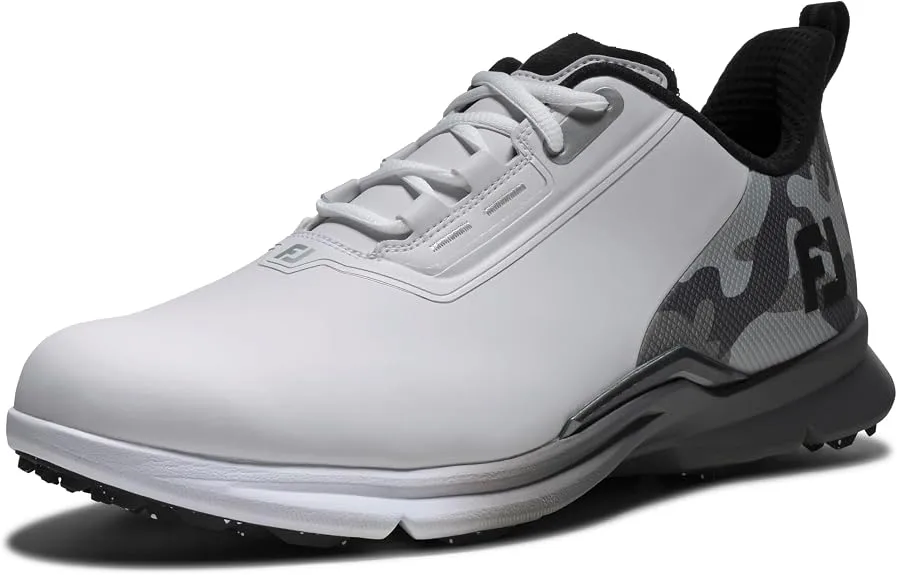
The FJ Fuel is the shoe I grab when I know I am walking 18 and want my feet to feel fresh at the end. It is about 2 oz lighter than the Pro/SL per shoe, and that weight difference matters over 10,000+ steps.
The Stratolite cushioning runs the full length of the shoe, and the optimized FitBed insole provides solid arch contouring.
What I like for plantar fasciitis specifically is the heel stabilizer. FootJoy built a reinforced counter into the heel that prevents the rolling motion that aggravates the fascia.
Combined with a broader base than most athletic-style golf shoes, the FJ Fuel stays flat and stable through the swing without feeling rigid.
The outsole pattern looks unusual, almost like a tire tread, but it grips well on turf, cart paths, and practice mats.
Toby’s Reading
- Choose it: if you walk 18 and want your feet to feel fresh at the end
- Best for PF severity: Mild to moderate
- Walking or riding: Built for walkers; about 2 oz lighter per shoe than the Pro/SL
- Course type: Flat to rolling; grips well on turf, cart paths, and practice mats
- Budget: Mid-range ($100 to $130)
- Orthotic-friendly: Yes, removable insole
- Width options: Medium and Wide
- Heel support: A reinforced heel stabilizer prevents the rolling motion that aggravates the fascia
- Durability note: The upper wears faster than leather, and the waterproof warranty is 1 year
- Skip it: if you need the strongest possible arch support
- Toby’s verdict: Best lightweight option for long walks
| Pros | Cons |
|---|---|
| Lightweight reduces walking fatigue | 1-year waterproof warranty vs. 2 years for Pro/SL |
| Full-length Stratolite cushioning | Arch support is not as aggressive as Skechers Arch Fit |
| Reinforced heel stabilizer | Less premium feel than leather shoes |
| Broad base for swing stability | Upper shows wear faster than leather alternatives. |
Scroll to see more features
Adidas Tech Response 3.0 Best Budget-Friendly
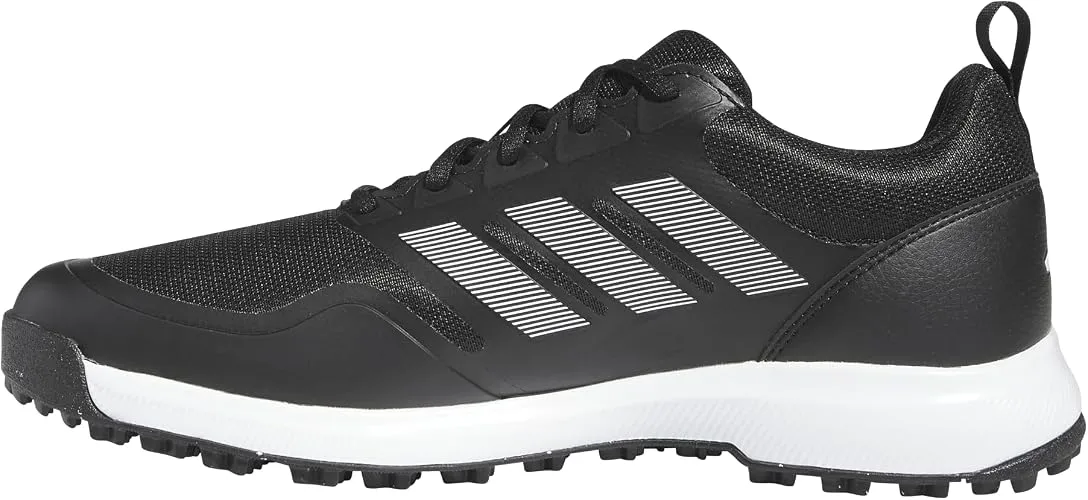
At under $75, the Adidas Tech Response 3.0 is the most affordable shoe on this list, and it does more than the price tag suggests.
The EVA insole provides decent cushioning, and the microfiber and mesh upper keeps the shoe breathable and flexible.
I would not recommend the Tech Response as a long-term plantar fasciitis solution for golfers who walk 18 regularly.
The arch support is moderate, not aggressive. But for golfers who ride a cart, play 9 holes, or need a starter shoe while they figure out whether custom orthotics are the better investment, this is a solid entry point.
The shoe flexes naturally with your foot movement, which is actually helpful for mild PF cases; overly rigid shoes can restrict the calf-to-fascia chain and create new problems.
Toby’s Reading
- Choose it: if you ride a cart, play 9 holes, or want a starter shoe before investing in orthotics
- Best for PF severity: Mild only
- Walking or riding: Better suited to riding or shorter rounds than walking 18 regularly
- Course type: Dry, fair-weather golf (it isn’t waterproof, and wet traction is weaker)
- Budget: Lowest on the list ($55 to $75)
- Orthotic-friendly: Yes, removable insole; pairs well with an aftermarket orthotic
- Flexibility: The shoe flexes with your foot, which helps mild PF
- Skip it: if you walk 18 times or have moderate to severe PF
- Toby’s verdict: A fair entry point, not a long-term fix
| Pros | Cons |
|---|---|
| Under $75 is the best value on this list | Not waterproof or water-resistant only |
| EVA insole with moderate arch support | Arch support not aggressive enough for severe PF |
| Lightweight and flexible | Traction is weaker in wet conditions |
| Breathable microfiber and mesh upper | Durability will need replacing sooner than premium shoes |
Scroll to see more features
Skechers GO GOLF Pro 5 | The Best Spiked Option
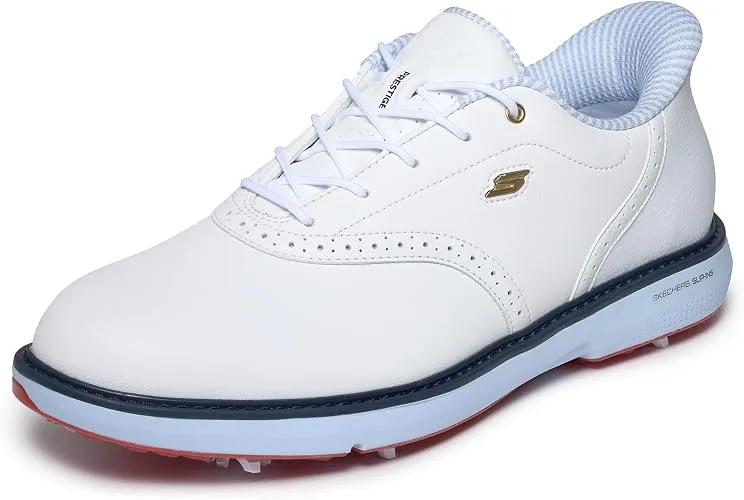
If you play on hilly courses or in wet conditions and need spiked traction alongside plantar fasciitis support, the Pro 5 Hyper delivers both.
It uses the same Arch Fit insole system as the Set Up (shoe #2 on this list), giving you that podiatrist-certified arch support, but adds replaceable Softspikes for aggressive turf grip.
The ULTRA GO cushioning midsole sits underneath the Arch Fit insole, and the combination handles heel impact and arch support in separate layers.
Amazon and Skechers reviews keep saying the same thing: foot pain that stuck around in other shoes went away in these.
The spiked design does add slight weight and a firmer ground feel compared to spikeless options.
But for golfers who prioritize traction and play in climates where morning dew or rain is the norm, the Pro 5 Hyper gives you the grip to stay planted during your swing without worrying about slipping.
If wet rounds are your normal, build the rest of your kit around it too. My picks for the best golf rain gear keep the rest of you as dry as your feet.
Toby’s Reading
- Choose it: if you play hilly or wet courses and need spikes along with PF support
- Best for PF severity: Mild to moderate; same Arch Fit insole system as the setup
- Walking or riding: Works for both
- Course type: Best for morning dew, rain, and hilly layouts
- Budget: Mid-range ($95 to $130)
- Orthotic-friendly: Yes, removable insole
- Width options: Medium and Extra Wide
- Trade-offs: Heavier and firmer underfoot than spikeless shoes; Softspikes need periodic replacement
- Skip it: if you want a shoe, you can wear it off the course
- Toby’s verdict: The one to buy when you need grip and arch support together
| Pros | Cons |
|---|---|
| Podiatrist-certified Arch Fit insole (same system as Set Up) | Heavier than spikeless alternatives |
| Replaceable Softspikes for aggressive traction | Spiked shoes less versatile off-course |
| ULTRA GO cushioning midsole | Firmer ground feel than full-foam spikeless shoes |
| Available in Medium and Extra Wide | Spikes need periodic replacement. |
Scroll to see more features
PUMA Ignite Fasten8 | Best for Golfers
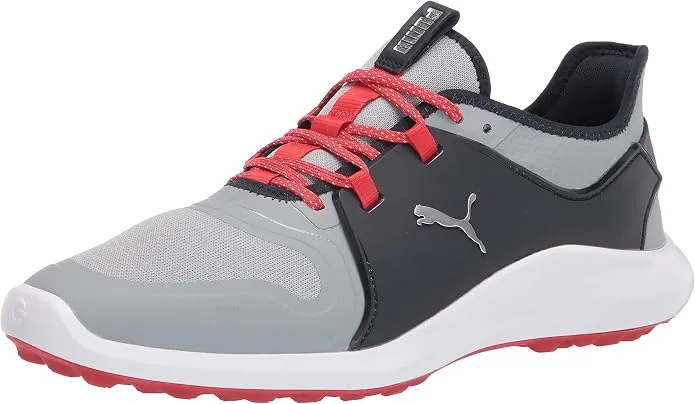
The PUMA Ignite Fasten8 has a design quirk that works in your favor if you have plantar fasciitis: it runs wider than its labeled size.
Multiple reviewers note that even the medium width feels roomier than other brands, and the wide version gives genuine extra space across the forefoot.
Why this matters for PF: a tight toe box forces your toes to grip and curl, which tightens the entire plantar fascia chain from toes to heel.
The Fasten8 gives your toes room to spread naturally, which reduces fascia tension during walking.
The IGNITE foam midsole provides solid energy return and heel cushioning. The PWRCAGE saddle wraps the midfoot for lateral stability during the swing, and the DISC closure system lets you dial the fit in tight or loose for swinging and slightly looser for walking between shots if needed.
Toby’s Reading
- Choose it: if a tight toe box is your main trigger for heel pain
- Best for PF severity: Mild to moderate
- Walking or riding: Comfortable for both
- Course type: Good for most courses; the PWRCAGE midfoot wrap helps stability on the swing
- Budget: Mid-range ($80 to $110), good value
- Orthotic-friendly: Yes, removable insole
- Width options: Medium and Wide+; runs wider than its labeled size
- Fit control: The DISC closure lets you dial it tighter for swings and looser for walking
- Limitation: Less arch support than the Skechers, and the waterproof warranty is 1 year
- Skip it: if you want traditional styling or maximum arch support
- Toby’s verdict: Best when forefoot room is the priority
| Pros | Cons |
|---|---|
| Runs wider than labeled, great for forefoot room | The DISC closure system takes getting used to |
| IGNITE foam midsole for cushioning and energy return | Not as much arch support as Skechers Arch Fit |
| PWRCAGE midfoot wrap for swing stability | Waterproof warranty: only 1 year |
| DISC closure for adjustable fit | Styling is very athletic, not for traditional clubs |
| Good value at $80 – $110 |
Scroll to see more features
FootJoy Hyperflex Carbon Best BOA Closure
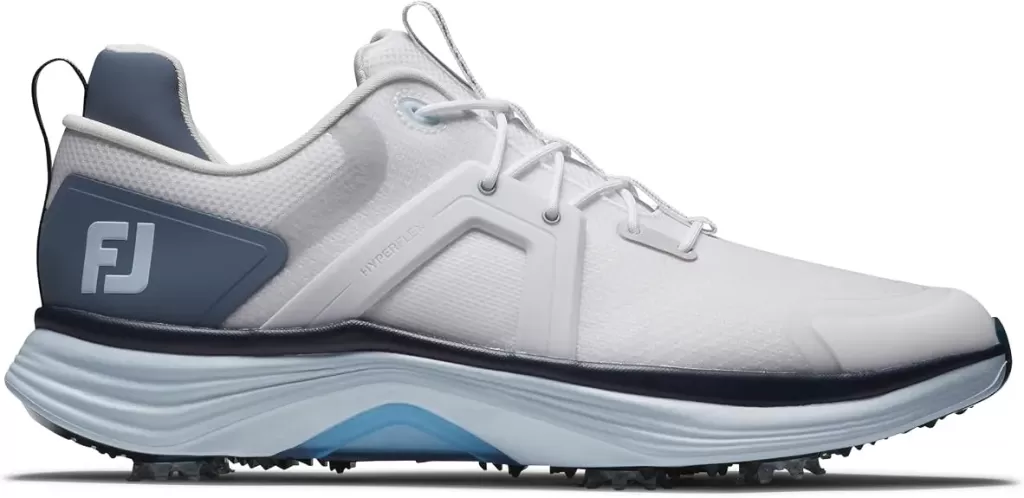
The Hyperflex Carbon rounds out my list because it solves a specific plantar fasciitis problem that laced shoes cannot: consistent, adjustable fit across 18 holes.
Your feet swell during a round. By hole 12, your foot is measurably bigger than it was on the first tee.
A laced shoe cannot adjust to that change without you stopping to retie. The BOA fit system on the Hyperflex Carbon lets you dial in micro-adjustments on the fly: a quarter turn looser as your feet swell and a quarter turn tighter when you need stability for a challenging lie.
The StratoFoam midsole provides responsive cushioning, and the carbon fiber plate adds torsional stability without excess weight. The OrthoLite FitBed insole is removable for orthotic use.
The one downside: the BOA dial sits on the tongue, and some golfers find it creates a pressure point on the top of the foot.
If you have a high instep alongside plantar fasciitis, try this shoe on before committing.
Toby’s Reading
- Choose it: if your feet swell during a round and you want to adjust the fit on the fly
- Best for PF severity: Mild to moderate; add an orthotic for more support
- Walking or riding: Great for walking, since the BOA dial adjusts as your feet swell
- Course type: Stable on most courses thanks to the carbon fiber plate
- Budget: Premium ($170 to $200)
- Orthotic-friendly: Yes, the OrthoLite FitBed insole is removable
- Width options: Medium and Wide
- How to use the dial: A quarter turn loosens as your feet swell; a quarter turn tightens for a tough lie
- Warning: The dial can press on a high instep, so try it on before committing
- Skip it: if you have a high interest
- Toby’s verdict: Best for golfers who want adjustable fit
| Pros | Cons |
|---|---|
| BOA closure for on-the-fly fit adjustment | BOA dial can create pressure on high insteps. |
| Carbon fiber plate for torsional stability | Premium price at $170 – $200 |
| StratoFoam midsole for responsive cushioning | The BOA system adds a small maintenance need (rare failures). |
| OrthoLite FitBed insole removable | Takes a round or two to find your ideal dial tension |
Scroll to see more features
Which Shoe Should you buy?
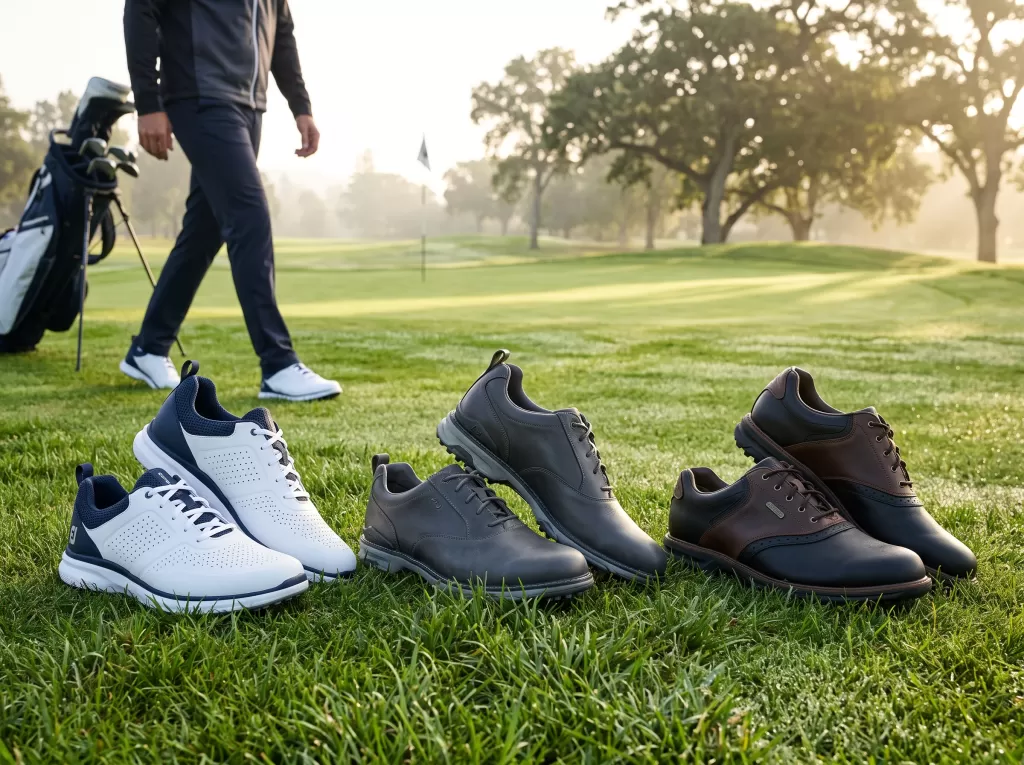
- Best overall for PF: FootJoy Pro/SL
- Strongest arch support: Skechers GO GOLF Arch Fit Set Up
- Best for wet or hilly courses: Skechers GO GOLF Pro 5 Hyper
- Best for wide feet: New Balance Brighton
- Best for tight toe box problems: PUMA Ignite Fasten8
- Best for swollen feet: FootJoy Hyperflex Carbon
- Best for long walks: FootJoy FJ Fuel
- Best premium comfort: ECCO Biom C4
- Best on a budget: Adidas Tech Response 3.0
How I Chose These Shoes
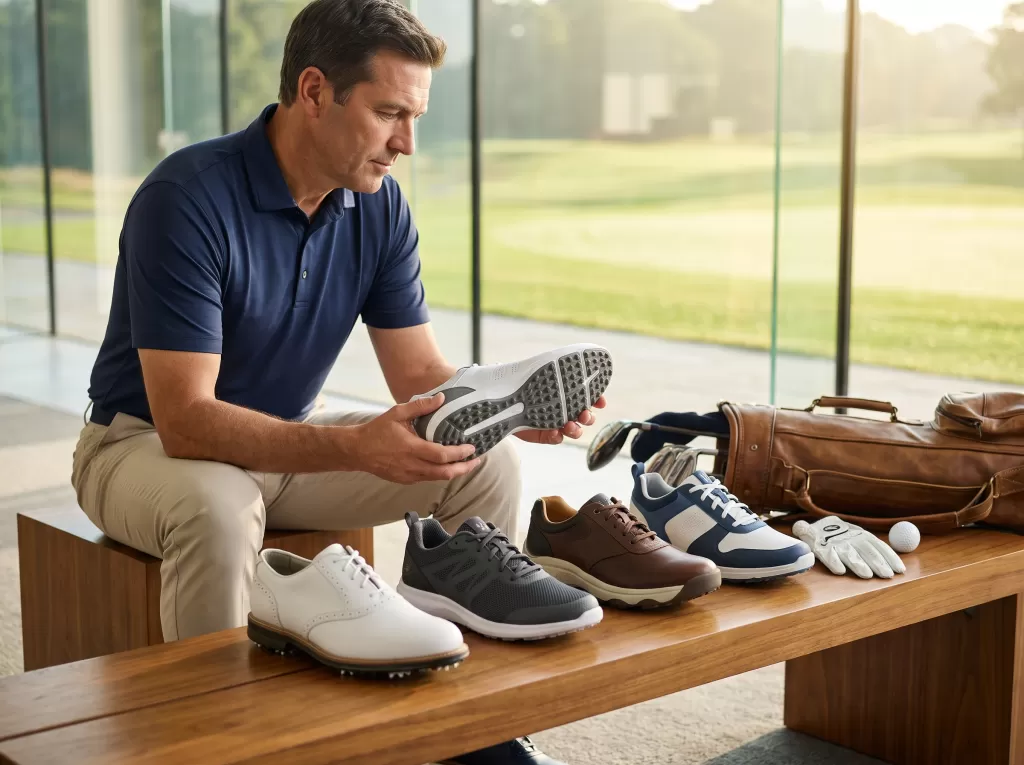
(For Illustrative Purposes Only)
Arch Support
Arch support is the most important feature on this list. A supportive shoe has a contoured insole that follows the natural curve of your arch and holds it in place through the round, instead of a flat slab of foam. A shoe can feel soft and still let your arch collapse with every step, which keeps stretching the fascia.
Arch height matters too. High arches usually need a more aggressive contour to fill the gap, neutral arches do well with moderate support, and flat feet often need a shoe with room for an orthotic. In my comparison table, I rate each shoe from Low to Very High so you can match it to your arch.
Quick check: Take the insole out and look at its shape. If it’s flat, the shoe isn’t doing the arch’s job. Then stand in the shoe and see whether your arch stays lifted or drops inward.
Heel Stability
Heel stability is how well the shoe keeps your heel locked in place. If your heel slides or rolls, your fascia absorbs the correction on every step and every swing. I look for a deep heel cup, a firm heel counter, and a base that stays flat through the swing without twisting.
This matters more in golf than in everyday walking, because your lead foot takes a twisting force through the arch on every full swing. A shoe that holds your heel and resists twisting protects the fascia from that load.
Quick check: Squeeze the back of the shoe. The heel counter should feel firm, not squishy. Hold the shoe at both ends and try to wring it like a towel. A good golf shoe resists twisting. Then walk in it and check that your heel doesn’t lift or slide.
Cushioning
Cushioning is the midsole foam that absorbs the impact of each step. Over 9,000 to 12,000 steps on foot, that shock adds up. But cushioning alone isn’t enough. A very soft shoe with no arch support can leave your foot sinking and your arch collapsing. I look for cushioning paired with stability, a midsole that softens the blow without feeling mushy.
Cushioning also wears out. Foam compresses over time, so a shoe that felt great last season can lose its protection even if the upper still looks new.
Quick check: Press your thumb into the midsole under the heel. It should give a little, then spring back. Then walk a few minutes on a hard floor and notice whether your heel feels protected.
Removable Insole for Orthotics
I made a removable insole a requirement for every shoe on this list. If the insole lifts out, you can drop in a custom orthotic or a supportive over-the-counter insole when the shoe’s own support isn’t enough. If the footbed is glued in, you’re stuck with what the factory gave you.
Depth matters too. A shoe with extra room under the foot lets an orthotic sit properly without lifting your heel or squeezing your toes. Take the stock insole out before you add an orthotic, so you aren’t stacking the two.
Quick check: Pull the insole out. If it comes out easily, you can swap it. When you try shoes on, bring your orthotic and wear it inside. Your heel should sit down in the shoe without popping above the collar.
Golf Shoes for Plantar Fasciitis
| Shoe | Price | Type | Waterproof | Widths | Removable Insole | Arch Support Level | Best For | Buy | Shop |
|---|---|---|---|---|---|---|---|---|---|
| FootJoy Pro/SL | $150–185 | Spikeless | Yes (2yr) | M, W, XW | Yes | High | Overall best for PF | Check Price | Visit Shop |
| Skechers Arch Fit Set Up | $90–120 | Spikeless | Yes | M, XW | Yes | Very High | Podiatrist-grade arch support | Check Price | Visit Shop |
| ECCO Biom C4 | $200–250 | Hybrid | Yes (3yr) | Standard | Yes | Moderate | Premium natural ground-feel | Check Price | Visit Shop |
| New Balance Brighton | $90–130 | Spikeless | Yes | D, 2E, 4E | Yes | Moderate | Wide/extra-wide feet | Check Price | Visit Shop |
| FootJoy FJ Fuel | $100–130 | Spikeless | Yes (1yr) | M, W | Yes | Moderate | Lightweight walking shoe | Check Price | Visit Shop |
| Adidas Tech Response 3.0 | $55–75 | Spikeless | No | M, W | Yes | Low-Moderate | Budget option | Check Price | Visit Shop |
| Skechers Pro 5 Hyper | $95–130 | Spiked | Yes | M, XW | Yes | Very High | Spiked traction + arch support | Check Price | Visit Shop |
| PUMA Ignite Fasten8 | $80–110 | Spikeless | Yes (1yr) | M, W+ | Yes | Moderate | Wider forefoot room | Check Price | Visit Shop |
| FJ Hyperflex Carbon | $170–200 | Spikeless | Yes (2yr) | M, W | Yes | Moderate-High | Adjustable BOA fit | Check Price | Visit Shop |
Scroll to see more features
Arch Support Levels Compared
| Arch Type | Recommended Shoes | Why |
|---|---|---|
| High arches | Skechers Arch Fit Set Up, Skechers Pro 5 Hyper | Aggressive arch contour fills the gap and prevents fascia overstretch |
| Neutral arches | FootJoy Pro/SL, FJ Hyperflex Carbon, ECCO Biom C4 | Moderate support maintains natural arch position without overcorrecting |
| Flat feet / fallen arches | New Balance Brighton (with custom orthotic), Adidas Tech Response 3.0 (with custom orthotic) | These shoes offer extra width and depth for aftermarket orthotics that address flat-foot pronation |
Scroll to see more features
Should You Use Custom Orthotics Inside Your Golf Shoes?
For mild plantar fasciitis, a shoe with good built-in arch support like the Skechers Arch Fit or FootJoy Pro/SL may be enough on its own. I know golfers who switched shoes, and their pain disappeared within two rounds.
For moderate to severe plantar fasciitis, custom orthotics from a podiatrist are a better solution than any off-the-shelf insole. The shoe becomes the platform, and the orthotic does the support work.
That is exactly why I made “removable insole” a non-negotiable requirement for this list. All 9 shoes above have removable insoles. Pull out the stock insole, drop in your custom orthotic, and the shoe accommodates it without cramping your foot.
What to look for in an orthotic for golf:
- Semi-rigid shell (not fully rigid; you need some flex during the swing)
- Deep heel cup (matches the shoe’s heel counter)
- Arch height matched to your foot scan (a podiatrist does this, not a shoe store kiosk)
- Thin enough to fit inside a golf shoe without raising your heel above the collar
3 Stretches That Help Plantar Fasciitis
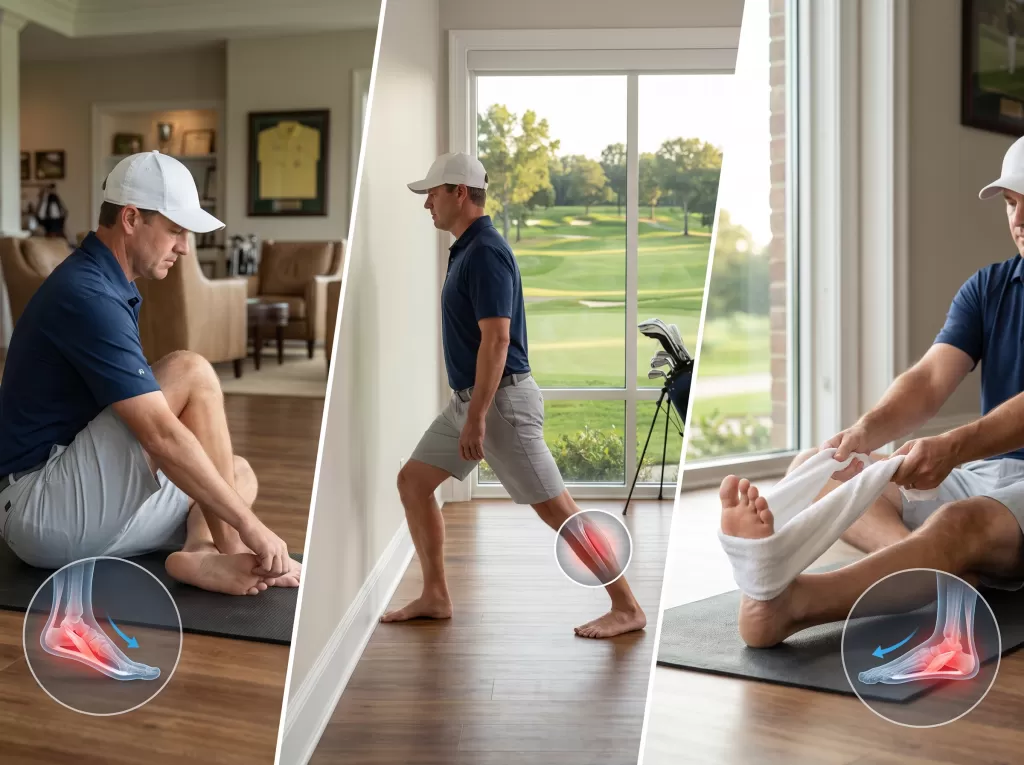
(For Illustrative Purposes Only)
I do these three stretches in the parking lot before every round. They take about three minutes and make a noticeable difference in how my feet feel through the back nine.
- Towel Stretch (Plantar Fascia + Calf): Sit on the ground or a bench. Loop a towel around the ball of your foot and gently pull toward you, keeping your knee straight. Hold for 30 seconds per foot.
- Calf Raise Hold: Stand on the edge of a step with your heels hanging off. Lower your heels slowly below the step until you feel a stretch in your calves. Hold for 20 seconds. Repeat three times.
- Frozen Water Bottle Roll: Keep a frozen water bottle in your golf bag cooler. Before teeing off, roll the arch of each foot over the bottle for 60 seconds. The cold reduces inflammation while the rolling massages the fascia.
Frequently Asked Questions
What causes plantar fasciitis in golfers?
Plantar fasciitis in golfers comes from a combination of two forces: repetitive compression from walking 18 holes (9,000–12,000 steps on foot, 5,000–7,000 riding a cart), and rotational shear from the golf swing.
Your lead foot absorbs a twisting force through the arch on every full swing. Combine that with hours on uneven terrain, and the plantar fascia, the thick band connecting your heel to your toes, becomes inflamed and irritated.
Are spikeless golf shoes better for plantar fasciitis than spiked shoes?
Spikeless shoes tend to be lighter and more flexible, which reduces overall foot fatigue during a round. For most golfers with plantar fasciitis, spikeless is the better choice.
The exception is golfers who play on hilly, wet courses where traction is a safety concern; in that case, the Skechers GO GOLF Pro 5 Hyper gives you spiked traction alongside podiatrist-certified arch support.
Can I use my own orthotics in golf shoes?
Yes, but only if the shoe has a removable insole. All 9 shoes on this list have removable insoles. Pull out the stock insole and replace it with your custom orthotic.
Make sure the orthotic has a semi-rigid shell (not fully rigid) so it allows some flex during the golf swing.
How do I know if my golf shoes are making my plantar fasciitis worse?
Three warning signs: (1) heel pain that starts during the round and increases with each hole,
(2) arch pain that is worse in the morning after you played the day before, and
(3) a burning or stabbing sensation in the heel when you push off on your lead foot during the swing.
If you notice any of these, your current shoes likely lack sufficient arch support, heel cushioning, or torsional rigidity.
Is it worth spending $200+ on golf shoes for plantar fasciitis?
It depends on severity and how often you play. If you play once a month and ride a cart, a $55–$75 shoe like the Adidas Tech Response 3.0 with a good aftermarket orthotic will do the job.
If you walk 18 holes twice a week, investing in a $150–$200 shoe like the FootJoy Pro/SL or ECCO Biom C4 saves you pain, replacement costs, and potentially medical bills. A $200 shoe that lasts three years costs $67 per year. A $75 shoe you replace every year costs $75 per year and does not protect your feet as well.
What is the single most important feature for plantar fasciitis in a golf shoe?
Arch support. Not cushioning arch support. A shoe can be soft and cushioned but still allow your arch to collapse, which stretches and inflames the plantar fascia on every step.
Look for a contoured insole (not flat foam) that follows the natural curve of your arch and holds it in position throughout the round.
Should I size up when buying golf shoes for plantar fasciitis?
In most cases, half a size up gives you room for the natural foot swelling that happens during a round and room for an aftermarket orthotic if you use one.
ECCO is the exception: their sizing runs large, so most podiatrists recommend going half a size down for ECCO golf shoes and removing the insole if you need extra width.
How should golf shoes fit if you have plantar fasciitis?
Try them on late in the day, when your feet have swelled, and bring the orthotic or insole you plan to use.
Walk on a hard floor for a few minutes. Your heel shouldn’t slip, your toes should be able to spread, and nothing should pinch across the top of your foot.
How long does it take for new golf shoes to help plantar fasciitis?
Most golfers notice improvement within their first round in a properly supportive shoe. Full relief typically takes two to four weeks of consistent use as the fascia inflammation gradually settles.
Do not expect a shoe to fix severe plantar fasciitis on its own; combine it with stretching, icing, and rest between rounds.
Can golf shoes prevent plantar fasciitis?
Yes. Golfers who wear shoes with proper arch support, deep heel cups, and good cushioning are far less likely to develop plantar fasciitis than golfers who wear flat, unsupportive shoes.
If you have never had plantar fasciitis but you walk the course regularly, choosing a shoe from this list is a preventive measure worth taking.