
That’s the gap between the best driver of 2026 and the twentieth best, measured over twenty thousand shots.
Three yards of carry spread across forty-two golf clubs, the cheapest of which is $249 and the dearest $699.
I keep coming back to that number because it should change how you shop, and for most golfers it doesn’t.
We read the rankings, we see a name at the top, and we assume the gap between first and twelfth is worth four hundred dollars. It isn’t. It’s roughly the length of a decent chip.
What is worth four hundred dollars is buying the right club for your particular disaster. If your bad drives finish forty yards short, you need a different club than the bloke whose bad drives finish in the car park.
Those are two different problems and one of them is not solved by whatever won the biggest test this year.
So this list runs from $100 to $699, and it’s organized around problems rather than podium finishes.
Nine drivers. Every one of them has problems, for somebody; none of them is right for everybody, and I’ve said plainly who should walk past each one.
| Driver | Best for | Toby Score | Price | Buy |
|---|---|---|---|---|
| TaylorMade Qi4D | Best overall | 9.0 | ~$649 | Check Amazon Price |
| Titleist GT2 | Best value | 8.9 | ~$400 | Check Amazon Price |
| Callaway Quantum Max | Distance | 8.7 | ~$649 | Check Amazon Price |
| Ping G440 Max | Hitting fairways | 8.5 | ~$550 | Check Amazon Price |
| Callaway Quantum Triple Diamond | Fast swingers | 8.4 | ~$699 | Check Amazon Price |
| Tour Edge Exotics Max | Forgiveness on a budget | 8.4 | ~$499 | Check Amazon Price |
| TaylorMade SIM2 Max | Best used buy | 8.3 | ~$200 | Check Amazon Price |
| Cleveland Launcher XL 2 | Best under $300 | 8.0 | ~$250 | Check Amazon Price |
| Orlimar Slice Killer | Chronic slicers only | 5.5 | ~$100 | Check Amazon Price |
Scroll to see more features
How I put this together
I read every serious independent driver test published this year: the forty-two-club program, Today’s Golfer’s controlled indoor round, the Golf Digest Hot List and then I did the bit none of them do, which is reading them against each other.
This is how every guide on USA Golf Guy works: I cross-reference the independent tests so you get the full picture, not one lab’s opinion.
They disagree more than you’d expect, and the disagreements turn out to be the useful part.
I didn’t run a lab. Nobody with a job does. Where a hard number appears below, it came from published testing, and I’ve said so. Where a verdict appears, that’s mine.
What I’ve added is the buy side. Real prices, the used market, and the sub-$300 tier that gets ignored by every big test because manufacturers don’t post $100 drivers to review houses.
That’s where a lot of golfers actually shop, and it’s where the honest advice runs thinnest.
TaylorMade Qi4D Best Overall
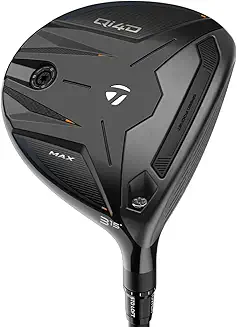
The Qi4D won the biggest test of the year in the least thrilling way available: by refusing to be bad at anything.
Sixth for distance. Fourth for accuracy. Fourth for forgiveness. It topped nothing, and it flinched at nothing, and across forty-two drivers that turned out to be the winning hand.
I’ve been unkind about TaylorMade drivers for a few years, and I’ll explain why, because it makes this club’s case better than any spec sheet. Their problem was never speed.
Their drivers have always been quick. The problem was that the quick ones were wild and the forgiving ones were slow, and you spent your money picking which compromise you could stomach.
The Qi4D is the first in a long while where the numbers stand up in all three columns simultaneously.
The engineering behind it: a carbon face, a reworked roll radius meant to tighten the spin between high and low strikes, and aero shaping to hold speed into impact.
They’ve also rebuilt the shaft fitting around how fast your hands rotate rather than the old launch-condition method. That’s either a real advance or excellent marketing, and I honestly can’t tell you which yet. Ask me in a year.
Who’s playing it: this is the part that convinced me. The previous model sold well, and yet Rory McIlroy and Scottie Scheffler both refused to put it in the bag, which is about as loud as a tour player ever gets in public. With the Qi4D, the three best players in the world adopted it late in 2025 before it had even launched, Charley Hull straight after.
When the men who publicly snubbed last year’s club queue up for this one, that’s worth more than any press release.
Scoring notes. Pop 9 is long, not the longest. Miss 9 top-five forgiveness in the largest test run this year. Line 8.5, and that’s a wary 8.5: one test measured 18.6 yards of dispersion with the rear weight in and 11.8 with it forward, which is essentially two different golf clubs sharing a headcover.
Feel 7.5 is the carbon tax; it’s a divisive sound, and no amount of engineering argues against someone out of disliking it. Value 7 because it’s $649 and you’ll want a fitting on top.
| Pros | Cons |
|---|---|
|
|
Scroll to see more features
Titleist GT2 Best Value
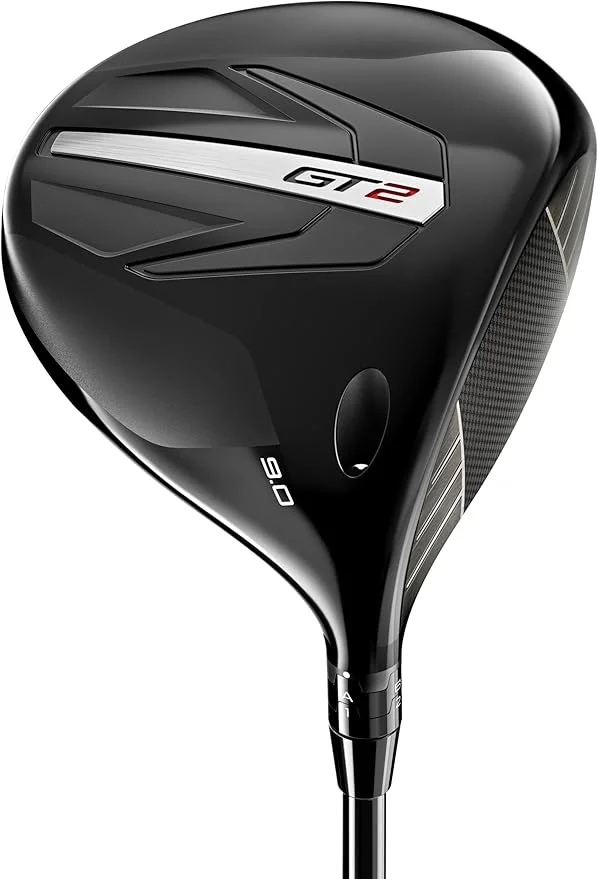
This is the best money in golf right now, and the reason is a calendar, not a performance problem.The GT2 finished ninth of forty-two this year with a distance score level with the very top of the field.
Then Titleist launched its replacement in June, and the price fell off a cliff. That’s the entire story. It wasn’t marked down because it stopped working. It was marked down because Titleist needed the shelf space.
Which means you can have a driver that went toe to toe with everything released this season for about sixty percent of what those clubs cost. The performance gap between this and a 2026 flagship is a handful of yards. The price gap is a fitting session and three dozen premium balls.
I’ll go further. I’d struggle to look someone in the eye and tell them to spend $649 on a new driver while this exists at $400.
If you’ve got $649 to spend, spend $400 here and $250 on getting properly fitted, and you will beat the man who spent it all on the club. That’s not a clever contrarian take, it’s just what the numbers say.
Who’s playing it: Adam Scott has been on the GT2 a long time and was hitting it off the deck at the Scottish Open, which tells you something about how it sits behind the ball. Titleist remains the most-played driver brand on the PGA Tour.
Scoring notes. Pop 9 on the strength of a distance score matching the field’s best. Miss 7.5 forgiveness is respectable rather than remarkable. Line 8.5 off twelve yards of measured dispersion with low spin, which is an unusual pairing and a good one.
Feel 9.5 is the highest I’ve given anything here; at address it’s a sea of black with no graphics, no visible carbon, nothing shouting at you, and it sounds like a driver should. Value 10, and I’d give it 11.
| Pros | Cons |
|---|---|
|
|
Scroll to see more features
Callaway Quantum Max Best for Distance
The fastest driver anyone measured this year, and it isn’t a close-run thing.
It took the highest distance score in a forty-two-club field. In a completely separate test, run by different people with a different pro and a different methodology, it produced the highest ball speed and the longest carry of anything they hit.
When two tests with nothing in common land on the same conclusion, I stop hedging.
The face is a three-layer sandwich: thin titanium, a poly mesh middle, and carbon underneath.
I roll my eyes at face-technology announcements as a matter of routine. This one produced numbers, so I’ll shut up.
Worth noting how completely Callaway owned this season without getting the trophy. All four of their Quantum Heads finished in the top seven of the biggest test.
In the other big test, Quantum models took the win, the runner-up spot, and two category titles. They arguably had the better year, and TaylorMade got the headline.
Scoring notes. Pop 10, obviously. Miss 7 is the whole conversation: forgiveness came in at 8.5 out of 10, which is ordinary, and ordinary is what you’re trading for that speed. Line 8.5 the accuracy holds up better than the forgiveness, which surprised me.
Feel 8; one reviewer I rate called it good rather than great, and that matches what I’d expect from a face with that much going on in it. Value 7 at $649.
| Pros | Cons |
|---|---|
|
|
Scroll to see more features
Ping G440 Max Best for Hitting Fairways
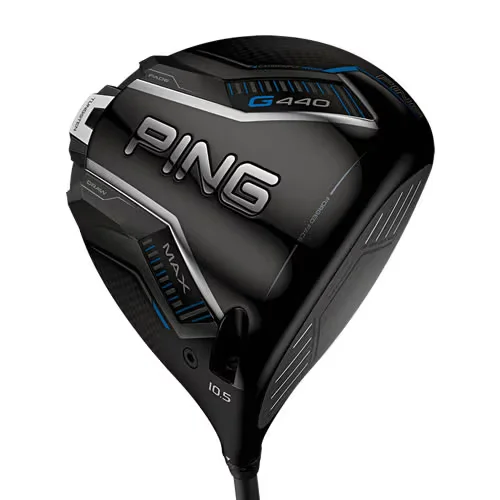
Here’s the most interesting argument in golf equipment this year, and it’s the one most likely to save you shots.
One major test ranked this club twelfth. Another made it third overall and best for forgiveness, off the tightest left-to-right dispersion figure recorded anywhere in 2026 (8.7 yards), and nothing else came near.
Both are right. They’re measuring different things, and nobody bothers to explain that to golfers.
The first test builds its forgiveness score from how much your carry distance wanders, how much your ball speed wanders, and total shot area. That’s a consistency measure. The second reports how far left the worst pull went against how far right the worst push went. That’s a direction measure.
The Ping doesn’t reward you with speed. It just declines to send the ball sideways. Put it in the hands of thirty-five golfers with thirty-five different swings, and that reads as unexceptional.
Put it in the hands of one repeatable pro swing, and it reads as the straightest driver of the year.
So here’s the question that actually matters. Are your bad drives the wrong distance or in the wrong postcode? If it’s distance, the twelfth-place ranking is telling you the truth.
If it’s direction and for most amateurs I’ve played with, it is, then this is the best driver of 2026, and the ranking is answering a question you didn’t ask.
There’s a second advantage that gets overlooked. Ping ships the deepest range of stock shafts in the business, and one of the quieter findings from this year’s testing was that brands with more stock shaft options simply score better, because more testers find something that suits them.
Your odds of walking out of a shop properly fitted, without an upcharge, are higher here than anywhere.
Scoring notes. Pop 6.5, and that’s the honest number: mid-pack ball speed, mid-pack distance score. You are buying fairways with yards, and you should go in knowing it. Miss 8.5. Line 10, the only ten I’ve given, off a dispersion figure nothing else got close to.
Feel 8.5; Ping has spent years on their acoustics, and it shows. Value 8.
| Pros | Cons |
|---|---|
|
|
Scroll to see more features
Callaway Quantum Triple Diamond Best for Fast Swingers
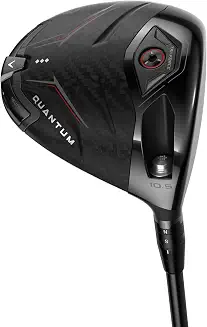
The longest carry recorded anywhere this year, at just under 2,000 rpm of spin.
First for carry, second for ball speed, in a test where those two things rarely appear together. Its predecessor won the biggest driver test of 2025 outright, so this is a bloodline rather than a fluke.
If you swing hard and your problem is the ball ballooning and stalling, this is the head that fixes it.
I want to be blunt about who this is not for, because low-spin drivers get bought by people who have no business owning one. Low spin in a swing that doesn’t generate enough speed produces a ball flight that is low, short, and thoroughly unpleasant to watch.
If your driver spin is already under 2,500 rpm, walk away from this section entirely. If it’s north of 3,000 and you’re swinging hard, keep reading.
There’s a variant worth knowing about: the Triple Diamond Max. One of this year’s tests made it their outright winner, choosing it over the standard Triple Diamond even though the standard model posted better raw numbers, on the grounds that the Max version, marginally bigger, with a touch of offset and more stable, is playable by far more golfers.
It finished fifth in the other big test. Almost nobody is writing about it, and I think that’s an oversight.
Scoring notes. Pop 9.5, Miss 6.5, and that isn’t a criticism of the design; low spin and high forgiveness pull against each other, and you can’t have both. Line 8.5. Feel 9; the compact head sits beautifully, and testers rated it highly.
Value 6 because $699 is a lot of money for a club that suits maybe one golfer in six.
| Pros | Cons |
|---|---|
|
|
Scroll to see more features
Tour Edge Exotics Max Best Forgiveness
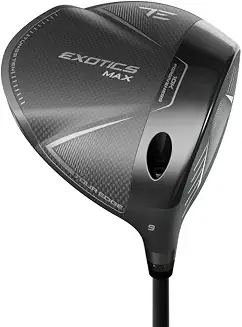
Fourth out of forty-two in the largest independent test of the year. Ahead of every Titleist. Ahead of every Ping. Ahead of three of the four Callaways.
And you’ve probably never considered it, because Tour Edge doesn’t pay tour players and doesn’t buy billboards.
The card reads 9.2 for forgiveness, 9.1 for accuracy, and 8.7 for distance. That’s a golf club built for golfers rather than for screenshots, and it carries the 10K MOI badge everyone chased this year. At $499, it undercuts the flagship tier by roughly a hundred and fifty quid.
This is the pick I’d make for a mid-handicapper who genuinely doesn’t care what’s stamped on the sole. The problem is that most of us do care a bit, and I’d rather acknowledge that than pretend otherwise.
Scoring notes. Pop 7.5 solid, unspectacular; you’re buying stability here, not yards. Miss 9.5, bettered by almost nothing on the market. Line 8, and I’ve marked it down deliberately: one test scored its accuracy at 9.1, while another measured 20.2 yards of dispersion, which is mid-pack.
Those don’t reconcile, so demo it before you commit. Feel 7.5. Value 9.
| Pros | Cons |
|---|---|
|
|
Scroll to see more features
TaylorMade SIM2 Max Best Used Buy
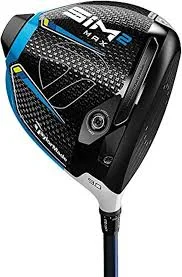
Right, this is a 2021 driver. On paper, it has no business in a 2026 list.
It’s here because of the three yards I opened with. Driver technology has been in diminishing returns for years now, and if the entire top twenty of this year’s field is separated by three yards of carry, then a five-year-old flagship that was excellent in its day is still, functionally, a very good golf club. It just costs $180 instead of $649.
The SIM2 Max was TaylorMade’s forgiving head in 2021, and it was properly good: an aluminum ring wrapped round the back of the head to free up mass, a 24-gram rear weight for stability, and a carbon crown and sole.
It took a Hot List gold that year. More telling, five years on, it still holds 4.8 out of 5 across more than 630 reviews on TaylorMade’s own store that’s not launch hype; that’s people who’ve owned it for years and haven’t changed their minds.
The SIM2 family was in the bags of Tiger Woods, Rory McIlroy, Dustin Johnson, and Jon Rahm in its day. That’s not a sales line; it’s the reason the used supply is so deep and so cheap.
Scoring notes. Pop 7.5 and Miss 8.5 are genuinely forgiving on heel and toe strikes thanks to that rear weight.
Line 8. Feel 8.5, and here’s an underrated advantage: it’s a titanium face, so none of the carbon-sound objections that come with the modern TaylorMade heads. Value 10.
| Pros | Cons |
|---|---|
|
|
Scroll to see more features
Cleveland Launcher XL 2 Best Driver
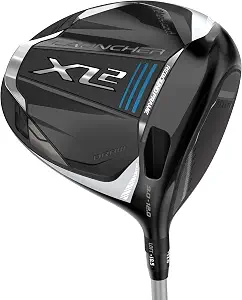
Cleveland doesn’t chase tour bags. They build clubs for people who play on Saturdays, and this is the clearest example of that philosophy in the driver category.
The head is an enormous, long, front-to-back shape that pushes stability about as far as the rules allow. The claimed gains over the previous model are 2% in heel-toe resistance and 12% top-to-bottom. That second figure is the interesting one.
Top-to-bottom stability is what saves you on thin and heavy strikes, which is where most amateurs actually bleed yards, and almost nobody markets it because it doesn’t sound as good as a big MOI number.
You get a full adjustable hosel across 9 to 12 degrees in half-degree steps, at a quarter of flagship money.
There’s an 8-gram counterweight in the butt of the grip to settle the feel of such a big head, and a Draw model if you fight a slice but want something less drastic than the Orlimar below.
Two things testers found that you need to weigh. It launches and spins lower than average; it’s brilliant if you already balloon it, a genuine problem if you struggle to get the ball airborne.
And it’s consistent to a fault: ball speed barely moves shot to shot.
Scoring notes. Pop 7. Miss 9, driven by that vertical stability. Line 8. Feel 6, and I’ve been harsh on purpose; it’s a high-pitched impact, and the counterweight blunts your sense of where you struck it.
Some players find that soothing. I find it slightly numb. Value 9.5.
| Pros | Cons |
|---|---|
|
|
Scroll to see more features
OrlOrlimar Slice Killer For Chronic Slicers Only
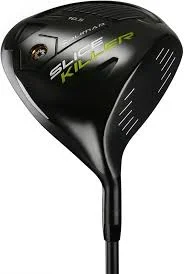
Every major manufacturer builds a draw-bias driver, and every one of them is coy about it.
They give it three letters and hope you work it out. Orlimar called theirs the Slice Killer and built the most aggressive anti-slice head on the market, and I respect the honesty even where I don’t love the club.
The geometry is extreme: a 7-degree closed face and an 11 mm offset hosel. A big-brand draw model might close the face by a degree, maybe two.
This isn’t a nudge; it’s a shove. Real 6/4 titanium, 460 cc, 45.5 inches, headcover included, about a hundred dollars.
Now the bit nobody else prints. Orlimar’s own product FAQ states the Slice Killer was never submitted to the USGA for a conformity ruling.
They add that they see no reason it would fail if it were. But “we reckon it’d pass” and “it’s on the list” are not the same sentence.
What that means in practice: for social golf, range work, and knocking it round with your mates, it’s irrelevant swing-away.
For club competitions, medal rounds, anything with a card and a pencil, you need a head on the USGA-conforming list, and this isn’t one.
Check with your club before you put it in play in anything that counts.
I’d rather tell you that and lose the sale than have you disqualified from a monthly medal you were winning.
Scoring notes. Pop 5 and Feel 4 are the honest numbers; this is a blunt instrument, and it isn’t pretending otherwise. Line 7 comes with a heavy condition: it’s a 7 if you genuinely slice everything, and about a 3 if your slice is mild, because seven degrees of closed face plus offset will turn a fade into a hook you can’t play from.
Value 7.5 if it keeps you in play for a season while you work on the actual problem; that’s the cheapest lesson in golf.
| Pros | Cons |
|---|---|
|
|
Scroll to see more features
Buying a driver without wasting your money
Get fitted. Seriously.
This is the most useful thing on the page.
One of this year’s tests ran the same head in two configurations, 9 degrees with the weight forward against 10.5 with it back, and recorded a 19.9-yard difference in carry and 7.3 mph of ball speed. Same club. Same golfer. Same afternoon.
The spread between first and twentieth across the whole 2026 field was three yards.
So a fitting is worth about six times more than choosing the right club off a list. Including this list. Get fitted first, then buy whatever the numbers like.
Once your driver is sorted, the gap between 180 and 240 yards is where a fairway wood earns its keep. I ranked the best fairway woods of 2026 using the same cross-source method.
Play more loft than your ego wants.
Most amateurs play too little. If your drives fall out of the sky, go up.
Your irons fill the rest of the bag from the fairway in. I reviewed the best golf irons buying guide by Toby’s 15 players’ irons the same way, starting with MyGolfSpy’s data, then cross-referencing everything else.
And remember that adjusting the loft on a modern hosel also changes the face angle; adding loft closes the face, and taking it off opens it.
There’s a slice fix hiding in that sleeve and a face, and most people never touch it.
Shorter shafts, better golf
Forty-six inches is the legal ceiling. A 46-inch shaft will nearly always give you more raw yards and nearly always cost you accuracy.
A shorter one rarely costs many yards, because you’ll find the middle more often. Also worth knowing: manufacturers measure inconsistently, so one brand’s 45.75 is another’s 46.
Looks matter less than you think. Sound matters more.
The data on this is blunt: golfers routinely post excellent numbers with clubs they claim to hate the look of. Keep an open mind on something that doesn’t appeal to you.
Sound is different. If a face makes you wince at impact, you’ll wince on the course, and no amount of engineering fixes a flinch.
Adjustable hosels are table stakes now.
Every single driver in this year’s forty-two-club field had one, including the $249 club and the $319 one.
And if you’re spending $400–650 on a driver, protect it when you fly. I tested the best golf travel bags by Toby. The data shows a hard line at $150 between bags that protect and bags that don’t.
If a new driver doesn’t, that tells you what corner got cut.
Frequently Asked Questions
What’s the best golf driver in 2026?
The TaylorMade Qi4D. It won the largest independent test of the year by finishing sixth for distance, fourth for accuracy, and fourth for forgiveness no weak category anywhere on the card.
Scottie Scheffler, Rory McIlroy, and Tommy Fleetwood all put it on the course before it officially launched.
What’s the longest driver of 2026?
The Callaway Quantum Max. It posted the highest distance score in a forty-two-driver field and the fastest ball speed and longest carry recorded in separate independent testing, the only club to top both.
Knowing exactly how far you carry your driver makes club selection on the tee honest rather than hopeful. I ranked the best golf rangefinders to help with that.
What’s the most accurate driver of 2026?
The Ping G440 Max, off 8.7 yards of left-to-right dispersion, is the tightest figure measured anywhere this year.
It ranks lower in tests that define forgiveness in terms of distance consistency rather than direction, which is why you’ll see it as high as third and as low as twelfth.
What’s the best driver under $300?
The Cleveland Launcher XL 2 is around $250. For the golfer who wants forgiveness off the tee without a full driver commitment, a hybrid might be the smarter play. See my best golf hybrid club guide for that angle.
This gets you a twelve-position adjustable hosel and Cleveland’s most stable head.
If you’ll buy used, a TaylorMade SIM2 Max at $180–250 gives you more club for less money.
Is it daft to buy a five-year-old driver?
No, and the numbers back that up. Three yards of carry separated first from twentieth across this year’s entire field.
A 2021 flagship still rated 4.8 out of 5 by more than 630 owners will give you most of a new driver’s performance for roughly thirty percent of the price.
