

Ask ten golfers what a “game improvement iron” is for, and at least seven will describe it as the club you play until you’re good enough for real irons.
That assumption is backwards, and believing it is costing golfers strokes in a very specific way: choosing a compact, low-offset iron with an accuracy score they can’t repeat, instead of the wider-soled, higher-launching iron that would actually fix their scorecard.
If you want to see how game improvement sets stack up against players and cavity-back irons across the board, our full breakdown of the best golf irons of 2026 covers the whole category.
Here’s the number that should end the debate. In this year’s independent lab testing, several sub-$1,000 game improvement sets scored competitively against irons priced 50% higher, and the PING G440, one of 2026’s most forgiving irons, did it in a head shorter and cleaner-looking than the model it replaced.
The old trade-off between “looks like a real iron” and “plays like a safety net” is closing fast, and most golfers shopping this category are still making decisions based on a stereotype from a decade ago.
Game-improvement irons (sometimes called GI irons, or “the most forgiving irons” you’ll find outside the true super-game-improvement tier) are a purpose-built tool: they get more of your mishits into play, launch the ball higher with less effort, and turn a 40-yard slice into a 15-yard fade you can actually work with.
They’re not a consolation prize. They’re an engineering decision that happens to suit the way most golfers actually swing.
All 15 Game Improvement Irons of 2026
| Rank | Iron | Price (Full Set) | Best For | Handicap Range | Buy | Shop |
|---|---|---|---|---|---|---|
| 1 | PING G440 | $1,200–$1,400 | Best overall game improvement iron | 10–22 | Check Price | Visit Shop |
| 2 | Titleist T350 | $1,300–$1,500 | Best-looking GI iron | 8–20 | Check Price | Visit Shop |
| 3 | Callaway Quantum Max / Max OS | $1,000–$1,150 | Best forgiveness for the money | 12–28 | Check Price | Visit Shop |
| 4 | Mizuno JPX925 Hot Metal | $1,000–$1,200 | Longest game improvement iron | 10–22 | Check Price | Visit Shop |
| 5 | TaylorMade Qi Max | $1,000–$1,150 | Best all-around, easiest to fit | 10–22 | Check Price | Visit Shop |
| 6 | Srixon ZXi4 | $900–$1,100 | Best players-distance crossover | 8–18 | Check Price | Visit Shop |
| 7 | Cobra King | $899–$1,000 | Best value from a major brand | 12–24 | Check Price | Visit Shop |
| 8 | Cleveland Launcher XL Halo | $600–$900 | Easiest-launching hybrid-style set | 15–30 | Check Price | Visit Shop |
| 9 | Tour Edge Hot Launch C523 | $325–$450 | Best budget game improvement iron | 12–28 | Check Price | Visit Shop |
| 10 | Wilson Staff Launch Pad 2 | $400–$600 | Best for slower swing speeds | 16–30 | Check Price | Visit Shop |
| 11 | Wilson Dynapower | $800–$900 | Best budget major-brand pick | 14–28 | Check Price | Visit Shop |
| 12 | Tour Edge Exotics Max | $700–$900 | Best mid-range value | 14–26 | Check Price | Visit Shop |
| 13 | Honma TW HX | $1,300–$1,600 | Best premium feel & finish | 8–18 | Check Price | Visit Shop |
| 14 | Sub 70 699 v3 | $600–$750 | Best DTC forgiveness on a budget | 12–24 | Check Price | Visit Shop |
| 15 | Callaway Paradym Ai Smoke HL | $685–$900 | Best lightweight high-launch pick | 12–26 | Check Price | Visit Shop |
Scroll to see more features
How I Ranked These Irons
I’ll be straight with you: I don’t run a robotics-arm testing lab, and neither do most sites ranking for “best game improvement irons 2026.”
What I did instead is what I’d want a friend who’s obsessive about golf gear to do for me: Read the actual testing data from outlets that do have launch monitors (MyGolfSpy’s Most Wanted lab alone logged over 12,000 shots across 13 irons this year), cross-reference hands-on reviews from Golf Monthly, Golf Digest, and
GOLF.com, pull manufacturer spec sheets for the technical claims, and dig through verified buyer reviews to catch what a one-day lab test sometimes misses: durability gripes, sizing surprises, and how a set holds up after six months instead of six swings.
When multiple independent sources land on the same conclusion that the PING G440 launches high with excellent forgiveness, or that the PXG 0311 XP GEN8 is long but genuinely tougher to control, I weighted that consensus heavily.
Where sources disagree (and they do, especially on whether something like the Srixon ZXi4 or Cobra 3DP X is really “game improvement” or “player distance”), I flagged the disagreement instead of pretending there’s one clean answer.
Quick heads-up before you buy anything: iron performance data (ball speed, launch, spin, dispersion) shifts with the shaft, loft, and the golfer swinging it. Every number in every review, including this guide, reflects specific test conditions.
Use this list to build a shortlist of 3 to 4 irons worth demoing at a fitting, not to skip the fitting entirely.
PING G440 Best Overall Game Improvement Iron
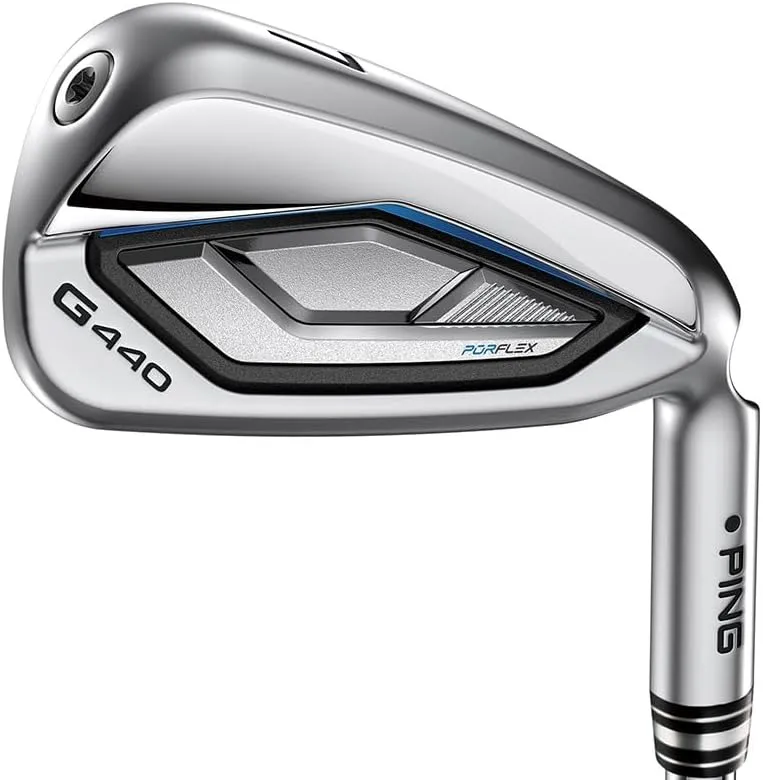
PING built its entire reputation on forgiveness, and the G440 is the current high-water mark for that philosophy without looking like a shovel at address.
It’s the rare game improvement iron that multiple major test panels independently rank in their top tier, and it manages to be both genuinely easy to launch and noticeably shorter in blade length than the G430 it replaced, narrowing the old trade-off between “forgiving” and “good-looking” that used to define this category.
What’s actually going on under the hood: The G440 pairs a thinner face with a lower/back center of gravity to push ball speed and launch angle up at the same time.
Usually, you trade one for the other, but PING’s engineering gets both. A new four-piece chrome-plated cavity badge does double duty: it flexes to add ball speed on contact and dampens vibration to improve sound and feel, fixing the tinny “clicky” complaint that dogs a lot of thin-faced GI irons.
PING also refined the shaping with a slightly shorter blade length and a thinner topline than the prior generation, so it addresses the ball with more confidence than most oversized game improvement irons.
Who should buy it: Golfers in the 10–22 handicap range who want maximum forgiveness without a club that looks intimidating at setup.
It’s also a smart pick if a previous game improvement iron felt harsh or sounded hollow on your mishits; the G440’s impact feel is a genuine step up.
| Pros | Cons |
|---|---|
| Best forgiveness-to-looks ratio in the category | Premium pricing for the category, typically $1,200+ |
| High launch with real ball speed gains, not a trade-off between the two | Limited shot-shaping ability if you like to work the ball |
| Noticeably improved sound and feel over the previous G430 generation | Stock steel shafts can feel firm for slower swing speeds without a proper fitting |
| Strong resale value, since it's a PING product |
Scroll to see more features
Titleist T350 Best-Looking Game Improvement Iron
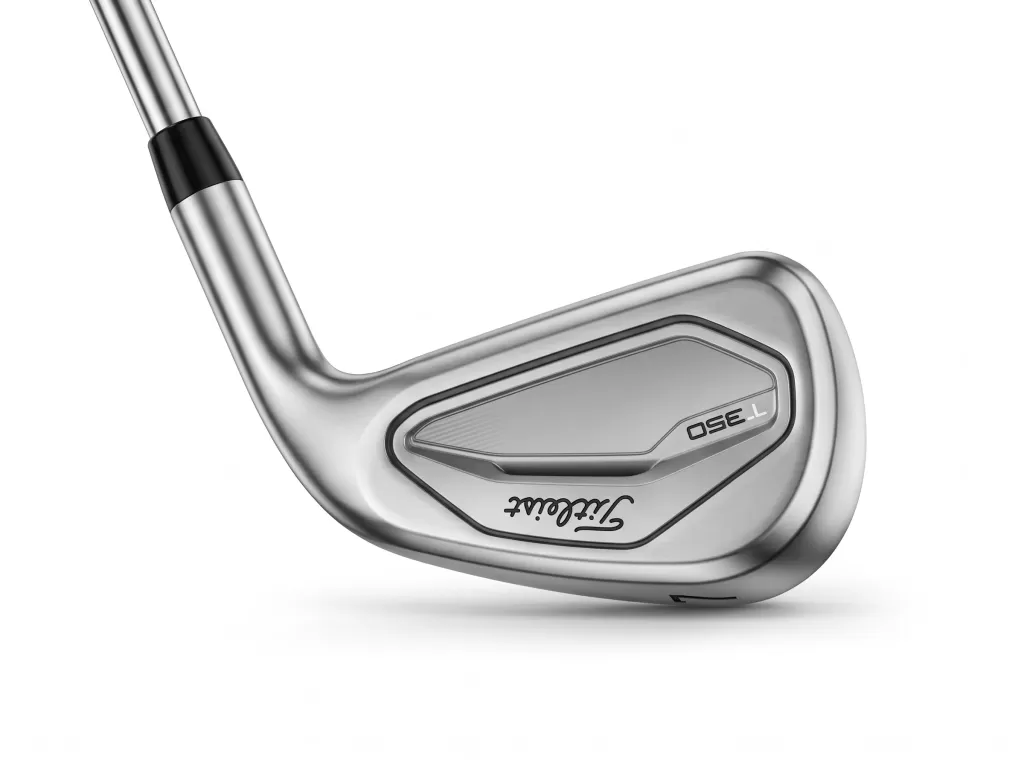
The T350 exists to answer one specific complaint: “I need game improvement forgiveness, but I refuse to play something that looks like a shovel.”
It’s arguably the best-looking iron in this entire category: a clean topline, minimal offset, and a profile at address that wouldn’t look out of place in a much lower handicap’s bag.
What’s actually going on under the hood: Titleist didn’t sacrifice performance to get the looks right. A forged L-face wraps around the sole on the longer irons and uses variable thickness to boost ball speed and launch specifically on low-face strikes, the exact mishit most game improvement buyers actually make.
Max Impact Technology and split high-density tungsten weighting work together to keep distance and dispersion consistent shot to shot, which is really what “forgiveness” means in practice, not just a bigger sweet spot on a spec sheet.
The strong lofts across the set fuel serious ball speed and carry, and Titleist even offers a custom high-launch build that adds roughly 2 degrees of loft for golfers with slower swing speeds who still want the T350 look.
Who should buy it: Golfers who’ve outgrown the look of oversized cavity backs but still need real forgiveness often have an 8–20 handicapper stepping down from a super game improvement or maxed-out GI set.
| Pros | Cons |
|---|---|
| Best-in-class looks for a game improvement iron, full stop | The forgiveness ceiling is lower than the most oversized GI heads on this list |
| Strong ball speed even on low-face contact | Among the pricier options here, typically $1,300+ |
| Tight, consistent dispersion in independent testing | Rewards more centered contact than the true max-forgiveness picks |
| Premium Titleist fit and finish, plus a custom high-launch option for slower swingers |
Scroll to see more features
Callaway Quantum Max Best Forgiveness Iron
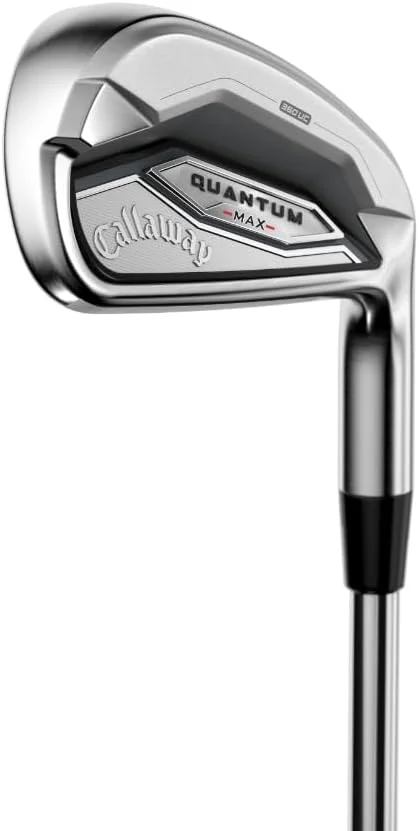
Callaway makes two versions here, and the distinction matters if you’re shopping by handicap.
The standard Quantum Max is Callaway’s mainline game improvement offering; the Quantum Max OS (“Oversize”) pushes further into max-forgiveness territory for higher handicappers who need every bit of help they can get off the tee and through the bag.
What’s actually going on under the hood: Both use QuantumCOR internal polymer technology to maximize USGA-legal C.O.R. (essentially, the trampoline effect off the face) across a wider area than a simple thin-face design achieves alone.
That’s paired with an exposed 360 undercut cavity that drives the center of gravity lower for easier launch. In independent lab testing, the Quantum Max posted some of the best raw distance numbers in the entire category, competitive with, and in some tests beating, irons costing 50% more.
Who should buy it: Mid-to-high handicappers (roughly 12–28) who want straightforward, no-drama forgiveness without the price tag of a Titleist or PING.
The OS version specifically suits golfers who miss the face frequently and need the largest realistic margin for error.
| Pros | Cons |
|---|---|
| Excellent distance-to-price ratio, some of the longest numbers in the category | Impact sound is a recurring minor complaint in reviews |
| Confidence-inspiring look at address without feeling oversized (Max version) | Accuracy and forgiveness scores trail the class leaders even as distance leads |
| Two head sizes let you dial in exactly how much forgiveness you need | The OS version's larger profile isn't for every eye at address |
| Widely stocked, easy to demo at almost any retailer |
Scroll to see more features
Mizuno JPX925 Hot Metal Longest Game Improvement Iron
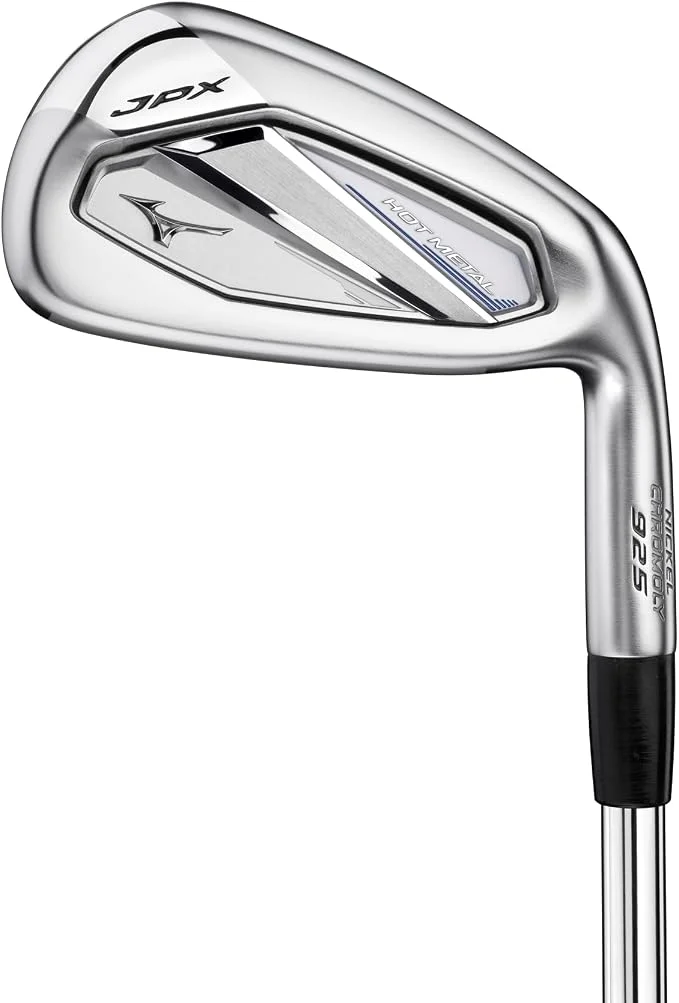
Mizuno built its name on forged players’ irons that feel like nothing else in golf, which creates an odd tension when the brand releases a game-improvement iron designed to prioritize ball speed over that buttery forged feel.
The JPX925 Hot Metal leans all the way into distance, and by most independent measures, it’s currently the longest game improvement iron you can buy.
What’s actually going on under the hood: A new 360-degree undercut construction creates a deeper cupface that extends further toward the trailing edge of the sole, increasing face deflection beyond what the previous JPX923 generation achieved.
A weight bar pushes the center of gravity low and forward without restricting sole flex, keeping ball speed high even on shots struck low on the face, a very common miss for higher handicappers who steepen their attack angle under pressure.
Mizuno also raised the leading-edge chamfer on the tri-sole to reduce digging and improve impact location on the face for golfers who address the ball hands-forward.
Who should buy it: Golfers whose main complaint with their current irons is “I need more carry distance,” particularly through the middle and long irons where game improvement technology matters most.
| Pros | Cons |
|---|---|
| Class-leading distance in independent testing | Bulkier, less refined look than earlier Mizuno GI irons |
| Genuinely high, easy launch across the whole set | Impact feel doesn't match Mizuno's forged reputation |
| Strong stopping power on approach shots relative to how far it flies | Sits in an awkward spot between GI and super-game-improvement positioning |
| Blends seamlessly into a combo set with other JPX925-family clubs |
Scroll to see more features
TaylorMade Qi Max Best All-Around Balance
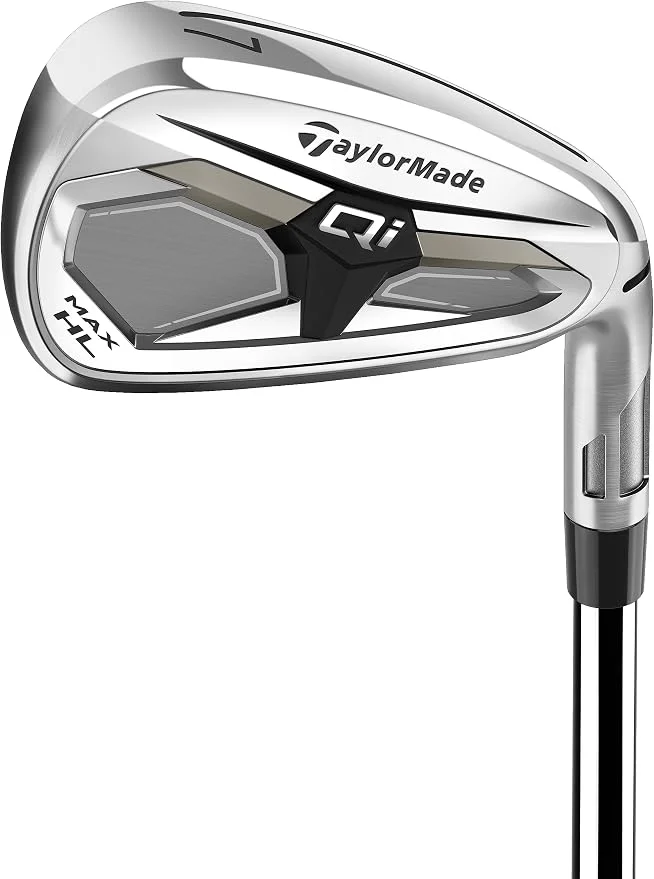
If you want one iron that doesn’t ask you to sacrifice anything in particular, the Qi Max is the safest recommendation on this whole list.
It’s rarely the outright leader in any single metric, but it consistently lands in the top tier across distance, forgiveness, and accuracy in independent testing, which for most buyers is exactly what “best overall” should mean.
What’s actually going on under the hood: TaylorMade uses a multi-material cap back that’s lighter than the steel it replaces, wrapping around the high-toe area specifically to reduce your odds of a slice; less mass up there makes it easier to square the face at impact.
Extreme heel-toe weighting adds stability across the face, and slots in the sole let the face flex for ball speed even with the weaker, more forgiving lofts built into the set.
TaylorMade specifically engineered the face flexibility to control cut spin, which is their answer to the single most common recreational miss: the slice.
Who should buy it: Golfers who genuinely don’t know yet which single trait distance, forgiveness, or accuracy matters most to their game.
That’s an extremely common situation if you’ve never been through a proper fitting. This is the “start here” iron if the whole category feels overwhelming.
| Pros | Cons |
|---|---|
| Genuinely well-rounded across every test metric: distance, forgiveness, and accuracy | Rarely the outright best in any one specific category |
| Anti-slice design targets the single most common recreational golfer miss | Less distinctive personality than some competitors, which can make it feel like a less "exciting" purchase even when it's the smarter one |
| Backed by TaylorMade's build quality and huge fitting-cart availability | Not the pick if you already know exactly which single trait you're chasing |
| Competitively priced against Callaway and Titleist equivalents |
Scroll to see more features
Srixon ZXi4 Best Players-Distance Crossover Iron
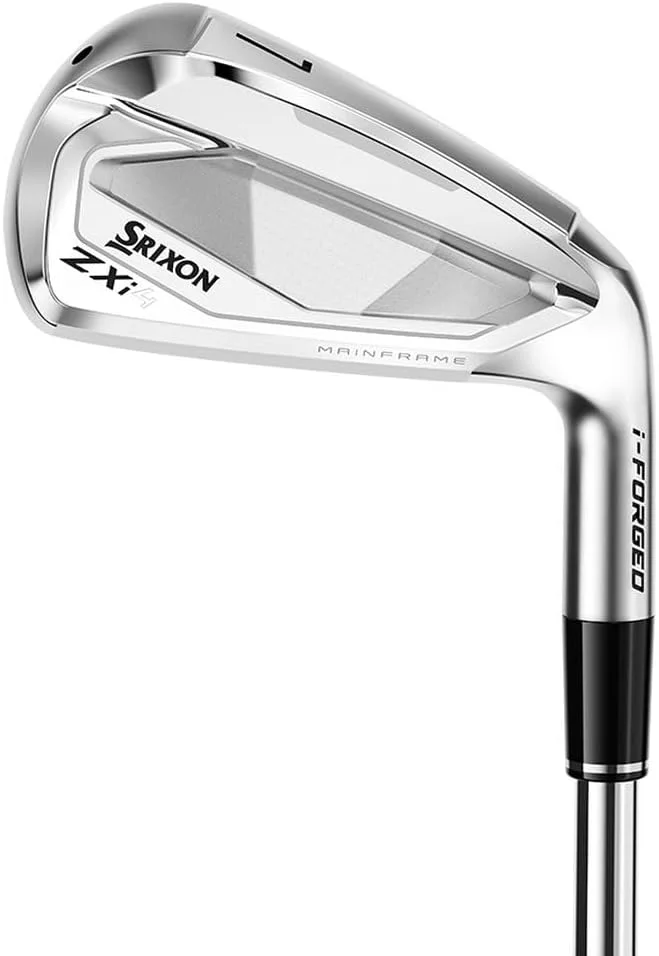
The ZXi4 sits in a deliberately blurry space between game improvement and players’ distance, and Srixon has built a genuinely compelling product out of that ambiguity: a mid-handicapper can play start to finish, or a lower-handicapper can mix into the long-iron slots of a combo set.
What’s actually going on under the hood: Unlike the more forgiving ZXi5 and ZXi7 in Srixon’s lineup, the ZXi4’s body isn’t forged; it’s a cast, multi-piece construction using a forged high-strength steel face insert (HT1770) over a heat-treated, cast 17-4 stainless steel body.
Curious how the ZXi4’s more forgiving sibling performs on course? We put the Srixon ZXi 5 iron set reviews.
That combination lets Srixon tune face flex and ball speed independently from the feel of the body, and the backside of the face uses a variable-thickness milling pattern to add both speed and forgiveness right where mis-hits actually happen.
It’s frequently called the “unicorn” of the game improvement category in reviews, precisely because it manages a forged-feel face insert on what’s otherwise a cast, budget-friendlier body.
Who should buy it: Better mid-handicappers (roughly 8–18) who want max distance and forgiveness in their long irons but sharper accuracy and control in the scoring clubs. It’s a genuinely smart way to build a set if you’re not shopping purely off a single “best overall” label.
| Pros | Cons |
|---|---|
| Excellent blend of distance and control in one head | Slightly less outright forgiveness than category-leading pure GI designs |
| Strong sound and feel relative to typical cast GI construction | Positioning between categories can make it confusing to shop for if you're not sure exactly what you need |
| Works well as a combo-set long-iron option even for lower handicaps | Not the top pick for 20+ handicappers chasing maximum forgiveness |
| Competitively priced against the true GI category leaders |
Scroll to see more features
Cobra King Best Value From a Major Golf Brand
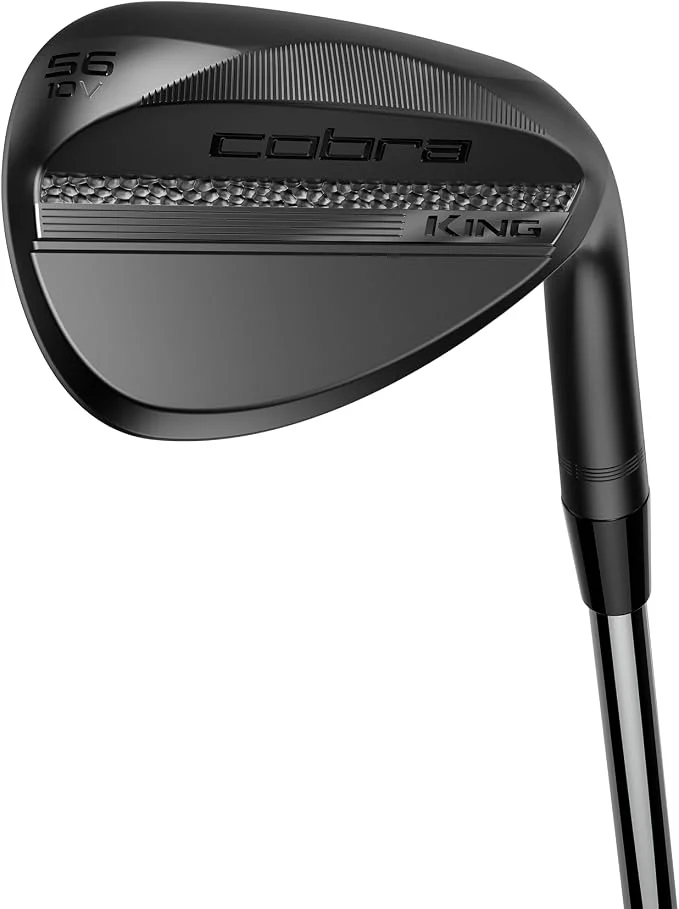
Cobra doesn’t spend its budget on tour trailers and celebrity endorsements the way some competitors do, and the King is the clearest evidence that the savings actually reach the golfer.
At roughly $899–$1,000 for a full set, it undercuts nearly every other major-brand game improvement iron on this list while genuinely competing on distance.
What’s actually going on under the hood: Cobra borrowed 3D-printing know-how from its far pricier 3DP Tour line to build a 3D-printed medallion that lowers the center of gravity for a higher launch and a steeper, more stopping-power-friendly descent angle technology transfer that usually stays locked in $1,900+ products.
An 80-gram internal catapult weight suspended in polymer, combined with a 360 SpeedShell face that flexes roughly 23% more than the prior generation, produces genuinely long numbers on a launch monitor.
An updated skid sole with a pre-worn leading edge and flatter midsole improves turf interaction, a detail that matters more on a real course than it does on a spec sheet.
Who should buy it: Value-conscious golfers in the 12–24 handicap range who want major-brand engineering and fitting-cart support without major-brand pricing.
| Pros | Cons |
|---|---|
| Genuine 3D-printing technology transfer at a mid-tier price point | Less prestige than Callaway, Titleist, or PING equivalents |
| Class-leading distance for what it costs | Forgiveness trails the true category leaders slightly |
| Updated sole design genuinely improves turf interaction | Fewer premium finish options than Cobra's own 3DP line |
| Backed by Cobra's fitting-cart network at major retailers |
Scroll to see more features
Cleveland Launcher XL Halo Best Hybrid-Style Forgiveness
Cleveland built the Launcher XL Halo for golfers who are tired of fighting their irons. The oversized hollow head looks big at first, and that size is the point: it is one of the easiest sets on this list to get airborne.
What’s actually going on under the hood: Cleveland lists a 7-iron MOI of 2,908 g-cm², the highest it has put into a hybrid-iron.
A rail-to-V sole is designed to improve turf interaction through the set, and a crown step lowers the center of gravity to help launch. Variable face technology adds ball speed on off-center strikes.
Who should buy it: Higher handicappers (roughly 15–30), seniors, and returning golfers who want maximum launch and a bigger margin for error, and who don’t mind a chunky look.
| Pros | Cons |
|---|---|
| Very high MOI for easy launch and stability on mishits | Large head and offset won’t suit golfers who like to work the ball |
| Wide, forgiving sole helps with thin and fat strikes | Not built for lower handicappers |
| Strong value at its typical $600–$900 street price | Feel is less refined than slimmer, forged-style irons |
| Widely available on Amazon in several shaft and set options |
Scroll to see more features
Tour Edge Hot Launch C523 Best Budget Game Improvement Iron
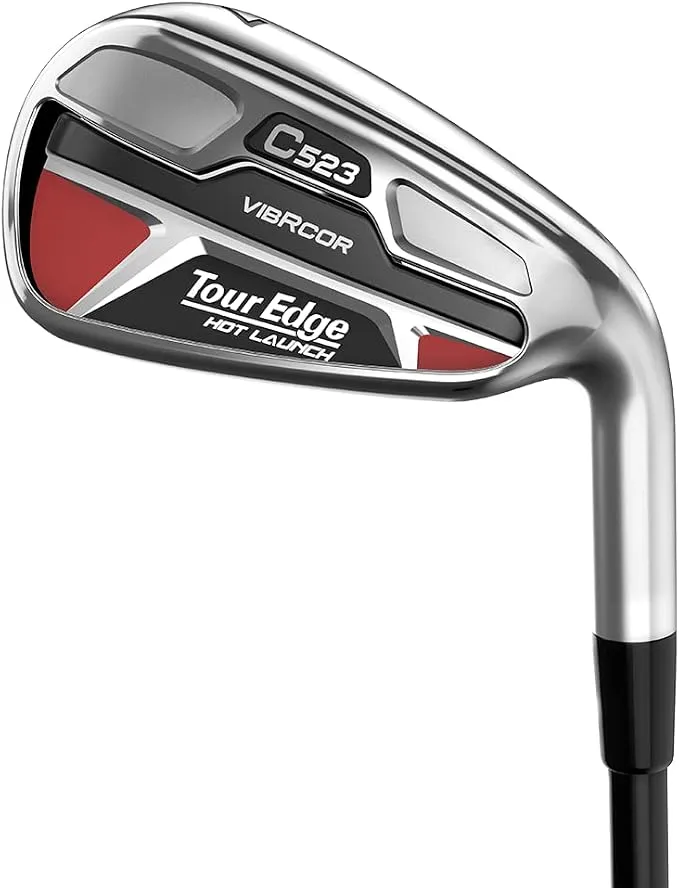
Tour Edge puts its money into R&D instead of tour-van marketing, and the Hot Launch C523 shows it. It is one of the cheapest ways to get a full game improvement set without giving up the traditional look most budget sets lose.
What’s actually going on under the hood: The C523 uses a cavity-back design with a more traditional profile than the oversized hybrid-style sets on this list.
A wide sole and a lower center of gravity help the ball launch easily on off-center strikes. Power lofting adds distance without flattening the flight.
It sits in the middle ground between a super-forgiving set and a compact iron, so it doesn’t scream “beginner club” at address.
Who should buy it: Budget-conscious golfers in the 12–28 handicap range, newer players building a first full set, and anyone who wants forgiveness at roughly a third of premium pricing.
| Pros | Cons |
|---|---|
| Among the lowest entry prices on this list, typically $350–$450 | Previous-generation model, so it lacks the newest face and weighting technology |
| Traditional cavity-back look at address, not oversized or clunky | Feel and finish are less refined than premium brands |
| Easy launch and solid forgiveness from the wide sole and low CG | Lower resale value than the major OEMs |
| A sensible first set that leaves room to upgrade later |
Scroll to see more features
Wilson Staff Launch Pad 2 Best Irons for Slower Swing Speeds
Slower swing speeds don’t need more effort. They need a lighter club that launches itself, and the Launch Pad 2 is designed around that idea.
What’s actually going on under the hood: Wilson’s sole is shaped for cleaner turf interaction, which helps with the fat shots slower swingers tend to hit.
Lightweight graphite shafts help produce higher ball flight and more speed with a smoother swing. It sits in the super game improvement category, so forgiveness is the priority over looks or workability.
Who should buy it: Seniors, newer golfers, and anyone with moderate-to-slow swing speed (roughly 16–30 handicap) who wants higher launch without paying premium prices.
| Pros | Cons |
|---|---|
| Anti-chunk sole design is forgiving on heavy contact | Faster swingers will find it too light and too high-launching |
| Lightweight graphite shafts suit slower swings | Larger look at address |
| Typically priced well below its original retail price | Fewer shaft and grip options than premium sets |
| High-launch flight helps stop the ball on greens |
Scroll to see more features
Wilson Dynapwr Best Budget Option From a Major Brand
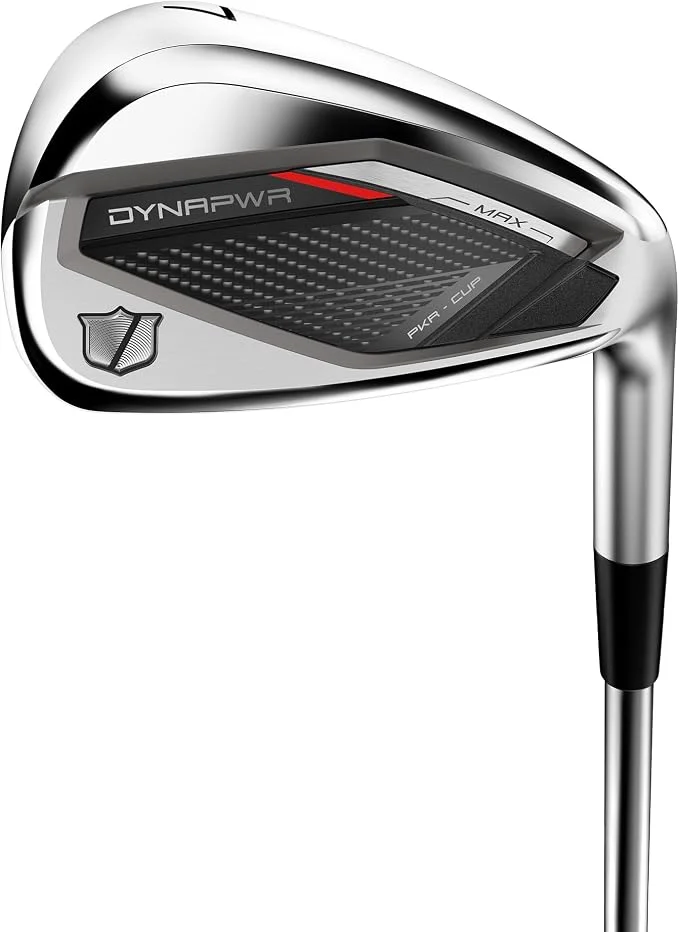
Wilson rarely gets the credit it deserves in the modern game improvement conversation, but the Dynapwr line delivers a genuinely usable, major-brand-engineered iron at a price that undercuts most of the field.
What’s actually going on under the hood: A thin, fast AM355P steel L-face is built to maximize distance specifically for slower swing speeds, a deliberate, targeted design choice rather than a generic “make it thin and hope” approach.
Independent testing places it solidly in the middle of the pack across accuracy, forgiveness, and distance, which, for a set priced well under $1,000, represents genuinely strong value for the money.
Who should buy it: Golfers with moderate-to-slower swing speeds who want a forgiving, easy-launching iron without paying premium pricing, a particularly good fit for seniors or golfers returning to the game after time away.
If you’re shopping with a slower swing speed in mind, our picks for the best golf clubs for women in 2026 cover several sets built around that same easy-launch philosophy.
| Pros | Cons |
|---|---|
| Strong value at well under $1,000 | Not the ideal match for faster swingers |
| Face design specifically engineered for slower swing speeds | Less brand cachet than Callaway, Titleist, or PING |
| Solid, well-rounded scores across every independent test metric | No single standout "best in class" trait to point to |
| Wilson's long manufacturing heritage and warranty backing |
Scroll to see more features
Tour Edge Exotics Max Best Mid-Range Value Iron
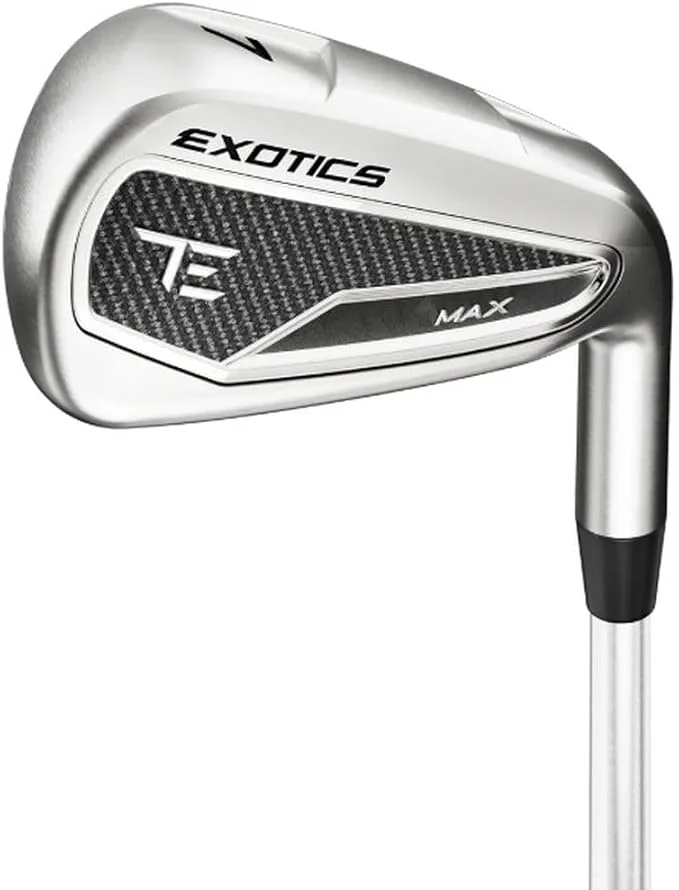
Tour Edge has built a loyal following by investing in R&D rather than tour sponsorships and Super Bowl advertising, and the Exotics Max reflects that philosophy directly in its price-to-performance ratio.
What’s actually going on under the hood: Independent testing places the Exotics Max as a genuinely balanced performer, solid across accuracy, distance, and forgiveness without a glaring weakness at a price meaningfully below the Callaway, Titleist, and PING equivalents.
It’s the kind of iron that rarely wins outright in any single category but rewards buyers who value consistency over headline numbers.
Who should buy it: Golfers in the 14–26 handicap range looking for genuine mid-range value without stepping all the way down to true budget/DTC territory.
| Pros | Cons |
|---|---|
| Well-balanced performance across all three key metrics | No standout "best in class" trait |
| Strong value relative to major-brand pricing | Brand recognition and resale value trail the majors |
| Backed by Tour Edge's R&D-first reputation | Less flashy aesthetics than some category competitors |
| Increasingly easy to find at major retailers |
Scroll to see more features
Honma TW HX Best Premium Feel and Finish
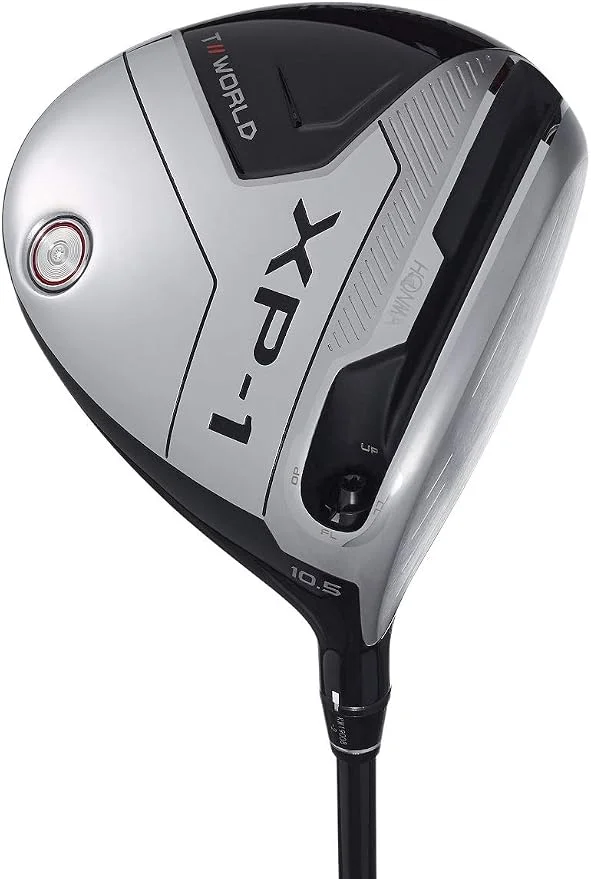
Honma has built its entire brand identity around premium craftsmanship, and the TW HX brings that sensibility to the game improvement category without fully abandoning forgiveness in pursuit of feel.
What’s actually going on under the hood: Independent testing shows the TW HX delivering above-average distance alongside a finish and fit-and-finish quality that testers consistently single out as a genuine point of differentiation in a category where most competitors focus purely on launch-monitor numbers rather than craftsmanship.
Who should buy it: Golfers who want their equipment to feel and look like a premium investment, not just perform like one; often better mid-handicappers (8–18) willing to pay for craftsmanship alongside performance.
| Pros | Cons |
|---|---|
| Standout fit-and-finish and a genuinely premium feel at impact | Premium pricing relative to performance-per-dollar |
| Strong distance numbers in independent testing | Less widespread U.S. retail and fitting-cart availability than Callaway, TaylorMade, or PING |
| Distinctive brand cachet in a category dominated by the same handful of major OEMs | Smaller head profile than most GI competitors, given the players-adjacent feel priority |
Scroll to see more features
Sub 70 699 v3 Best DTC Forgiveness on a Budget
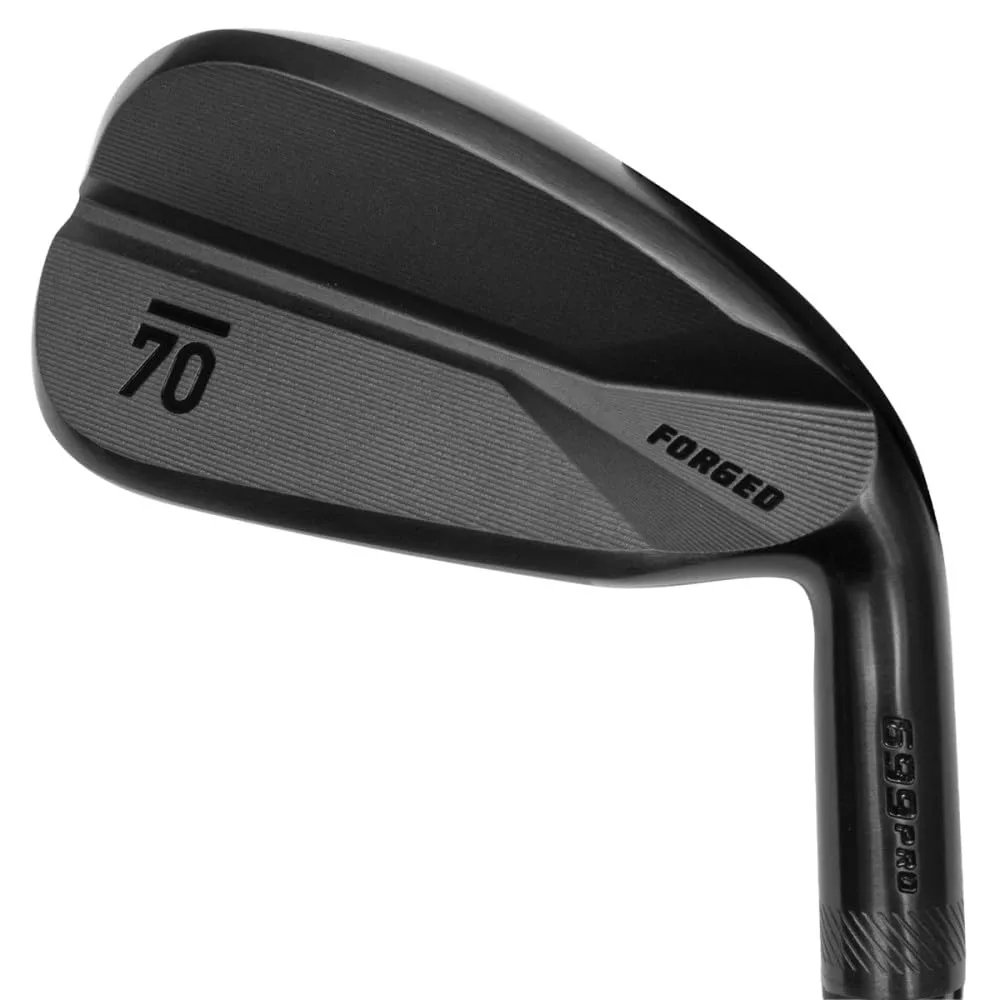
Sub 70 has quietly built a reputation among direct-to-consumer shoppers as a brand that delivers real forgiveness without the retail markup that comes with a pro-shop wall display.
What’s actually going on under the hood: Independent testing consistently places the 699 V3 in solid middle-of-the-pack territory across all three key metrics a genuinely usable, forgiving iron at a price point ($600–$750) that undercuts nearly every major-brand competitor on this list.
Who should buy it: Budget-conscious golfers, particularly those comfortable buying directly rather than through a traditional retail fitting cart, who want dependable forgiveness without premium pricing.
| Pros | Cons |
|---|---|
| Strong forgiveness-to-price ratio | No physical retail fitting-cart presence for most buyers |
| Consistent, dependable independent test scores | Brand recognition and resale value trail legacy OEMs |
| DTC pricing model cuts out the retail markup entirely | Distance trails the category's more aggressive distance-first options |
Scroll to see more features
Callaway Paradym Ai Smoke HL | Best Lightweight
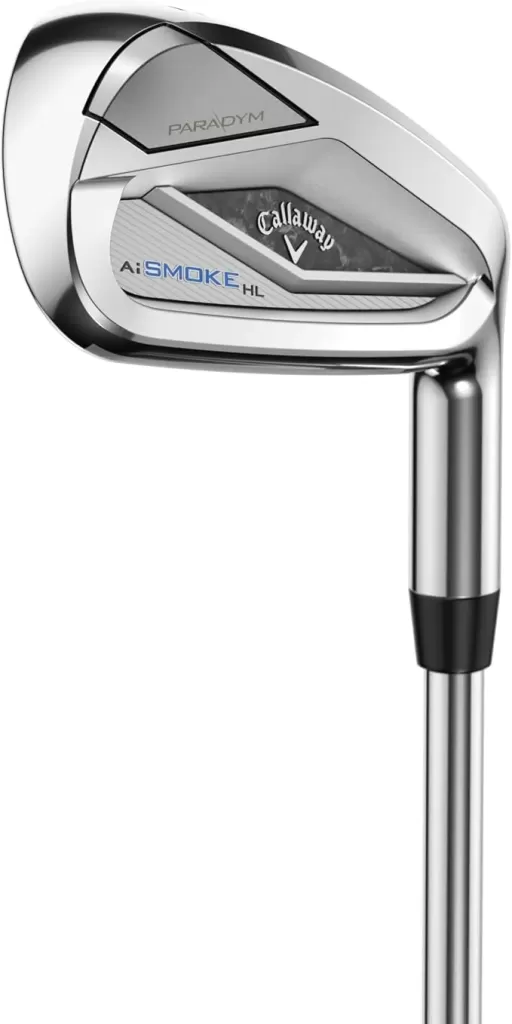
If you want a major-brand name without Quantum Max pricing, the Paradym Ai Smoke HL is the pick. It’s the lighter, higher-launching version of Callaway’s Ai Smoke family, and it often sells for well under its original retail price on Amazon.
What’s actually going on under the hood: Callaway built the Ai Smoke line around its Ai Smart Face, a face design tuned by AI to improve ball speed and consistency across the whole face.
The HL version adds a lighter, easier-launching build for golfers who need help getting the ball up and keeping speed on mishits.
Who should buy it: Mid-to-high handicappers (roughly 12–26) who want Callaway quality and a recognizable name but don’t need the latest-release price tag.
| Pros | Cons |
|---|---|
| Ai Smart Face targets better ball speed on off-center strikes | Previous-generation model, so you won’t get the newest tech |
| Light, high-launching build suits moderate swing speeds | Faster swingers may find the HL build too light |
| Often discounted to the $685–$900 range on Amazon | Priced above the true budget options on this list |
| Major-brand quality, resale and warranty support |
Scroll to see more features
How to Choose the Right Iron for Your Game
Get Fit: This Isn’t Optional Advice
Every credible testing organization in this space says the same thing for a reason: off-the-rack performance data tells you how an iron performed for a specific tester with a specific shaft at a specific swing speed.
Shaft weight, flex, length, and lie angle can change your actual results more than switching between two similarly ranked iron models. If you take one piece of advice from this entire guide, let it be this one.
If you’re building your very first bag rather than upgrading one club at a time, start with our guide on how to choose golf clubs as a beginner before locking into a single iron set
Match the Iron to Your Actual Miss, Not Just Your Handicap Number
Two golfers can carry the same 18 handicap and need completely different irons: one because they’re inconsistent strikers who need maximum forgiveness (SGI or a high-forgiveness GI iron), the other because they’re a former better player rebuilding consistency who needs workability more than a bailout (players-distance). Be honest about what actually happens when you miss a shot before you shop by handicap alone.
Shaft Selection Matters as Much as the Head
Graphite shafts are lighter and generally help generate faster swing speeds, which benefits slower-swinging golfers most.
Steel shafts offer more control and consistency for golfers who already generate sufficient speed. Shaft flex should match your swing speed, and transitioning to a shaft too stiff for your speed will feel dead and fly low; too flexible, and you’ll lose control and consistency.
Consider a Combo Set.
You don’t have to buy 8 identical clubs. Many golfers, even better players, carry a game improvement 4- or 5-iron for extra forgiveness in the hardest-to-hit long-iron slots, paired with a more compact players’ or players-distance iron in the scoring clubs (8-iron through wedges) where control matters more than raw forgiveness.
Budget Realistically
Game improvement irons in 2026 span roughly $580 (Takomo) to nearly $2,000 (Cobra 3DP X) for a full set. Spending more doesn’t automatically mean a better fit for your game; several of the strongest independent test scores this year came from sub-$1,000 sets.
Reserve premium spending for once you’ve been fit and know specifically what you need.
Frequently Asked Questions
What is a game improvement iron?
A game improvement iron is a moderately oversized iron designed with a wide sole, perimeter weighting, and a low, forward center of gravity to launch the ball higher and forgive off-center strikes more than a traditional players’ iron.
It sits between super game improvement irons (maximum forgiveness) and players’ distance or players’ irons (maximum control and workability) in golf’s iron technology spectrum.
Who should play game improvement irons?
Most commonly, golfers are in the 10–25 handicap range, though the real test isn’t your handicap number; it’s your typical miss.
If your biggest issue is getting the ball airborne consistently or avoiding big penalty misses on off-center strikes, a game-improvement iron will help regardless of your specific handicap.
Some skilled players even use a single game improvement long iron (4- or 5-iron) in an otherwise players’-iron bag, since long irons are the hardest clubs to hit well for almost everyone.
What’s the best game improvement iron for 2026?
Based on aggregated independent testing data, the PING G440 currently earns the strongest overall consensus for balancing forgiveness, distance, and looks.
The Titleist T350 is the top pick if aesthetics matter most to you, the Mizuno JPX925 Hot Metal leads on pure distance, and the Takomo 101 MKII delivers the best value-to-performance ratio if budget is your top constraint.
What’s the difference between game improvement and super game improvement irons?
Super game improvement (SGI) irons take every game improvement principle further: larger heads, wider soles, more offset, and often hybrid clubs replacing the hardest-to-hit long irons entirely.
SGI is built for golfers who need maximum forgiveness, typically 20-plus handicappers or golfers with slower swing speeds, while standard game improvement irons offer a more moderate, versatile middle ground.
Do professional golfers ever use game improvement irons?
Rarely as a full set, but it’s not unheard of for tour professionals to game a single game improvement or players-distance iron in their longer-iron slots (4- or 5-iron) as part of a combo set, since long irons are difficult to hit consistently even at the highest levels of the game.
How much should I spend on game improvement irons?
2026 pricing for a full set ranges from roughly $580 to nearly $2,000. Independent testing this year found strong performance scores across that entire range; several sub-$1,000 sets scored competitively against $1,500+ options.
Spend based on your budget and confirmed fitting results rather than assuming price correlates directly with how well an iron will actually fit your swing.
Should I get custom fit for game-improvement irons?
Yes, without exception if it’s accessible to you. Shaft weight, flex, length, and lie angle materially change how any iron performs for your specific swing, often more than the difference between two competitively ranked iron models off the rack.
A fitting is typically free or low-cost at most major retailers and will meaningfully improve your outcome regardless of which iron you ultimately choose.
What shaft should I use in game improvement irons?
Graphite shafts are lighter and generally help golfers with slower swing speeds generate more clubhead speed with less effort; steel shafts offer more control and are typically favored by golfers who already generate adequate swing speed and prioritize consistency and feel.
Shaft flex (regular, senior, stiff, etc.) should match your swing speed and transition tempo; a fitting is the most reliable way to confirm the right combination for your game.
Can better players (low handicappers) benefit from game improvement irons?
Yes, most commonly through a combo set pairing a game improvement iron in the 4- through 6-iron slots (where extra forgiveness helps everyone) with a more compact players’ or players-distance iron in the scoring clubs from 7-iron through the wedges, where control and feel matter more than raw forgiveness.
For a deeper look at how players and game improvement models differ across the full set, see our best golf irons of 2026 guide.
How often should I replace my game improvement irons?
There’s no fixed timeline; irons don’t wear out the way golf balls or grips do, but most golfers see meaningful upgrades in launch monitor performance roughly every 3–5 years as face and weighting technology advances.
A more practical trigger: replace them when a fitting shows a clear, measurable performance gain over your current set, or when your swing has changed enough (speed, consistency, or ball flight) that your current specs no longer match your game.
What’s the difference between game improvement irons and players’ distance irons?
Players’ distance irons use similar hollow-body and thin-face technology to add ball speed and forgiveness, but in a more compact, less offset head shape that looks and feels closer to a traditional players’ iron.
Game improvement irons prioritize maximum forgiveness and easy launch in a moderately larger, more visually forgiving package.
The right choice depends on whether you prioritize a confidence-inspiring look with maximum forgiveness (GI) or a more compact, workable shape with slightly less outright forgiveness (players distance).
Are more expensive game improvement irons always better?
No. Independent testing consistently shows sub-$1,000 options like the Takomo 101 MKII and Cobra King scoring competitively against $1,500–$2,000 sets on key performance metrics.
Price often reflects brand positioning, materials (like 3D-printed construction), and marketing investment as much as it reflects how well a given iron will perform for your specific swing.