

Every iron on the rack at your local pro shop was either forged or cast two manufacturing methods, two different philosophies baked into the metal before you ever grip the club. And somewhere between the fitting bay and the checkout counter, you are expected to know which one belongs in your bag.
The problem is that most of the advice floating around online treats this like a personality quiz. “Do you value feeling? Forged. Do you want forgiveness? Cast.” That is not wrong, but it is so reductive that it barely qualifies as useful.
The actual decision involves how each construction method affects adjustability during a fitting, how long the grooves hold up under real use, what you are genuinely paying per year of ownership, and whether a combo set makes more sense than committing to one type across all your irons.
I do not run a testing lab. Instead, I cross-reference independent robot test data from MyGolfSpy and Golf Monthly with owner feedback from hundreds of Amazon reviews, and I lay out what the evidence actually says. No speculation. Named sources. Honest positioning when publications disagree.
Feel, Sound, and Feedback
(For Illustrative Purposes Only)
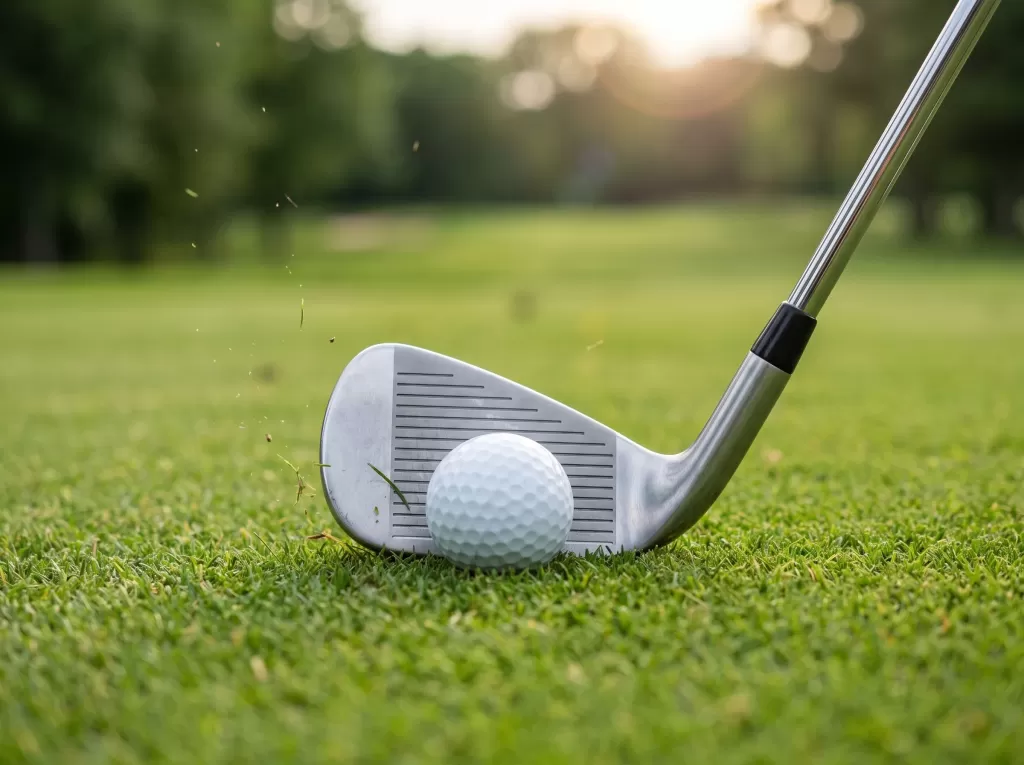
This is the reason most golfers start searching “forged vs. cast irons” in the first place. They hit a forged iron at a demo day, and something felt different. Crisper. More honest.
That sensation is real, and it comes from the uniform grain structure inside forged carbon steel. When the face contacts the ball, vibration travels through a consistent internal grain pattern, giving your hands a more precise read on where contact happened.
Pure the center, and you know it. Catch it in a low groove, and you know that too. This is not marketing. It is metallurgy.
But here is the nuance that most comparisons skip: the specific steel grade changes the feel as much as the manufacturing method. A forged head made from Mizuno’s S20C steel feels noticeably different from one made from 8620 carbon steel, even though both carry the “forged” label.
Grouping every forged iron under one “soft feel” umbrella is like saying every bourbon tastes the same because it is all made from corn.
Cast irons made from 17-4 stainless steel produce a firmer, more dampened sensation. The hollow internal cavities absorb some vibration, and modern manufacturers lean into this by injecting speed foam or urethane inserts (Callaway, Cobra, TaylorMade) to specifically tune the acoustic profile.
The result is a more muted click versus the resonant ping of a forged blade. Neither is objectively better. But if feedback quality ranks high on your priority list, forged construction has an inherent edge that no amount of foam injection fully replicates.
Forged vs. Cast Irons Explained
If you’d rather see the difference than read about it, this is worth two minutes. GOLFTEC breaks down how each construction method is actually made one piece of hammered metal versus molten metal poured into a mold and walks through the myths golfers repeat most, including whether forged really does feel softer and whether cast irons can be shaped just as well. It’s a good gut check before you commit to either type at a fitting.
Forgiveness and Off-Center Performance
(For Illustrative Purposes Only)
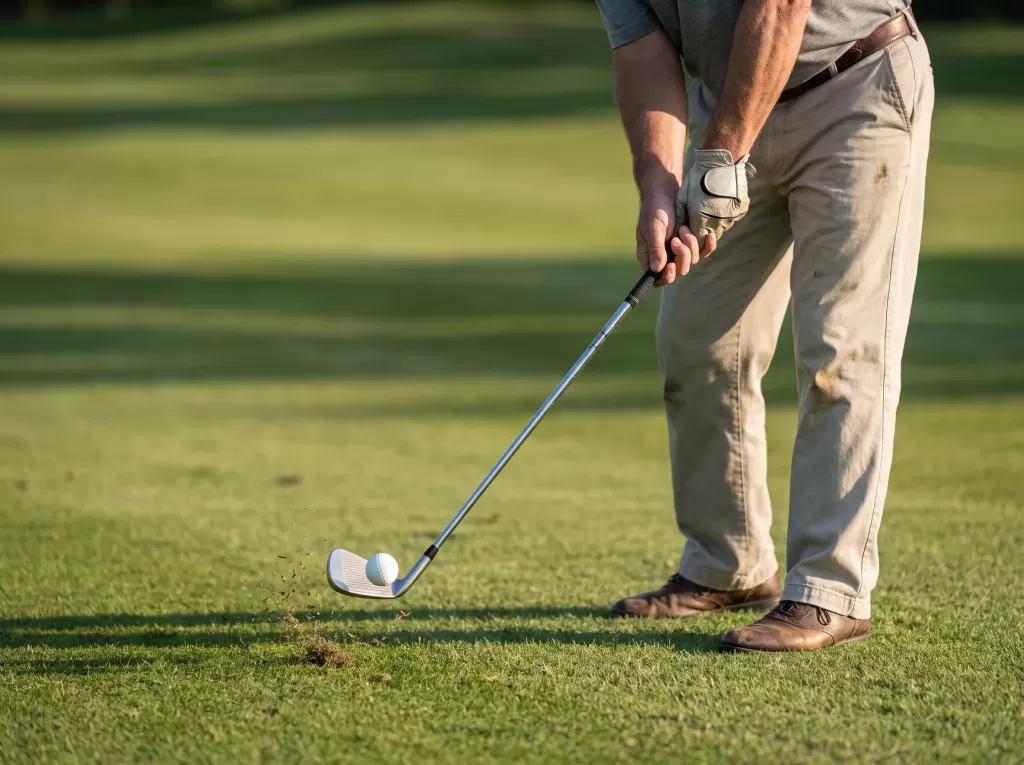
This is where cast irons earn their keep for the majority of golfers.
The investment casting process gives engineers freedom to push weight to the extreme perimeter of the clubhead, which directly increases the moment of inertia (MOI).
Higher MOI means the face resists twisting when you catch one off-center. Your mishits hold their line better and retain more ball speed.
Numbers tell the story clearly. A typical cast game improvement iron with aggressive perimeter weighting might exceed 3,000 g·cm² of MOI.
A compact forged blade sits closer to 2,200 g·cm². For golfers whose strike pattern covers two inches of face real estate (which includes most mid- and high-handicappers), that gap translates directly into tighter dispersion and fewer penalty situations.
If forgiveness is your top priority, it’s worth seeing how today’s cast game-improvement irons stack up against each other. I broke down the most forgiving sets on the market right now in a separate deep dive
One thing worth flagging: the sweet spot is a single point on the face, not a zone. Perimeter weighting reduces the punishment for missing that point.
Some forged cavity backs with strategic tungsten weighting (Titleist T150, Srixon ZX5 Mk II) now achieve MOI numbers that compete with cast game improvement models while keeping the compact profile better players prefer.
The categories are converging, but pure forgiveness still favors cast construction.
The Distance Question

(For Illustrative Purposes Only)
“Forged vs. cast iron distance” shows up in search data consistently, and the answer disappoints people who want a clean winner.
The construction method alone does not determine distance. Robot testing from MyGolfSpy and Golf Monthly confirms this repeatedly.
A forged 7-iron and a cast 7-iron set to the same loft, with the same shaft, produce nearly identical ball speeds.
The differences golfers experience in real life are almost always traceable to something else entirely: loft creep.
A traditional forged 7-iron sits at 33 or 34 degrees of loft. A modern cast game improvement 7-iron might be stamped at 27 or 28 degrees.
That is effectively a traditional 5-iron with a “7” printed on the sole. You are not hitting it farther because the iron is cast.
You are hitting it farther because the manufacturer quietly delofted the club by a full two clubs and changed the number.
Before comparing distance between any two iron sets, normalize for loft. Otherwise, the comparison is meaningless.
Adjustability and What It Means at Your Fitting
(For Illustrative Purposes Only)
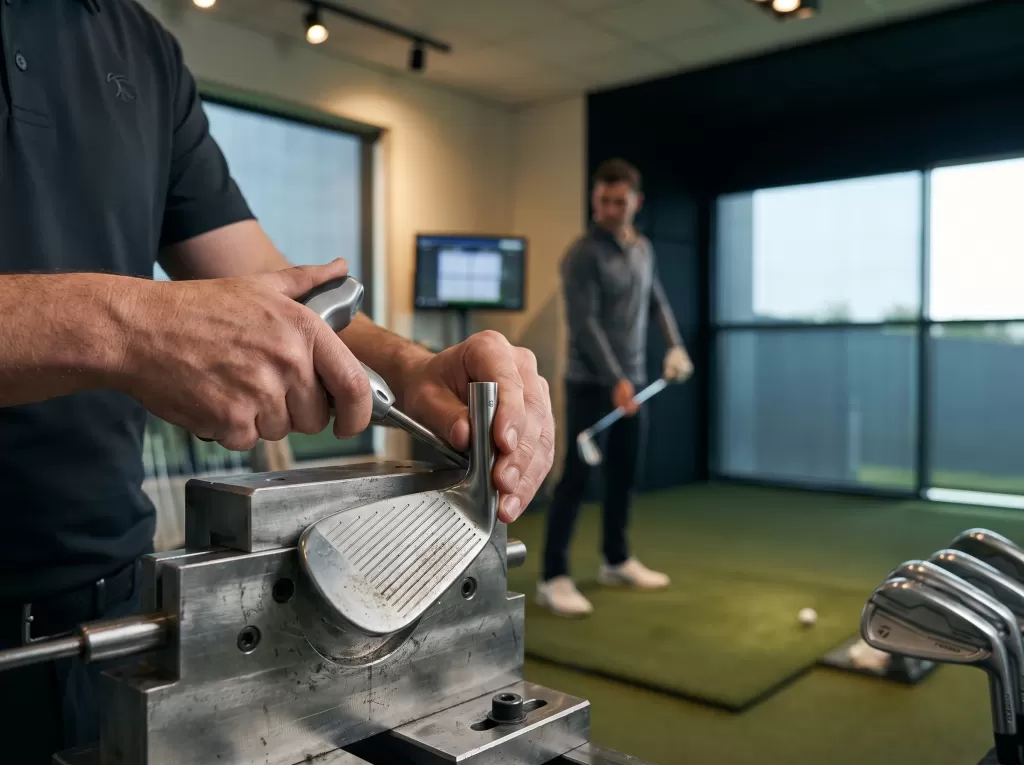
This is one of the most practical differences between forged and cast irons, and almost nobody covers it.
Forged carbon steel can be bent 2 to 4 degrees for both loft and lie angle without compromising the structural integrity of the head.
If your fitting data shows you need irons set 2 degrees flat because of your height or swing plane, a forged head accommodates that without issue.
Cast stainless steel is harder and more brittle. Most manufacturers recommend bending cast irons no more than 1 degree in either direction.
Push past that and you risk micro-fractures in the hosel that are invisible but degrade long-term durability.
This matters more than most golfers realize. If you are significantly taller or shorter than average, or your swing plane runs unusually upright or flat, the adjustability ceiling of your irons becomes a real constraint.
Forged construction gives your fitter substantially more room to dial in the specs your swing actually needs.
Durability, Groove Wear, and Replacement Cycles
(For Illustrative Purposes Only)
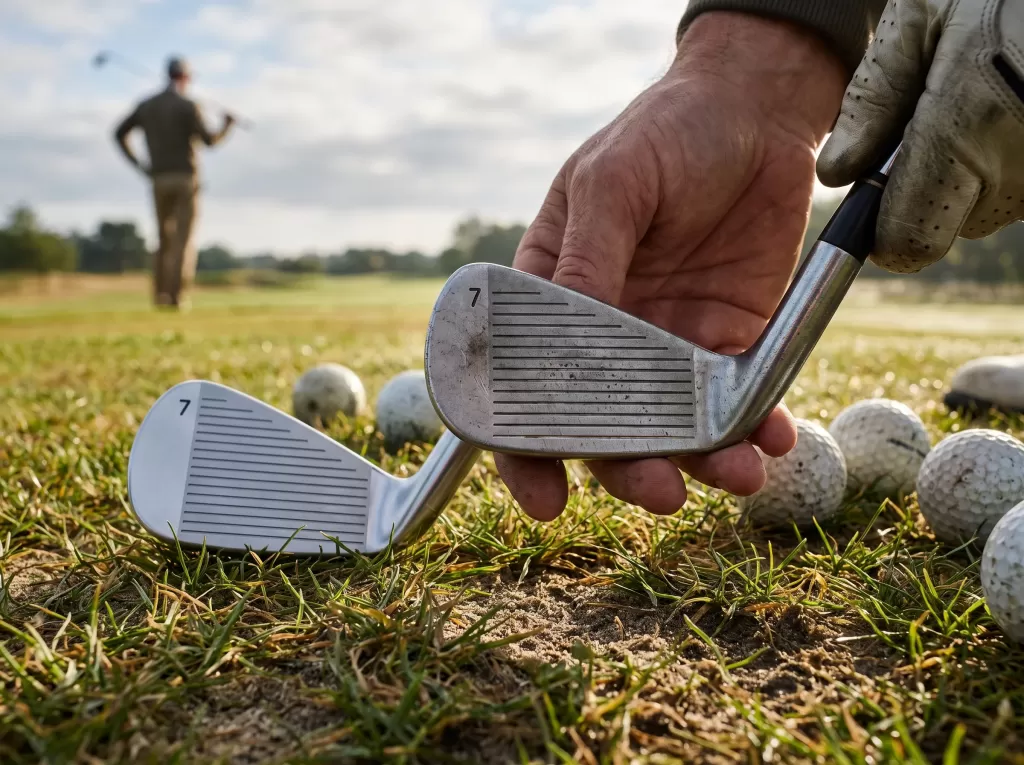
Forged carbon steel is softer than cast stainless. That softness is precisely what creates the feel advantage, but it also accelerates wear.
Grooves lose their edge sharpness faster, face surfaces accumulate ball marks and bag chatter sooner, and soles show wear patterns after a couple of seasons of consistent play.
Cast stainless holds groove geometry longer and resists surface damage more effectively.
The tradeoff is brittleness under sudden impact forces, though in practice this matters only if you are regularly taking divots out of rock-hard hardpan.
From the usage data I have reviewed, a forged iron set that played 80 to 100 rounds per year starts showing meaningful groove degradation around year 3 to 4.
A cast stainless set under the same conditions holds performance through years 5 to 6.
You can check groove depth at home with a thumbnail test or a groove sharpness tool.
When the edges feel smooth and rounded rather than crisp, spin rates are declining, and replacement is worth considering.
Price Ranges and the Cost Per Year Calculation
(For Illustrative Purposes Only)
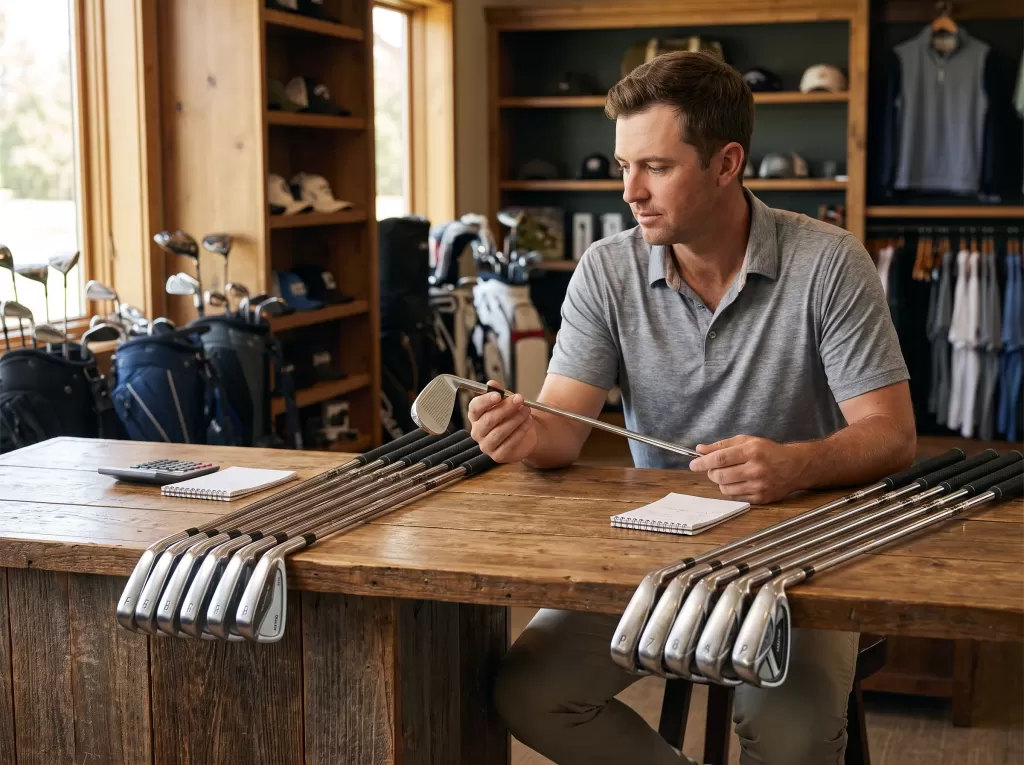
Every comparison article says “cast irons are cheaper.” None of them give you actual numbers or frame the value properly.
Forged irons in 2026: Entry-level (Srixon ZX4 Mk II, Cleveland Launcher XL Halo) run roughly $700 to $900 for a 5-PW set. Mid-range (Titleist T150, TaylorMade P770, Mizuno JPX925 Forged) sits at $1,000 to $1,400.
Premium forged blades (Mizuno Pro 245, Titleist T100, and TaylorMade P7MC) land between $1,400 and $1,800+.
Cast irons in 2026: Entry game improvement (Cleveland Launcher XL, Tour Edge Hot Launch) starts at $400 to $600. Mid-range (Callaway Paradym, PING G430, Cobra Darkspeed) runs $700 to $1,000.
Premium cast with advanced tech (Titleist T350, TaylorMade Qi, Callaway Paradym Ai Smoke) sits at $900 to $1,300.
For a full side-by-side of this year’s top-rated sets across every price tier, my complete iron buying guide breaks down which ones are actually worth the money
Now here is the calculation nobody runs. If a $1,200 forged set lasts you 4 years, your annual cost of ownership is $300. If an $800 cast set lasts 6 years, your annual cost is about $133.
Cast irons cost less upfront and last longer, delivering a meaningful value advantage for golfers who do not specifically need the fitting adjustability or feedback precision that forged construction provides.
That does not make forged irons a bad purchase. It means you should choose them because the performance characteristics genuinely serve your game, not because a forum thread told you they are the “serious golfer’s” choice.
Which Type Should You Actually Play
(For Illustrative Purposes Only)
Low Handicap and Scratch Players
Forged muscle backs or compact cavity backs. You have the strike consistency to benefit from the feedback loop and the swing speed to control trajectory through technique rather than club design, and you are more likely to need the fitting adjustability that forged steel tolerates.
The Mizuno Pro 245, Titleist T100, and Srixon ZX Mk II Forged are strong starting points.
Mid Handicappers (10 to 20)
This is the zone where the answer is genuinely personal. Forged cavity backs like the Titleist T150 or TaylorMade P770 deliver a feel with real forgiveness.
Premium cast models like the PING G430 or Callaway Paradym Ai Smoke maximize help on mishits while offering surprisingly responsive feedback.
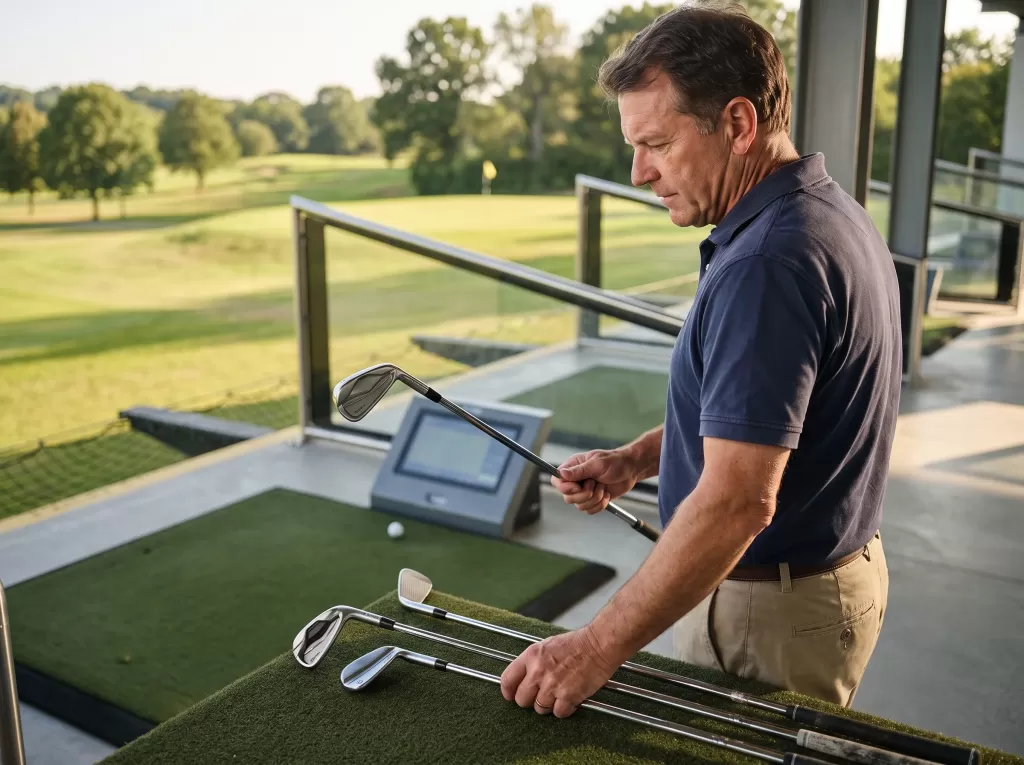
Demo both. Let your strike pattern data from the fitting session make the call, not a label on a box.
If you want a closer look at one of the more popular forgiving cavity backs on the market, I put the Srixon ZXi 5 iron set through a full review
High Handicappers and Beginners
Cast game improvement irons. You need the forgiveness, the higher launch, and the confidence that comes from seeing the ball get airborne consistently.
There is nothing to prove by fighting a compact, forged blade when your swing is still developing. Start with the best irons for beginners and revisit forged options once your contact point tightens up.
Building a Combo Set
Over half of PGA Tour players carry a mixed set. Forged short irons (8-iron through pitching wedge) for control and precision on scoring shots. C
ast or hybrid construction long irons (4 through 7) for launch height and forgiveness where carry distance matters more than workability.
Scottie Scheffler plays Titleist T100 (forged) in his short irons and T200 (cast body with forged face) in his longer irons. Collin Morikawa blends TaylorMade P7MC with P770 in the same bag. The best players in the world do not treat “forged or cast” as an identity.
They treat it as a tool selection problem, matching construction to the job each iron needs to do.
You can do the same. Most major manufacturers offer models within the same family that share progressive sole grinds and weighting, making it straightforward to blend a forged short iron set with a cast long iron set. Ask your fitter about combo builds. It is one of the smartest moves in equipment right now.
New clubs arrive with consistent specs, matching shafts, intact grips, and manufacturer warranties.
For complete beginner golf club sets specifically, buying new is often cheaper per club than assembling a used bag piece by piece.
There’s also a practical benefit for someone who’s never bought golf equipment before.
A new golfer doesn’t always know what “good condition” looks like in a used club. A new set removes that uncertainty entirely.
Frequently Asked Questions
Do forged irons go farther than cast irons?
Not inherently. Distance is driven by loft, ball speed, and launch angle. Modern cast irons often appear longer because of loft creep. At equal loft, robot testing shows negligible distance differences between the two construction types.
Can you bend cast iron for a fitting?
Yes, but only about 1 degree safely. Forged irons tolerate 2 to 4 degrees of loft and lie adjustment, giving fitters significantly more room to customize the club to your swing.
How long do forged irons last?
With regular play (80 to 100 rounds per year), forged grooves maintain performance for roughly 3 to 4 years. Cast stainless holds up for 5 to 6 years under the same usage pattern.
Are forged irons worth the extra cost?
They are if you have the strike consistency to use the feedback, and you need the fitting flexibility that forged steel provides. If forgiveness and value are higher priorities, cast irons deliver more for the money.
What is a combo iron set?
A combo set blends two different iron models, typically forged short irons for feel and cast long irons for forgiveness. Over half of touring professionals use some version of this approach. It is worth exploring with your fitter if you are a mid-handicapper or better.
How are forged and cast irons actually manufactured?
The manufacturing processes differ significantly in materials, tooling, and what each method allows designers to achieve. I cover the full breakdown, including steel grades and hybrid construction, in a separate deep dive.